

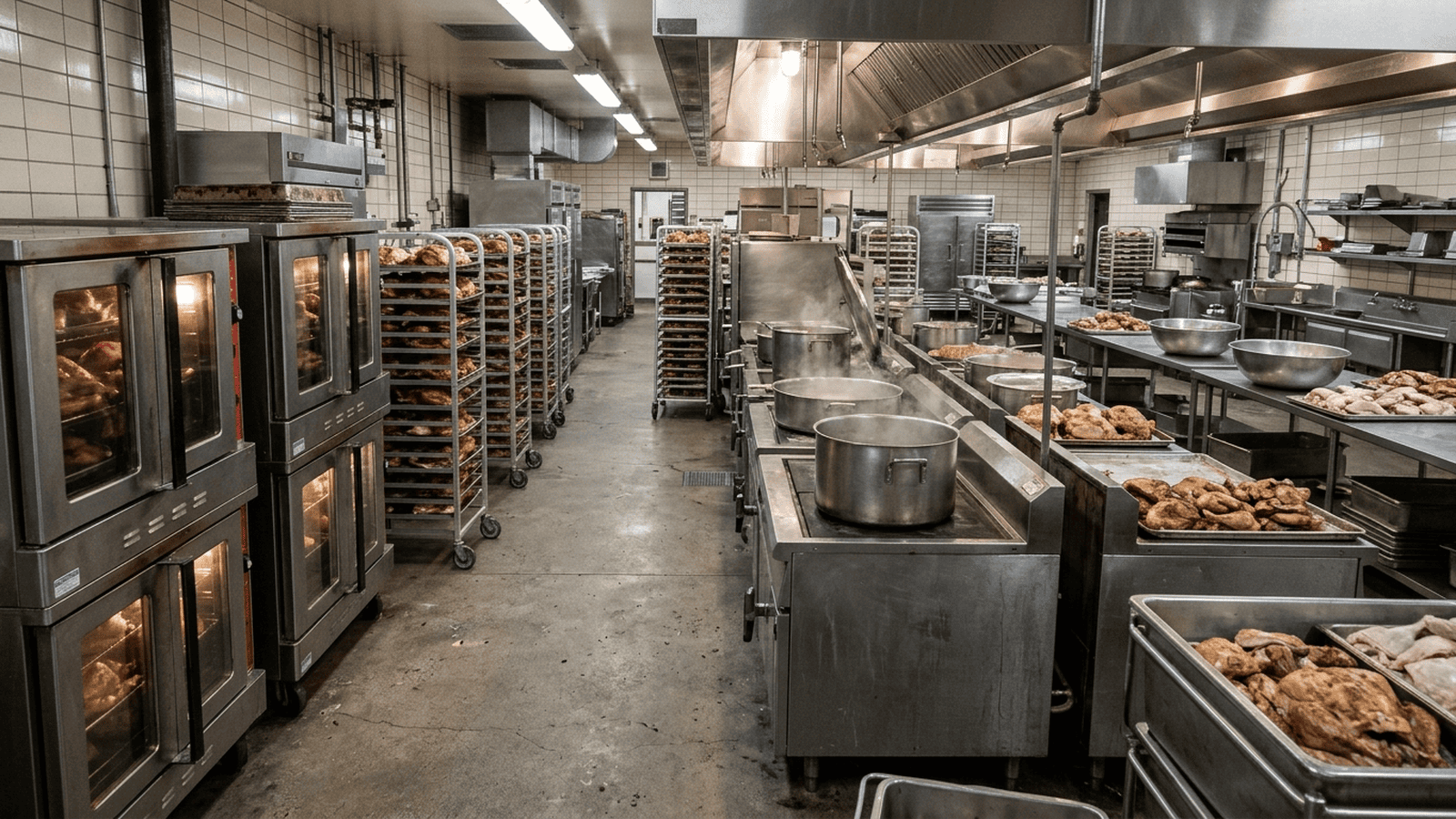
Rikers Island staff are preparing more than 6,000 pounds of turkey and about 10,000 Thanksgiving lunches. The kitchen produces more than 20,000 meals each day, and staff began the holiday work several days ahead because many will be off on Thanksgiving. A corrections officer who oversees kitchen operations says the familiar meal helps maintain order, since inmates know what they will receive. The jail houses about 6,700 people and has faced years of violence, overcrowding and mismanagement. A city plan announced by Mayor Zohran Mamdani calls for closing Rikers by 2032, while the city is expected to miss a legal 2027 deadline to replace it with four smaller jails.
TLDR: Rikers kitchen workers are preparing roughly 10,000 Thanksgiving lunches, including turkey, traditional sides and options for some dietary needs. The operation offers a routine security benefit, according to a corrections officer, while the city faces a 2027 legal deadline for replacing Rikers that it is expected to miss.
New York City’s Rikers Island jail is preparing more than 6,000 pounds of turkey for Thanksgiving. Staff plan to serve about 10,000 holiday lunches. The work is part of a kitchen operation that produces more than 20,000 meals each day, according to the information provided about the jail’s food service.
Workers began preparing for the holiday several days in advance. Each person in custody is set to receive four ounces of turkey, along with familiar side dishes and dessert. The meal is a special holiday service, but the scale of the work also reflects the daily task of feeding thousands of people at a large jail complex.
A corrections officer who oversees kitchen operations describes the holiday meal as a practical aid to security. The officer says people in custody know what they are supposed to receive. That expectation, in the officer’s view, can help maintain order. The explanation links a meal plan to one of the everyday concerns inside a jail: keeping routine and expectations clear.
The planned service is about 10,000 lunches, while Rikers houses about 6,700 people. Those figures describe different parts of the operation. The meal count is not simply a head count of the people held at the jail. The available details do not explain how the number of lunches is calculated or how the food is distributed across the facility.
The kitchen’s daily output is larger still. More than 20,000 meals are produced each day, while the Thanksgiving effort centers on lunch. The holiday menu and the amount of turkey offer a snapshot of the labor involved in preparing food at this scale. Staff start days ahead, and the planned portions give the meal a clear, repeatable shape: turkey, sides and dessert.
That routine sits within a troubled institution. Rikers has faced years of violence, overcrowding and mismanagement. The holiday preparations do not resolve those problems, and the planned meal is not evidence that the jail’s wider conditions have changed. It is a specific operation within a facility that continues to face serious challenges.
The officer’s security rationale is also limited to the meal and the expectations around it. The account does not say that food alone can prevent violence or address overcrowding. It says the meal may help maintain order because people know what they are meant to receive. That is a practical claim about one part of daily life, not a broader answer to the problems associated with Rikers.
The jail’s future is also part of the context. Mayor Zohran Mamdani has announced a plan to close Rikers by 2032. At the same time, the city is expected to miss a legal 2027 deadline to replace the jail with four smaller jails. Those dates point to a gap between the announced closure goal and the earlier deadline for replacement facilities.
The information provided does not include estimates for the cost of the Thanksgiving meal, the wider kitchen budget or the cost of the replacement jails. It also does not describe paperwork or enforcement steps tied to the closure plan. What it does establish is a timeline problem: the city is expected to miss the 2027 legal deadline, while the mayor’s announced goal puts closure in 2032.
For now, the holiday meal is a near-term task, while the facility’s future remains a longer-term policy challenge. Staff are preparing thousands of pounds of turkey and planning thousands of lunches. The officer overseeing the kitchen says predictable portions can support order. Beyond that account, the available details do not show how the meal will affect conditions at Rikers or change the larger debate over its closure.
The contrast is clear. Kitchen workers are preparing a large, defined meal for Thanksgiving, with a set portion and familiar accompaniments. The jail itself remains marked by long-running concerns about violence, overcrowding and mismanagement. Meanwhile, the announced closure target and the missed replacement-jail deadline describe a separate challenge, one measured in years rather than holiday preparations.
The meal will be served within that larger reality. Its scale reflects the work of feeding people at Rikers, and its stated security purpose reflects the importance officials place on predictable routines. But the preparations do not settle questions about the jail’s conditions, its replacement facilities or the timing of its closure. Those issues remain distinct from the Thanksgiving service planned by kitchen staff.

Greg Sanders serves as the Senior Correspondent for Corporate Power and Antitrust at Just Right News, where he brings a principled, conservative perspective to the complex intersection of big business, government regulation, and the American consumer. With a career dedicated to investigative depth and economic clarity, Greg has become a leading voice in examining how the consolidation of industry power impacts the foundational values of the free market and individual liberty.
Raised in Denver, Colorado, Greg’s reporting is deeply informed by the Western spirit of independence and a healthy skepticism of centralized authority. Growing up in the shadows of the Rockies, he witnessed firsthand the importance of local entrepreneurship and the vital role that small-medium enterprises play in sustaining vibrant communities. This upbringing instilled in him a belief that the American Dream is best preserved when the playing field remains level and when competition—rather than backroom deals between corporate lobbyists and federal regulators—dictates success. For Greg, the rugged individualism of his home state serves as a constant reminder that the economy should serve the people, not the other way around.
Now based in Chicago, Illinois, Greg operates from the heart of the nation’s industrial and financial crossroads. His location in the Midwest provides him with a unique vantage point to observe the real-world consequences of corporate overreach. From the boardrooms of the Loop to the manufacturing hubs that define the region, he tracks the movement of capital and the shifting tides of market influence. Chicago’s history as a center of trade and labor offers a rich backdrop for his work, allowing him to bridge the gap between high-level economic theory and the lived experiences of hardworking Americans who feel the squeeze of monopolistic practices.
At Just Right News, Greg’s beat focuses on the “new monopolies” and the rise of “woke” corporate culture. He argues that when corporations become too large, they often abandon their fiduciary duties to shareholders in favor of social engineering and political posturing. His reporting seeks to hold these “Titans” accountable, ensuring that the power of the purse is not used to silence dissent or bypass the democratic process. He is a firm advocate for the idea that true conservatism requires a vigilant defense of competition, preventing any single entity—public or private—from exerting undue control over the lives of citizens.
This mission is most clearly seen in his acclaimed feature series, “The Titans and the Toll.” In this ongoing project, Greg explores the human cost of market consolidation, from the erosion of consumer choice to the decline of local economies. Through rigorous analysis and boots-on-the-ground reporting, he documents how the concentration of power in sectors like tech, agriculture, and finance creates a “toll” paid by the average family.
Greg Sanders remains committed to the idea that a transparent, competitive market is the greatest engine for prosperity ever devised. Through his work at Just Right News, he continues to provide the essential oversight necessary to protect that engine from the encroaching influence of corporate giants and the bureaucratic structures that enable them.