

Israeli strikes and renewed Russian pressure on shipping show how unresolved conflicts are putting civilian populations, trade routes and U.S.-backed diplomacy under strain.
Two separate conflicts put pressure on diplomacy and commercial movement on November 1, as Israeli strikes killed at least eight Palestinians in Gaza and Russia reported a new strike on a vessel off Ukraine’s Black Sea coast.
The incidents underscore a practical challenge for American foreign policy: ceasefire proposals and military support matter only insofar as they change the conduct of the parties and the risks on the ground. In Gaza, unresolved terms have left a U.S.-backed plan short of its next phase. In the Black Sea, repeated attacks have made shipping increasingly hazardous.
Reuters and The Associated Press reported that Israeli strikes killed at least eight Palestinians on November 1. Five were police officers in western Khan Younis; three people were killed in Gaza City, including a 4-year-old boy. Israel said it targeted militants. Hamas accused Israel of undermining the ceasefire.
The deaths came amid a dispute over the ceasefire’s next steps. Hamas said it remained ready to implement the U.S.-backed plan and move to its second phase, but Israel had not accepted the latest draft, according to reporting by The Daily Star. The central questions remain whether Hamas will disarm and how far, and on what timetable, Israeli forces will withdraw.
Those disagreements are reflected in the map. Israeli troops still control about two-thirds of the Gaza Strip, Reuters reported, and have ordered residents to leave areas under their control. Reconstruction has made little progress amid the impasse. Without agreement on security and withdrawal, the ceasefire framework has not yet produced a path to broad rebuilding or a settled postwar arrangement.
The immediate costs are borne by civilians, but the unresolved terms also matter to outside powers seeking to shape the region. A diplomatic plan can establish a framework; it cannot by itself compel either side to accept the conditions that would make the next phase workable. The latest deaths offer a stark measure of how exposed the truce remains.
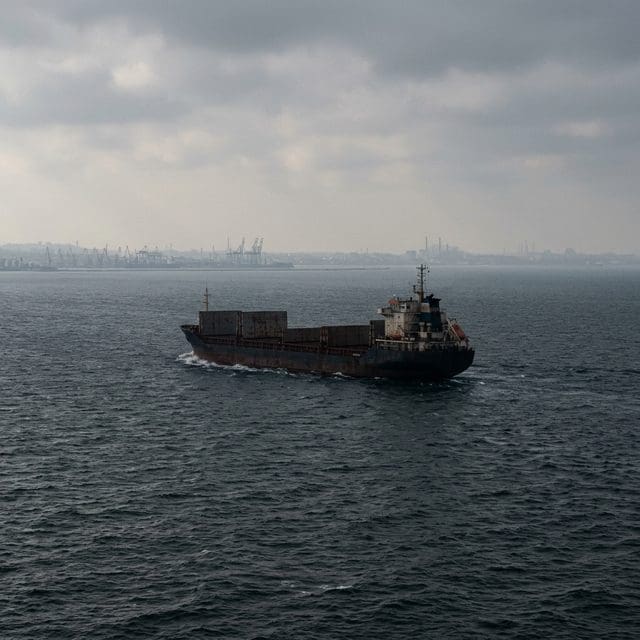
In the Black Sea, Russia’s Defense Ministry said Russian forces struck a dry-cargo vessel 16 kilometers southeast of Odesa on November 1, describing it as carrying supplies for Ukrainian forces. That account, including the cargo description, was not independently verified. The distinction matters: a claim about the target does not establish what the vessel carried or whether it was a military objective.
The wider shipping picture is nevertheless troubling. The Christian Science Monitor reported that maritime traffic has nearly halted after repeated Russian attacks on port infrastructure and commercial vessels. A Russian strike on October 3 reportedly killed one sailor and wounded three others. The report also described damage to commercial shipping, but the available material does not independently establish the full scale of disruption.
For Ukraine, access to Black Sea ports is a strategic and economic concern. For other countries, attacks that endanger commercial vessels can raise the cost and uncertainty of moving goods through a vital maritime corridor. The November 1 strike claim adds to that risk even as its details remain unverified.
The two theaters are distinct, and the available reporting does not establish a direct connection between them. Their shared feature is narrower: both expose the limits of diplomacy when the parties’ core security terms remain unsettled. In Gaza, the dispute centers on disarmament and Israeli withdrawal; near Odesa, the immediate question is whether shipping can operate without further attack.
For Washington and its partners, the measure of influence is not the number of plans announced but whether negotiations alter those realities. Until the underlying terms are resolved, civilians remain vulnerable and commercial routes remain exposed.

Olivia Kendall serves as the Senior Correspondent for Geopolitics, Defense, and Foreign Policy at Just Right News, where she provides a principled, conservative perspective on the complex forces shaping the global stage. With a career dedicated to deconstructing the intricacies of international relations, Kendall has become a trusted voice for readers who value national sovereignty, a robust military, and a foreign policy that prioritizes American interests above all else.
A native of Washington, D.C., Kendall’s professional journey is deeply rooted in her upbringing within the nation’s capital. Growing up in the epicenter of American political life, she developed an early and profound understanding of how policy is crafted and, more importantly, how it often fails to account for the values of the American heartland. This unique vantage point allowed her to witness firsthand the rise of globalist bureaucracies, fueling her commitment to reporting that champions the constitutional foundations of the United States. Her background as a British White American further informs her worldview, providing her with a keen appreciation for the Western tradition and the enduring importance of the “Special Relationship” in maintaining global stability.
Now based in Arlington, Virginia, Kendall operates from the doorstep of the Pentagon and the heart of the nation’s defense establishment. Her proximity to the decision-makers in the military and intelligence communities allows her to provide boots-on-the-ground reporting that is both timely and deeply informed. For Kendall, Arlington is more than just a base of operations; it is a daily reminder of the sacrifices made by the men and women in uniform. This connection to the defense community drives her rigorous coverage of military readiness and her advocacy for a “peace through strength” approach to diplomacy.
At Just Right News, Kendall is perhaps best known for her acclaimed feature series, “The World’s Shadow on America.” In this ongoing project, she explores the direct correlation between international developments and the daily lives of American citizens. Whether she is analyzing the encroachment of foreign adversaries in domestic supply chains or the impact of international treaties on local economies, Kendall’s work serves as a vital bridge between distant geopolitical shifts and their consequences at home. She rejects the notion that foreign policy is an abstract concern for elites, instead proving that what happens in the corridors of power in Brussels or Beijing has a tangible “shadow” that falls across every American doorstep.
Throughout her tenure, Kendall has remained a steadfast critic of international overreach and a vocal proponent of a clear-eyed, realistic foreign policy. She brings a sharp analytical mind to her beat, often challenging the prevailing narratives of the mainstream media to uncover the underlying truths that affect national security. Her reporting is characterized by a refusal to compromise on the truth and a dedication to the idea that a strong, secure America is the world’s best hope for liberty. As a Senior Correspondent, Olivia Kendall continues to lead the charge in providing the essential context and conservative insight necessary to navigate an increasingly volatile world.