

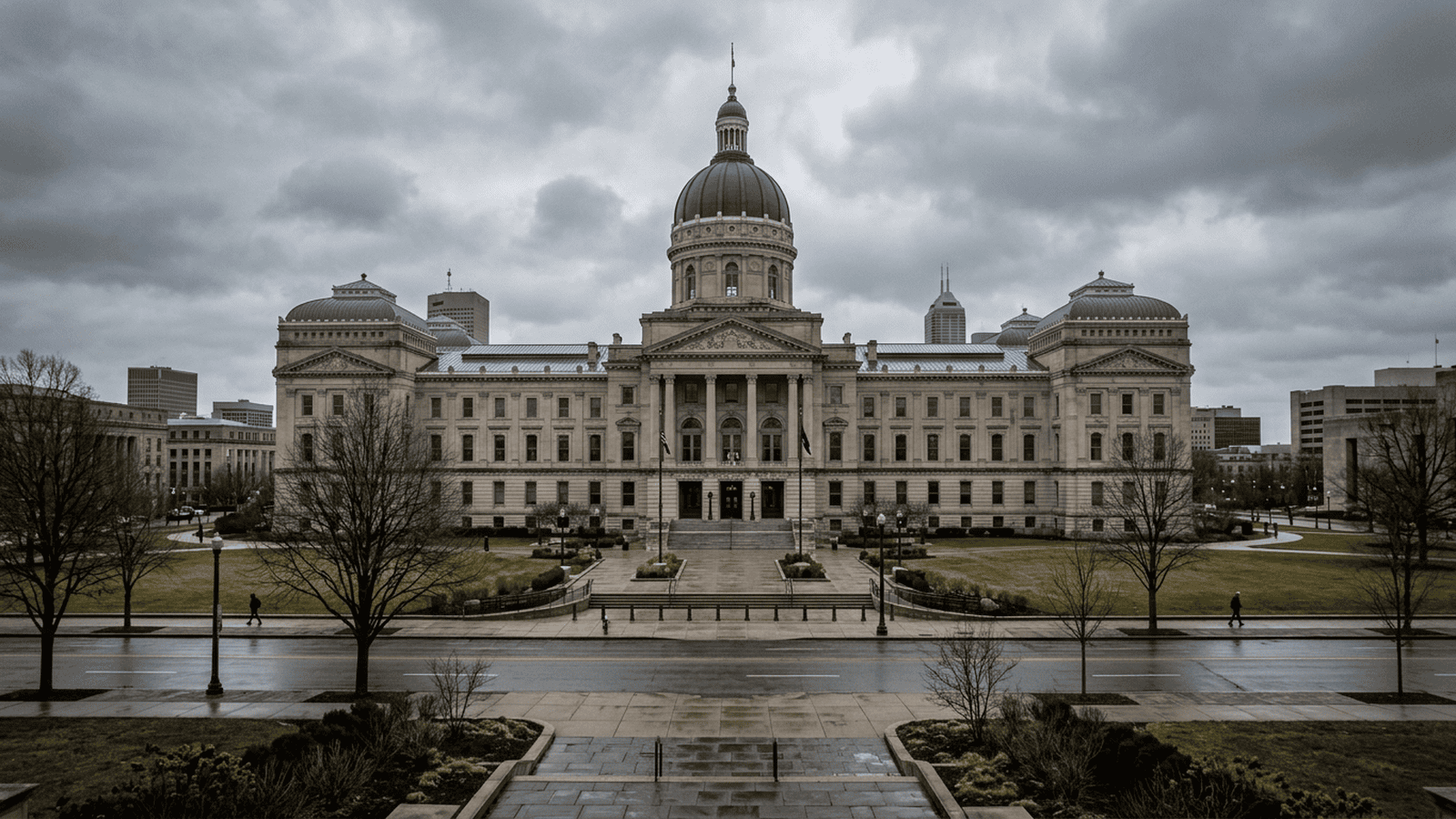
Indiana’s parole board has unanimously recommended that Gov. Mike Braun deny Jeffrey Weisheit’s request to replace his death sentence with life imprisonment. The recommendation follows two days of testimony, including statements from Weisheit, lawyers, the children’s parents and first responders. The board said it considered information about Weisheit’s mental health but found it did not greatly distinguish his case from that of most incarcerated people. Braun has the final decision, and an execution by lethal injection is scheduled for Nov. 5. The account names no fee, added paperwork or separate deadline for the governor’s ruling.
TLDR: The Indiana Parole Board recommends that Gov. Mike Braun deny Jeffrey Weisheit’s clemency request after hearing two days of testimony. Braun’s decision is pending, with an execution date of Nov. 5 listed in the account.
Indiana’s parole board has unanimously recommended that Gov. Mike Braun deny clemency to Jeffrey Weisheit, whose execution by lethal injection is scheduled for Nov. 5. Weisheit was convicted of murder and arson after a 2010 fire at an Evansville home killed Alyssa Lynch, 8, and Caleb Lynch, 5. The governor has the final decision on Weisheit’s request for a life sentence.
The board’s stated rationale is that it considered the case, including information about Weisheit’s mental health, and concluded that this information did not greatly distinguish his situation from that of most incarcerated people. Chairperson Gwendolyn Horth wrote that the board unanimously recommended denying his request. The recommendation followed two days of testimony.
The board heard from Weisheit, lawyers, the children’s parents and first responders who had been at the home. The hearing gave the governor a record of views from people directly connected to the case, while leaving the clemency decision with him. The recommendation is not itself a final ruling.
Weisheit has a right under Indiana law to seek clemency and ask for a life sentence. He spoke to the board on Oct. 16, saying, “There is no excuse or explanation for what I did.” He also said that he wants to live and improve the lives of other people in prison.
Lisa Lynch, the children’s mother, addressed the board by video. She said clemency should be for people who show genuine remorse and value human life, and said the murders did not show mercy, humanity or remorse. Steven Lynch, the children’s father, said he would accept a life sentence.
The case dates to 2010, when Lisa Lynch was at work and Weisheit was in a relationship with her. The children were recovered from the fire ruins. The state’s account of events before the fire was presented to the board by Tyler Banks, a lawyer with the Indiana attorney general’s office. Banks said Weisheit quit his job, withdrew money from the bank and canceled an engagement-ring order, telling the jeweler he would soon leave the country.
The clemency hearing also addressed the defense’s concerns about Weisheit’s health. His lawyer, Joseph Perkovich, told the board that Weisheit had a history of head injuries and mental health problems that did not receive enough attention at his 2013 trial. Perkovich acknowledged the crimes as “unspeakable,” according to the account of his remarks.
The board said it considered information about Weisheit’s mental health. It concluded that the information “does not greatly distinguish his situation from a vast majority of incarcerated individuals.” The recommendation therefore reflects the board’s assessment of that material, but the available account does not provide further detail about the records it reviewed or the weight assigned to each item.
The competing positions were presented during the two-day proceeding. Weisheit asked to live and described a wish to help people in prison. The children’s mother opposed clemency, while their father said he could accept a life sentence. Those statements formed part of the hearing record, but the final choice remains Braun’s under the process described in the report.
The immediate practical impact is a pending decision, not a completed change in sentence. Weisheit’s request seeks to replace his death sentence with life imprisonment, and the board recommends that the request be denied. The execution date listed in the account is Nov. 5, only days after the board’s Wednesday recommendation. The account identifies no filing fee, additional form, new compliance requirement or separate deadline for the governor’s decision.
That process places a consequential choice with the governor after a board review and testimony from the prisoner, lawyers, family members and first responders. The case also brings into focus competing considerations of executive discretion, the state’s use of capital punishment and the right to seek clemency. The report does not describe any further appeal or oversight step after Braun acts, so those details remain unspecified rather than assumed.
Braun’s decision is the next step. The board has made its recommendation, and the scheduled execution date remains Nov. 5 in the account. Any further action must follow the process available under Indiana law; the governor’s ruling will determine the outcome of this clemency request.

Rachel Vaughn serves as a Senior Correspondent for Just Right News, where she leads the network’s coverage of Global Health, Climate, and Development. With a career defined by intellectual rigor and a commitment to principled reporting, Rachel provides a vital conservative perspective on some of the most complex and high-stakes issues facing the world today. Her work is characterized by a refusal to accept bureaucratic narratives at face value, focusing instead on how international policies impact national sovereignty, individual liberty, and the American taxpayer.
Raised in New Haven, Connecticut, Rachel grew up in an environment dominated by elite academic discourse. This upbringing provided her with a front-row seat to the inner workings of the American establishment, but it also instilled in her a healthy skepticism of the “ivory tower” consensus. She learned early on that while academic theories may sound promising in a lecture hall, they often fail to account for the practical realities of the working class. This background drives her to bridge the gap between high-level policy discussions and the common-sense concerns of everyday citizens, ensuring that her reporting remains grounded and accessible.
Now based in Burlington, Vermont, Rachel operates from a unique vantage point within one of the nation’s most progressive political landscapes. Living and working in a region that often serves as a testing ground for radical social and environmental experiments allows her to witness the real-world consequences of these policies firsthand. From her base in the Green Mountain State, she provides Just Right News readers with essential “boots on the ground” reporting, documenting the friction between local mandates and the constitutional freedoms of the individual. Her presence in Burlington ensures that her critiques of globalist agendas are informed by a direct understanding of how those ideologies manifest at the local level.
In her acclaimed feature series, “Planetary Stakes,” Rachel explores the intersection of international development and environmental stewardship. She rejects the alarmism often found in mainstream media, opting instead for a sober analysis of the economic and geopolitical costs of global climate agreements. Her reporting frequently highlights the importance of market-driven innovation and the role of American leadership in fostering global health without ceding authority to unelected international bodies. Through “Planetary Stakes,” she has become a leading voice for those who believe that true conservation and public health are best achieved through transparency, accountability, and the protection of private property rights.
Throughout her tenure at Just Right News, Rachel has distinguished herself as a journalist who is unafraid to ask difficult questions of global institutions. Whether she is investigating the influence of non-governmental organizations on domestic policy or analyzing the fiscal transparency of international health initiatives, her goal remains the same: to provide her audience with the facts necessary to navigate an increasingly interconnected world. Her blend of East Coast intellectual heritage and her current immersion in the political heart of the Northeast makes her an indispensable asset to the newsroom and a trusted source for readers seeking a principled, conservative take on the issues that define our era.