

Nigeria’s House of Representatives is calling for a review of public tertiary-school fee increases and more federal funding to reduce institutions’ reliance on student charges.
Nigeria’s House of Representatives is pressing for a pause and review of fee increases at public tertiary institutions, warning that higher charges could put education beyond the reach of poorer students and strain the country’s education-loan system.
In a motion reported Tuesday by Punch, lawmakers urged the Federal Government to increase funding for public institutions. They also called on the Federal Ministry of Education and the National Universities Commission to engage institutions on suspending fee increases and reviewing tuition structures. The reports do not say that the government or schools have agreed to suspend charges.
The House said public universities, polytechnics and colleges of education had raised fees and mandatory charges by more than 100% in some cases. According to Punch and Vanguard, lawmakers objected that some increases came without broad consultation or sufficient consideration of families’ economic circumstances. The reports do not identify a comprehensive list of institutions or establish that increases of this scale were universal.
Lawmakers warned that higher charges could widen disparities in education-loan allocation, exclude poorer students, contribute to dropouts and campus unrest, and undermine confidence in the government’s affordable-education commitment. They also raised concerns about NELFUND, saying fee increases could threaten the sustainability of the education-loan program.
The House assigned committees responsible for university education, federal polytechnics and higher technical education, and federal colleges of education to investigate the extent and justification of recent increases. The inquiry could establish how widespread the changes are and what institutions say is driving them. No timetable or findings were reported.
The dispute highlights a basic challenge for higher education: institutions need money to operate, but larger student bills can narrow access. For students, the cost of attendance may determine whether they enroll, continue their studies or leave before earning a qualification. In turn, reduced access to training can limit the supply of people prepared for skilled work.
Vanguard reported that lawmakers linked rising charges to public institutions’ dependence on internally generated revenue. They called for greater federal subventions to reduce reliance on student payments. That approach would shift more of the burden to public funding, but the reports provide no cost estimate, funding commitment or plan for distributing additional support.
Nor do the reports detail the operating costs of individual institutions or provide comparable fee schedules. That leaves open how much of the increases reflects specific institutional needs and how much warrants further scrutiny. The House has called for an investigation, not presented a completed audit.
The policy question is how to sustain teaching and services without making access depend increasingly on family finances. The reports do not outline a formula for balancing institutional funding with affordable charges, or say whether schools would receive additional support in exchange for holding or revising fees.
The House’s requests now place responsibility on federal officials, the education regulator and institutions to clarify the scale and causes of the increases. Whether charges are suspended, revised or maintained will affect students weighing the cost of continuing their studies. The committee inquiry may provide a clearer basis for decisions, but no change in policy has yet been reported.
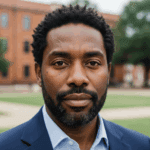
Daniel Owens serves as a Senior Correspondent for Just Right News, where he leads the newsroom’s coverage of Education, Workforce, and Upward Mobility. In an era where the national conversation often overlooks the practical foundations of success, Owens brings a principled perspective to the forefront of the media landscape. His work is defined by a commitment to the idea that a strong society is built on the pillars of quality education, a robust work ethic, and the removal of bureaucratic barriers to individual achievement.
Born and raised in Cleveland, Ohio, Owens’s worldview was shaped by the industrial landscape of the Midwest. Growing up in a city known for its grit and resilience, he witnessed firsthand the transformative power of steady employment and the devastating effects of economic stagnation. This background instilled in him a deep respect for the American worker and a healthy skepticism toward top-down government solutions that often fail to reach the communities they intend to help. As an African American man who has navigated the path to professional success, Owens approaches his beat with a nuanced understanding of how meritocracy and personal responsibility intersect with opportunity. He frequently draws on his roots to highlight the importance of family stability and community-led initiatives in fostering the next generation of leaders.
At Just Right News, Owens is the architect of the acclaimed feature series, “The Learning Curve.” Through this platform, he explores the evolving landscape of American schooling, from the rise of the school choice movement to the revitalization of trade schools and vocational training. He frequently challenges the status quo of higher education, advocating for a return to academic rigor and the practical alignment of degrees with market demands. For Owens, education is not merely about obtaining credentials; it is about equipping young people with the tools necessary to lead self-sufficient, meaningful lives. His reporting on “The Learning Curve” has become essential reading for parents and policymakers who believe that educational competition and parental rights are the keys to a brighter future.
Now based in Raleigh, North Carolina, Owens finds himself at the heart of one of the nation’s most dynamic regions for innovation and growth. Raleigh’s unique blend of traditional values and a fast-paced economy provides the perfect backdrop for his reporting on the modern workforce. From the tech hubs of the Research Triangle to the rural communities of the South, he tracks how shifts in the economy are impacting families and local industries. His reporting often highlights the success stories of entrepreneurs and workers who are thriving by embracing the values of hard work and innovation.
Throughout his career, Daniel Owens has remained a steadfast voice for the student seeking a better path and the worker striving for a better life. His reporting for Just Right News serves as a vital resource for readers who value common-sense solutions to the challenges of the 21st-century economy. By focusing on the intersection of policy and the human spirit, Owens continues to provide a roadmap for how individuals and communities can achieve lasting upward mobility.