

Texas A&M-Victoria faces faculty departures over a strict 40-hour on-campus requirement, while Chicago Public Schools reports record-low vacancies despite a massive $732 million budget deficit.
The return to the classroom this August has highlighted a growing tension between institutional mandates and the modern workforce’s expectations for flexibility. At Texas A&M University-Victoria, a new policy requiring full-time faculty to be physically present on campus for 40 hours per week has sparked significant pushback and a reported “uproar” among staff. The directive, which threatens disciplinary action up to termination for noncompliance, has already led several faculty members to resign rather than comply with the rigid new standard.
University administrators tied the change to Texas SB 2615, a state law restricting telework for public employees. However, faculty advocates have noted that the law itself does not explicitly mandate a 40-hour on-campus requirement, suggesting the university’s interpretation is unnecessarily restrictive. Many affected professors had established remote or hybrid arrangements over the last two years, with some living two hours or more from the Victoria campus. The short notice of the policy change, delivered via email on June 26—just weeks before the August 24 semester start—left many educators with little choice but to exit the institution.
This friction contrasts with the situation at Chicago Public Schools (CPS), which welcomed over 300,000 students back to classrooms on August 24. Despite a daunting $732 million budget deficit, CPS reported a teacher vacancy rate of roughly 2.2%, the lowest in recent history. The district has utilized a “Teach Chicago” recruitment strategy to stabilize its workforce, though the financial picture remains complex. A late-summer $100 million funding revision allowed for some staffing restorations after more than 700 teachers were initially laid off, though principals are not required to reopen their budgets to hire back staff.
CPS has made specific strides in special education staffing, a perennial challenge for large urban districts. Since a 2024 funding formula change, the district reports adding nearly 800 special education teachers and over 2,700 classroom assistants. To protect these gains during recent “staffing adjustments,” CPS created retention pools to keep displaced special education staff within the system. This focus on human capital is essential as the district attempts to maintain service levels while closing massive fiscal gaps.
Efficiency through consolidation is also being tested in the private and parochial sectors. In Chicago, St. Walter and St. Benedict students began their school year together on a single shared campus on August 25. This merger reflects a broader trend of educational institutions streamlining operations to remain viable amidst shifting demographics and rising costs. By sharing facilities, these schools aim to preserve their educational mission while reducing the bureaucratic and facility overhead that plagues many modern institutions.
While elite institutions like Princeton University continue to focus on high-level academic achievements—recently celebrating three alumni receiving 2026 Fields Medals and launching new DOE-funded AI research projects—the broader educational landscape is grappling with more practical labor concerns. As functional unemployment in the U.S. increases for the fourth consecutive month, the ability of schools to attract and retain talent through common-sense management will be a decisive factor in student outcomes.
Ultimately, the situation in Victoria serves as a cautionary tale for administrators. While physical presence is a cornerstone of traditional education, the imposition of top-down mandates without regard for individual achievement or market realities can deplete the very human capital these institutions rely on to function. As schools across the country navigate the 2026-27 year, the balance between institutional control and worker autonomy will remain a central theme in the fight for upward mobility.
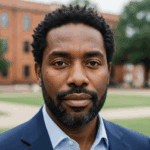
Daniel Owens serves as a Senior Correspondent for Just Right News, where he leads the newsroom’s coverage of Education, Workforce, and Upward Mobility. In an era where the national conversation often overlooks the practical foundations of success, Owens brings a principled perspective to the forefront of the media landscape. His work is defined by a commitment to the idea that a strong society is built on the pillars of quality education, a robust work ethic, and the removal of bureaucratic barriers to individual achievement.
Born and raised in Cleveland, Ohio, Owens’s worldview was shaped by the industrial landscape of the Midwest. Growing up in a city known for its grit and resilience, he witnessed firsthand the transformative power of steady employment and the devastating effects of economic stagnation. This background instilled in him a deep respect for the American worker and a healthy skepticism toward top-down government solutions that often fail to reach the communities they intend to help. As an African American man who has navigated the path to professional success, Owens approaches his beat with a nuanced understanding of how meritocracy and personal responsibility intersect with opportunity. He frequently draws on his roots to highlight the importance of family stability and community-led initiatives in fostering the next generation of leaders.
At Just Right News, Owens is the architect of the acclaimed feature series, “The Learning Curve.” Through this platform, he explores the evolving landscape of American schooling, from the rise of the school choice movement to the revitalization of trade schools and vocational training. He frequently challenges the status quo of higher education, advocating for a return to academic rigor and the practical alignment of degrees with market demands. For Owens, education is not merely about obtaining credentials; it is about equipping young people with the tools necessary to lead self-sufficient, meaningful lives. His reporting on “The Learning Curve” has become essential reading for parents and policymakers who believe that educational competition and parental rights are the keys to a brighter future.
Now based in Raleigh, North Carolina, Owens finds himself at the heart of one of the nation’s most dynamic regions for innovation and growth. Raleigh’s unique blend of traditional values and a fast-paced economy provides the perfect backdrop for his reporting on the modern workforce. From the tech hubs of the Research Triangle to the rural communities of the South, he tracks how shifts in the economy are impacting families and local industries. His reporting often highlights the success stories of entrepreneurs and workers who are thriving by embracing the values of hard work and innovation.
Throughout his career, Daniel Owens has remained a steadfast voice for the student seeking a better path and the worker striving for a better life. His reporting for Just Right News serves as a vital resource for readers who value common-sense solutions to the challenges of the 21st-century economy. By focusing on the intersection of policy and the human spirit, Owens continues to provide a roadmap for how individuals and communities can achieve lasting upward mobility.