

State and federal records documenting $45.6 million in improper payments have become the focal point of a heated accountability battle in Maine.
A growing trail of public records and federal audit findings has placed Maine’s financial oversight at the center of a national debate over government accountability. During an August 24 campaign appearance in Brewer, Maine, Vice President JD Vance utilized these documents to label the state “one of the fraud capitals of the United States.” The criticism is anchored in a 2024 state audit led by Matt Dunlap, which identified “material weaknesses and significant deficiencies” in the management of approximately $2.1 billion in state spending.
The primary source material for these allegations includes a series of damning reports regarding MaineCare, the state’s Medicaid program. A U.S. Department of Health and Human Services audit recently confirmed at least $45.6 million in improper Medicaid payments specifically for autism-related services in 2023. These federal findings corroborated internal state warnings that the program lacked the proper controls to protect billions in taxpayer funds. According to the records, the lack of monitoring not only led to financial leakage but also placed the state at risk of falling out of federal compliance, which could trigger further administrative sanctions.
Central to the investigation is the professional history of Matt Dunlap himself. Records show that Dunlap was forced to resign as state auditor in 2021 after twice failing to meet the mandatory CPA exam requirements for the position. Although he was reappointed in 2022 after passing the exam, Vance and former Governor Paul LePage have framed this two-year gap as evidence of a lack of qualified stewardship. They argue that this period of administrative instability allowed for the proliferation of the “material weaknesses” cited in subsequent reports, including the extensive use of sole-source, no-bid contracts and a pattern of late contract approvals.
The document-driven investigation also extends to whistleblower disclosures involving local nonprofits. Maine Republicans previously filed formal public records requests seeking documentation related to alleged overbilling and fraudulent claims by entities such as Gateway Community Services. These requests followed allegations from a whistleblower suggesting millions in excessive Medicaid billing. The records-based dispute focuses on whether Dunlap’s office prioritized routing these allegations to federal authorities rather than aggressively utilizing state-level investigative powers to probe the reported fraud.
Dunlap has pushed back against these characterizations, framing the Vice President’s visit as a “rescue mission” for a struggling Republican campaign. He has attempted to shift the focus to the economic impact of the Trump administration’s trade policies. This follows the August 22 suspension of trade talks by Canadian Prime Minister Mark Carney in response to 50 percent U.S. tariffs on $28 billion of Canadian goods. Dunlap argues that these trade wars, rather than internal audits, are the primary threat to Maine’s economic stability, citing potential price hikes and the closure of maternity wards as more pressing concerns for voters.
Beyond the Maine dispute, other records-based investigations are shaping the national landscape. In San Francisco, the arrest of 49ers owner Jed York on August 24 has introduced new franchise-governance questions. While York initially faced charges related to engaging in prostitution, court records from Ohio show he pleaded no contest to two amended misdemeanor charges of disorderly conduct. Simultaneously, the Global Anti-Scam Summit in San Francisco has convened leaders from the DOJ and Treasury to address the very types of systemic fraud currently being litigated in the Maine campaign, highlighting a broader federal push for document-driven accountability across both the public and private sectors.
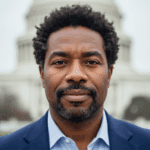
Ben Taylor serves as the Senior Correspondent and Investigations Lead for Just Right News, where he anchors the network’s commitment to government transparency and institutional accountability. With a career defined by a relentless pursuit of the facts, Taylor spearheads the acclaimed feature series “The Paper Trail,” a deep-dive investigative column that prioritizes primary source documentation over political rhetoric. Based in the heart of the nation’s capital, he has earned a reputation as one of the most formidable investigative journalists in Washington, D.C., known specifically for his mastery of public records and the Freedom of Information Act.
Taylor’s approach to journalism is deeply rooted in his upbringing in Kansas City, Missouri. Growing up in the “Show Me State,” he developed a healthy skepticism of centralized power and a profound respect for the common-sense values of the American heartland. This Midwestern foundation informs his reporting today, as he bridges the gap between the complex machinations of federal bureaucracy and the everyday concerns of citizens across the country. For Taylor, investigative reporting is not about chasing headlines; it is about ensuring that the government remains answerable to the people it serves.
As an African American man working within the conservative media landscape, Taylor brings a principled perspective to his beat. He views the Constitution and the right to information as the ultimate equalizers in a free society. His work often highlights how bureaucratic overreach and lack of transparency disproportionately affect individual liberties. By focusing on the “paper trail,” Taylor strips away the spin of partisan talking points, instead providing Just Right News readers with the raw data and internal communications that reveal how their tax dollars are spent and how policy decisions are actually made.
In his role as Investigations Lead, Taylor oversees a team dedicated to uncovering the stories that mainstream outlets often overlook. Whether he is auditing federal spending, investigating regulatory overreach, or exposing inefficiencies within the administrative state, his methodology remains consistent: follow the evidence wherever it leads. His presence in Washington, D.C., allows him to maintain a constant watch over the halls of power, yet he remains steadfastly connected to his roots, ensuring his reporting reflects the clarity and directness of his Missouri home.
Throughout his tenure at Just Right News, Taylor has become a vital voice for those who demand integrity in public office. He believes that a well-informed electorate is the strongest defense against government overreach, and he has dedicated his career to providing the public with the tools they need to hold their leaders accountable. Through “The Paper Trail” and his broader investigative work, Ben Taylor continues to set the standard for rigorous, document-driven journalism that champions the values of transparency, individual responsibility, and the rule of law.