

Federal authorities will maintain a support role in the Nancy Guthrie disappearance as investigators confirm multiple ransom notes were fabricated, highlighting jurisdictional friction between the FBI and local law enforcement.
The Federal Bureau of Investigation has formally declined to take the lead in the disappearance of Nancy Guthrie, opting instead to remain in a support capacity to state and local authorities. The decision, confirmed by Attorney General Todd Blanche on August 17, 2026, comes as federal investigators determined that all widely reported ransom communications in the case were fraudulent. The case, which involves the missing mother of television personality Savannah Guthrie, has become a focal point for questions regarding jurisdictional boundaries and the efficiency of the administrative state.
Blanche stated during national television interviews that a “sharp elbows” federal takeover of the Guthrie case is not necessarily the right move, despite the high-profile nature of the disappearance. The Attorney General emphasized that while the FBI is providing significant manpower and forensic support, he has no substantive public updates to offer regarding her whereabouts. This stance aligns with recent disclosures from FBI Director Kash Patel, who noted that approximately 150 agents and analysts are currently assigned to the Tucson-based investigation. However, Patel also revealed that local authorities initially kept federal agents out of the investigation for four days, a delay that transparency advocates argue may have impacted the early collection of critical evidence.
Internal records and investigative summaries indicate that the focus has shifted away from a kidnapping scenario after three separate messages were debunked. These included two early ransom notes and a later communication claiming to have video evidence of the victim and her abductors. Federal investigators now categorize these as hoaxes, which has complicated the search for Guthrie, who vanished from her Arizona home six months ago. The lack of credible leads has increased pressure on the Department of Justice to justify its resource allocation as the case remains under state control.
Beyond the Guthrie investigation, the federal government is facing a series of accountability challenges across multiple agencies. On August 16, 2026, Attorney General Blanche declined to commit to acting independently of President Trump, raising questions about the future of non-partisan law enforcement. Simultaneously, the U.S. Navy is navigating its own internal crises. Leadership recently met with approximately 200 family members of USS Abraham Lincoln sailors to address a surge in mental health and self-harm concerns. Senate Democrats have pressed Secretary of Defense Pete Hegseth for records regarding attempted suicides aboard the vessel, which has been deployed since November 2025.
In the realm of public health and surveillance, new records are surfacing that challenge existing government pledges. Senator Bill Cassidy recently accused HHS Secretary Robert F. Kennedy Jr. of breaking a commitment not to alter the childhood vaccine schedule, following an executive order from President Trump seeking to do just that. Meanwhile, the emergence of the “HaveIBeenFlocked” database has revealed 4.6 million license plate records tied to 242 million searches by law enforcement using Flock cameras. This massive pool of surveillance data, often collected without explicit public audits, highlights a growing need for FOIA-driven oversight into how private-sector technology is integrated into local policing.
Finally, the corporate sector is seeing a tightening of transparency requirements through international and domestic litigation. Apple recently agreed to legally binding changes to its App Tracking Transparency protocols following a multi-year investigation by Germany’s Bundeskartellamt. The agreement includes seven years of trustee monitoring to ensure Apple’s own services do not receive preferential treatment over third-party applications. This regulatory shift coincides with U.S. court orders demanding Apple submit detailed payment fee plans within narrow 24-hour windows, expanding the volume of discoverable records in ongoing antitrust litigation that could shape the future of digital privacy and competition.
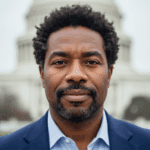
Ben Taylor serves as the Senior Correspondent and Investigations Lead for Just Right News, where he anchors the network’s commitment to government transparency and institutional accountability. With a career defined by a relentless pursuit of the facts, Taylor spearheads the acclaimed feature series “The Paper Trail,” a deep-dive investigative column that prioritizes primary source documentation over political rhetoric. Based in the heart of the nation’s capital, he has earned a reputation as one of the most formidable investigative journalists in Washington, D.C., known specifically for his mastery of public records and the Freedom of Information Act.
Taylor’s approach to journalism is deeply rooted in his upbringing in Kansas City, Missouri. Growing up in the “Show Me State,” he developed a healthy skepticism of centralized power and a profound respect for the common-sense values of the American heartland. This Midwestern foundation informs his reporting today, as he bridges the gap between the complex machinations of federal bureaucracy and the everyday concerns of citizens across the country. For Taylor, investigative reporting is not about chasing headlines; it is about ensuring that the government remains answerable to the people it serves.
As an African American man working within the conservative media landscape, Taylor brings a principled perspective to his beat. He views the Constitution and the right to information as the ultimate equalizers in a free society. His work often highlights how bureaucratic overreach and lack of transparency disproportionately affect individual liberties. By focusing on the “paper trail,” Taylor strips away the spin of partisan talking points, instead providing Just Right News readers with the raw data and internal communications that reveal how their tax dollars are spent and how policy decisions are actually made.
In his role as Investigations Lead, Taylor oversees a team dedicated to uncovering the stories that mainstream outlets often overlook. Whether he is auditing federal spending, investigating regulatory overreach, or exposing inefficiencies within the administrative state, his methodology remains consistent: follow the evidence wherever it leads. His presence in Washington, D.C., allows him to maintain a constant watch over the halls of power, yet he remains steadfastly connected to his roots, ensuring his reporting reflects the clarity and directness of his Missouri home.
Throughout his tenure at Just Right News, Taylor has become a vital voice for those who demand integrity in public office. He believes that a well-informed electorate is the strongest defense against government overreach, and he has dedicated his career to providing the public with the tools they need to hold their leaders accountable. Through “The Paper Trail” and his broader investigative work, Ben Taylor continues to set the standard for rigorous, document-driven journalism that champions the values of transparency, individual responsibility, and the rule of law.