

While Philadelphia celebrates microgrants and declining crime, a tragic shooting in a Lexington park underscores the fragile nature of community safety and local resilience.
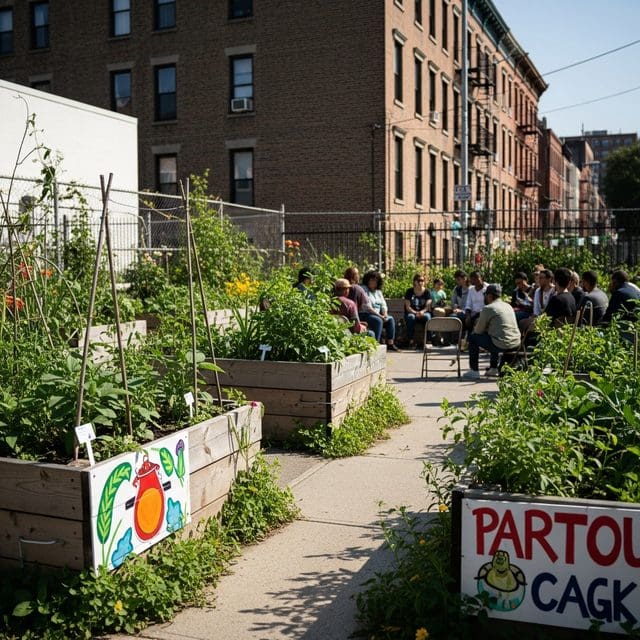
In the heart of North Philadelphia, the North Philadelphia Peace Park stands as a testament to what local hands can build when given modest support. On August 10, 2026, Philadelphia District Attorney Larry Krasner distributed $240,000 in violence-prevention microgrants to twenty-six neighborhood organizations. For groups like the North Philly Project, these funds are the lifeblood of youth programming and community beautification efforts that officials credit with a “59 consecutive months” decline in violent crime. The framing is one of hope for a city weary of headlines dominated by sirens.
Yet, the reality on the ground remains a complex mosaic of progress and pain. Even as the city celebrates these small-scale victories, the streets tell a different story. In early August, a father of four was fatally shot in his car, leaving a family searching for answers that policy papers cannot provide. A cluster of separate incidents near Temple University Hospital and West Clementine Street served as a grim reminder that for many residents, the statistical decline feels distant from the immediate fear of a Tuesday night. Shootings in Olney and Tioga, including one that left a man dead and two women injured, underscore the persistent volatility that microgrants alone struggle to extinguish.
Six hundred miles to the southwest, Lexington, Kentucky, is grappling with its own version of this struggle. Charles Young Park, a downtown green space intended for recreation, became a scene of chaos on the evening of August 15. Five people were shot, including a 4-year-old and a 14-year-old. The death of one victim and the life-threatening injuries sustained by the survivors have cast a long shadow over the city’s efforts to revitalize its public spaces. Police Chief Lawrence Weathers has promised support, yet the lack of immediate arrests as of August 16 leaves a community on edge, even as officials maintain there is no ongoing public threat.
Lexington officials have responded not with retreat, but with a renewed focus on the “Discover Great Places + Green Spaces” master plan. Throughout August, the Parks and Recreation department is hosting community conversations, betting that engagement is the only way to reclaim the safety of their parks. This local resilience is tested further by economic stressors, as over 400 apartments in the Cardinal Valley neighborhood head to auction following a $50 million fraud case, threatening the housing stability of the city’s working class.
These local stories reflect a broader national trend identified in recent economic data: a K-shaped recovery where discretionary spending masks the constrained demand of lower-income families. While wealthy Americans drive travel and the Dallas Cowboys Cheerleaders perform with Megan Moroney in a display of Texas sports culture, the families of the USS Abraham Lincoln meet with Navy leadership to discuss the mental health toll of Middle East deployments. Whether it is the $500,000 Duke Energy invested in North Carolina microgrants or the reopening of the Strait of Hormuz to stabilize oil prices, the common thread is a reliance on local institutions to buffer the shocks of a volatile world.
In the end, the strength of these communities is found in the individuals who refuse to let tragedy define their neighborhoods. From the peace gardeners in Philadelphia to the park planners in Lexington, the American spirit remains rooted in the belief that local control and personal responsibility are the most effective tools against the encroaching shadows of violence and economic uncertainty. They are the ones bridging the gap between national policy narratives and the lived experiences of the working class.

Ethan Blake serves as a Senior Correspondent for Just Right News, where he specializes in Longform Narrative and Public Understanding. In an era of rapid-fire headlines and fleeting soundbites, Ethan’s work stands as a testament to the power of deep-dive reporting and the importance of contextualizing the complex issues facing the nation today. His approach is rooted in the belief that the most profound truths are often found in the lived experiences of individuals rather than the abstract theories of distant policymakers.
Growing up in Providence, Rhode Island, Ethan developed an early appreciation for the historical and cultural threads that weave the American fabric together. Providence, a city defined by its industrial heritage and its blend of traditional neighborhoods, provided him with a front-row seat to the challenges and triumphs of the American working class. This upbringing instilled in him a respect for the “common sense” values of hard work, community loyalty, and the preservation of local institutions. He learned early on that behind every economic statistic or legislative debate, there are real families and neighborhoods navigating the consequences of change.
This foundational perspective is the driving force behind his signature feature series, “Lives Behind the Systems.” Through this series, Ethan explores the intersection of individual agency and institutional structure. Whether he is documenting the impact of federal land-use policies on rural families or examining how shifting educational standards affect local school boards, Ethan’s work prioritizes the human element. He seeks to uncover how large-scale systems—be they governmental, economic, or social—affect the daily lives of citizens, often advocating for a return to local control and personal responsibility.
Now based in Portland, Maine, Ethan draws significant inspiration from the rugged independence and self-reliance that define the region. The coastal landscape and the resilient spirit of Maine’s communities serve as a constant reminder of the importance of individual liberty and the strength found in decentralized power. Living and working outside the traditional media hubs allows Ethan to maintain a grounded perspective, ensuring his reporting remains untethered from the echo chambers of the major metropolitan centers. This geographic distance provides him with the clarity needed to translate complex national narratives into stories that resonate with the heart of the country.
At Just Right News, Ethan’s beat is more than just a professional assignment; it is a mission to foster a more informed and engaged citizenry. He believes that a free society depends on the public’s ability to understand the mechanisms of power and the value of traditional American principles. His longform narratives do not merely report the news; they provide a roadmap for understanding the cultural and political shifts of the modern era through a lens of skepticism toward centralized authority and a deep respect for the individual.
Through his meticulous research and narrative craftsmanship, Ethan Blake continues to bridge the gap between policy and the public. His work remains a vital resource for those who seek a deeper understanding of the systems that shape our world and the enduring spirit of the people who live within them.