

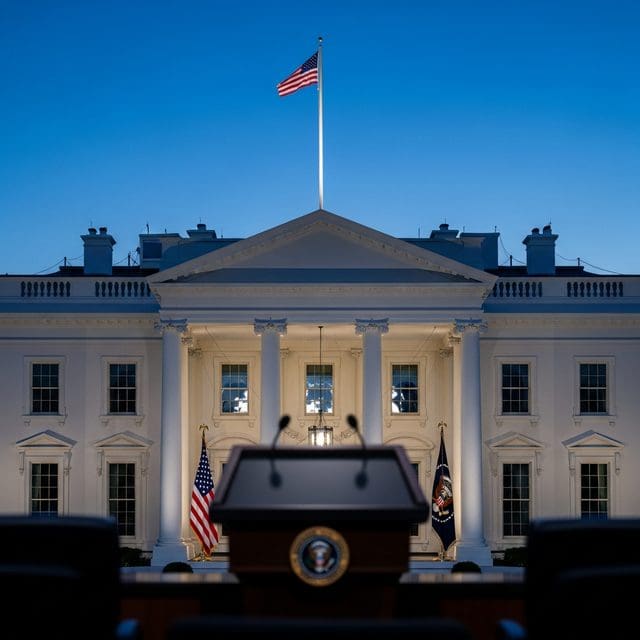
Press Secretary Karoline Leavitt exits for an outside advisory role as the Justice Department allows a foundational National Firearms Act provision to lapse following a Texas court ruling.
The White House communications apparatus and the Department of Justice are undergoing a dual recalibration as the administration prepares for the 2026 midterm elections. Press Secretary Karoline Leavitt, the youngest individual to ever hold the position, will depart her official role at the end of August. President Trump announced the move on August 12, stating Leavitt will transition to a senior outside advisory role to focus on the broader MAGA movement and his political operation. This shift allows a key loyalist to operate outside the constraints of the official White House structure while remaining an influential voice within the Republican Party.
Leavitt’s departure leaves the White House without a formal spokesperson during a period of heightened administrative activity and legislative friction. While the President characterized the move as a personal decision for Leavitt to spend time with her young children, the timing is notable. No successor has been named, though Cabinet secretaries who previously covered Leavitt’s maternity leave are expected to fill the void temporarily. The administration is currently managing a complex portfolio, including a controversial childhood vaccine order and ongoing executive privilege claims, making the loss of a trusted, aggressive public face a significant hurdle for the White House press office.
Parallel to this personnel shift, the Justice Department has executed a significant policy retreat regarding federal firearms regulation. Following a Texas court ruling, the DOJ allowed a 12:01 a.m. deadline to pass without seeking a stay on a key permitting requirement of the National Firearms Act. This decision effectively pauses federal regulation of short-barreled firearms and suppressors, a move long sought by Second Amendment advocates and Republican lawmakers. While the DOJ retains 52 days to file an appeal, the decision not to seek an immediate stay suggests a provisional victory for constitutionalists who view the Prohibition-era statute as an example of bureaucratic overreach. Congressional Republicans have already begun framing the lapse as a successful restoration of Second Amendment rights.
Further complicating the administration’s legal landscape is a new lawsuit filed by The Intercept and the Freedom of the Press Foundation. The suit challenges the White House’s use of Truth Social’s “Truth API,” which charges between $60,000 and $100,000 per month for early access to posts from the President and other high-profile accounts. Plaintiffs seek to block the White House from making official announcements exclusively on the platform while the paid feed exists, raising concerns regarding separation-of-powers and market integrity. This follows recent calls from Democratic Senators Elizabeth Warren and Adam Schiff for the SEC to examine whether the service undermines market fairness while enriching insiders.
These developments occur against a backdrop of worsening fiscal projections and domestic labor unrest. On August 11, the Congressional Budget Office revised its fiscal year 2026 deficit projection to $2.1 trillion, a $200 billion increase from previous estimates. Simultaneously, the private sector is facing disruptions as more than 190 Teamsters at IKEA’s Joliet distribution center struck on August 12, demanding protections against automation. In the states, the political landscape is shifting as Milwaukee County Executive David Crowley won the Wisconsin Democratic gubernatorial primary, while Minnesota state Rep. Lisa Demuth secured the Republican nomination, defeating a candidate endorsed by the President.
As the administration navigates these legal, fiscal, and personnel shifts, the rising federal deficit and the retreat from long-standing gun regulations remain central to the national debate. The choice to move Leavitt to an outside role suggests the President is prioritizing the upcoming midterm strategy, even as the Justice Department’s regulatory shifts and the Truth Social litigation create new fronts in the ongoing battle over executive power and administrative transparency.

Miles Harrington serves as the Senior Correspondent for Federal Systems & Executive Power at Just Right News, where he brings a disciplined, constitutionalist lens to the inner workings of the American government. With a focus on the mechanics of the federal bureaucracy and the limits of executive authority, Harrington has established himself as a vital voice for readers who value transparency, accountability, and the preservation of the separation of powers.
A native of Richmond, Virginia, Harrington’s perspective is deeply rooted in the traditions of the Old Dominion. Growing up in a city defined by its historical significance and its role as a center of American jurisprudence, he developed an early appreciation for the foundational principles of the Republic. His upbringing in Richmond—a place where the legacy of the Founding Fathers is woven into the landscape—instilled in him a belief that the federal government should remain within its constitutional bounds. This background informs his skepticism of centralized overreach and his commitment to reporting on the ways in which the administrative state impacts the lives of everyday citizens.
In his current role, Harrington specializes in the complexities of federal systems. He doesn’t just report on the headlines of the day; he digs into the structural shifts within the executive branch that often go unnoticed by the mainstream press. Whether he is analyzing the implications of a new federal regulation or investigating the expansion of agency jurisdiction, his work is characterized by a rigorous adherence to the facts and a dedication to the rule of law.
Harrington is perhaps best known for his signature feature series, “How Washington Works.” Through this ongoing project, he demystifies the often-opaque processes of the nation’s capital, pulling back the curtain on the “Deep State” and the unelected officials who wield significant influence over national policy. By breaking down complex legislative maneuvers and executive orders, he empowers Just Right News readers to understand the true levers of power in Washington. His reporting serves as a necessary check on the federal government, ensuring that the actions of those in power are held up to the light of public scrutiny.
Now based in Washington, D.C., Harrington operates at the epicenter of the political world, yet he remains intentionally distanced from the “Beltway bubble.” His proximity to the halls of power allows him to maintain a robust network of sources across the federal landscape, but his heart remains in the principled conservatism of his Virginia roots. He views his role not merely as a reporter, but as a steward of the public trust, dedicated to providing the clarity and context that conservative voters need to navigate an increasingly complex political environment.
Through his sharp analysis and unwavering commitment to the truth, Miles Harrington continues to be a cornerstone of the Just Right News team. His work ensures that the principles of limited government and executive restraint remain at the forefront of the national conversation, providing a crucial service to those who believe in a government that is truly of, by, and for the people.