

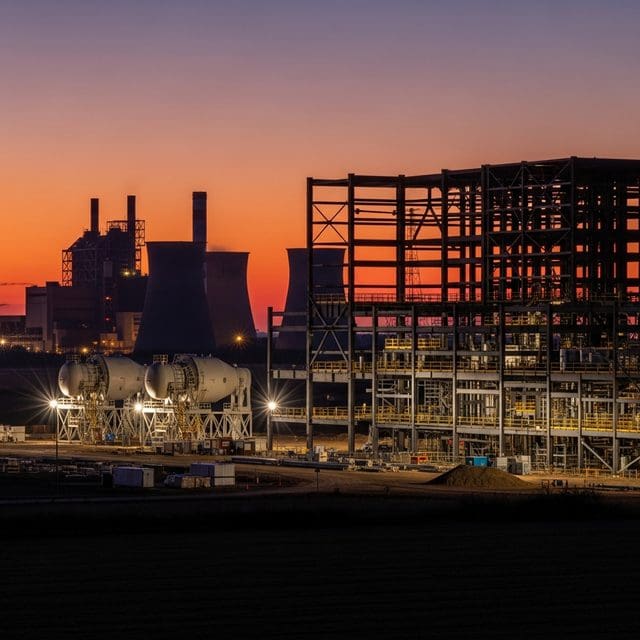
SpaceX’s massive new Texas semiconductor facility will bypass the state grid in favor of a 20-gigawatt natural gas and battery complex to ensure industrial-scale reliability for AI compute.
The industrial landscape of Texas is shifting as SpaceX and Tesla formalize plans for “Terafab,” a massive semiconductor manufacturing complex in Grimes County. The project, sited at the former Gibbons Creek coal plant, represents a pivot toward radical energy self-sufficiency. Rather than relying on the Electric Reliability Council of Texas (ERCOT) grid or Tesla’s own solar technology, the facility will be powered by a dedicated 15-20 gigawatt natural gas-fired power plant complex supported by large-scale battery arrays. This decision underscores a growing reality in the tech sector: the energy density and reliability required for high-output AI compute manufacturing currently exceed the capabilities of intermittent renewable sources.
The Terafab is designed to produce over one terawatt of AI compute per year, requiring a constant, high-load power profile that natural gas provides more cost-effectively than solar-plus-storage at this scale. To support these operations, SpaceX-linked Lone Star Mineral Development is already developing the “Starpipe” natural gas transmission line in Cameron County, signaling a move toward a fully vertically integrated energy supply chain. This infrastructure includes on-site liquefaction and potential upstream gas production, allowing the company to insulate itself from the price volatility and physical constraints of the broader commercial energy market.
State officials have signaled strong support for this market-driven approach. The project has been certified under the Jobs, Energy, Technology and Innovation (JETI) program and awarded a $30 million Texas Enterprise Fund grant. By repurposing the Gibbons Creek site, the project utilizes existing cooling-water infrastructure from the reservoir, avoiding additional strain on local groundwater—a key concern for local officials who approved the tax-abatement package in a 4-1 vote. Projections suggest the site will create 3,000 construction jobs and 1,800 permanent roles, providing a significant boost to a manufacturing sector that showed early job growth momentum in August 2026.
However, the scale of the investment is raising questions among market analysts regarding capital structure. SpaceX plans $64 billion in capital spending for 2026, with the Terafab project potentially reaching $119 billion across multiple phases. While securing a dedicated power supply mitigates the risk of grid volatility, the massive capital expenditure required for private utility-scale infrastructure could pressure free cash flow and gross margins. This comes at a time when SpaceX insiders became eligible to sell up to 911.5 million shares on August 6, 2026, though a significant portion remains locked up due to stock performance concerns.
As U.S. manufacturing shows signs of momentum aided by AI investment and a tightening labor market—with jobless claims reaching their lowest level since 1969—the Terafab project serves as a bellwether for industrial energy policy. It demonstrates that for the next generation of American manufacturing, energy independence is increasingly defined by the ability to generate reliable, on-site power. The reliance on gas over solar at a flagship Tesla-linked site highlights the pragmatic trade-offs being made to ensure that the 100 to 200 billion custom chips planned for annual production are not subject to the intermittency of the weather or the regulatory hurdles of the state grid.
Ultimately, the Grimes County development reflects a broader trend of large industrial loads moving to the grid edge. By “bringing their own power,” major tech players are effectively becoming their own utilities. This shift allows for the rapid scaling of AI workloads without waiting for grid upgrades, though it challenges the prevailing narrative that the transition to high-tech manufacturing will be powered exclusively by renewable energy. For the American taxpayer and the energy market at large, the Terafab stands as a massive bet on the continued necessity of natural gas in the age of artificial intelligence.

Mark Davis serves as the Senior Correspondent for Energy, Climate, and Resource Economics at Just Right News. In an era where the conversation around the environment is often dominated by alarmism and top-down mandates, Mark provides a vital, market-oriented perspective on the complex forces shaping our world. As the lead voice behind the acclaimed feature series “Power and the Planet,” he explores the intersection of environmental policy, global energy markets, and the fundamental economic principles that sustain modern civilization.
Mark’s pragmatic approach to resource management was forged in the high desert of his hometown, Albuquerque, New Mexico. Growing up in a region defined by both its breathtaking natural beauty and its rugged, resource-dependent landscape, he developed an early appreciation for the delicate balance between conservation and utilization. New Mexico’s unique position as a hub for both traditional energy production and cutting-edge scientific research provided Mark with a front-row seat to the evolution of the American energy sector. This upbringing instilled in him a deep-seated belief that true environmental stewardship is inseparable from economic prosperity and technological innovation.
Now based in Boulder, Colorado, Mark operates from the heart of the nation’s climate research community. While Boulder is often seen as a bastion of environmental idealism, Mark utilizes his post to provide a necessary counterweight, grounded in the realities of resource economics. He understands that energy policy does not exist in a vacuum; it has tangible consequences for the American taxpayer, the stability of the national power grid, and the strength of the domestic manufacturing sector. By reporting from the front lines of the climate debate, he is able to challenge prevailing narratives with hard data and a commitment to the principles of the free market.
Throughout his tenure at Just Right News, Mark has distinguished himself by focusing on the “Resource Economics” aspect of his beat. He frequently highlights the hidden costs of rapid energy transitions and advocates for an “all-of-the-above” energy strategy that prioritizes American energy independence. His work often shines a light on the geopolitical implications of resource scarcity, arguing that a secure nation must first be an energy-secure nation. Whether he is analyzing the impact of federal land-use regulations or investigating the supply chains required for new technologies, Mark remains focused on how policy decisions affect the lives and livelihoods of everyday citizens.
In “Power and the Planet,” Mark continues to bridge the gap between complex scientific concepts and the economic realities facing the country. He rejects the false choice between a healthy environment and a thriving economy, instead seeking out solutions that leverage American ingenuity and private-sector competition. For Mark, reporting on the climate is not about following the latest trends, but about ensuring that the conversation remains tethered to the foundational values of liberty, property rights, and fiscal responsibility. His contributions ensure that Just Right News readers receive a comprehensive, clear-eyed view of the challenges and opportunities defining the future of our planet.