

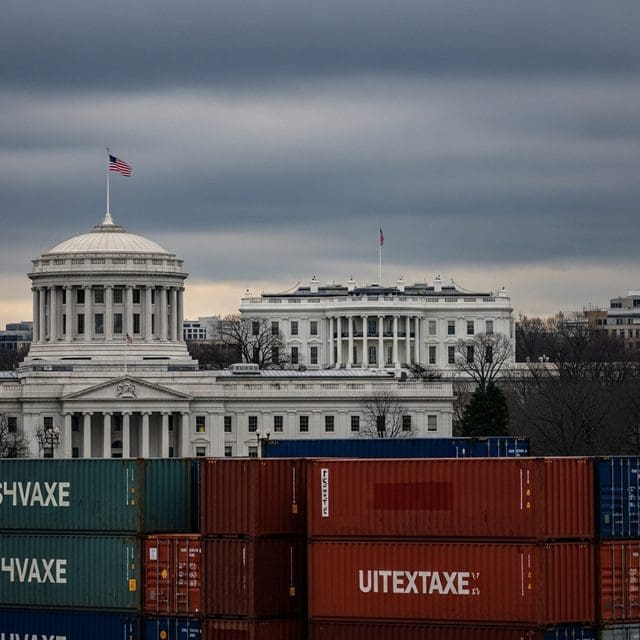
The Trump administration has launched a sweeping 10% to 12.5% tariff regime on 60 nations while maintaining a ‘locked and loaded’ military posture toward Iran.
The executive branch moved to fundamentally restructure American trade and defense priorities this week, implementing a massive new tariff regime while signaling a potential escalation in the Middle East. At 12:01 a.m. EDT on Friday, the administration enacted Section 301 tariffs ranging from 10% to 12.5% on goods from 60 trading partners. This action, framed by the White House as a necessary correction for global failures to ban forced labor, effectively replaces the previous 10% temporary global tariff and covers an estimated 99.4% of all U.S. imports.
Under the specific terms of a July 23 White House memorandum, the Trade Representative is directed to apply a 10% duty to a list of major economies including Canada, Mexico, the European Union, the United Kingdom, India, Indonesia, Pakistan, and several others. All other investigated economies face a 12.5% rate. To prevent immediate domestic shortages in critical sectors, the administration has exempted oil and gas, fertilizer, certain foodstuffs, autos, steel, aluminum, and critical minerals. Cargo already in transit remains exempt until July 28. Despite these carve-outs, global markets have reacted sharply, with Brent crude climbing toward $95 per barrel and U.S. Treasury yields rising as investors weigh the inflationary impact.
On the legislative front, Senate Finance Chair Ron Wyden has already challenged the administration’s logic, calling the forced-labor tariff plan ill-designed to combat modern slavery. This skepticism from the halls of Congress mirrors a broader tension between the executive and legislative branches. Senate Majority Leader John Thune stated on July 23 that the Senate would move to add Iran sanctions provisions to an existing Russia sanctions bill, a move intended to exert legislative control over a rapidly shifting foreign policy landscape.
President Trump, speaking on the dual pressures of trade and war, indicated that while he has not yet authorized a massive military strike against Iran, the United States remains locked and loaded. The President noted that Tehran is currently showing its most serious commitment to negotiations yet, presenting what he described as two ways forward: continued military action or a diplomatic agreement. In a strategic attempt to isolate Tehran, the President publicly warned Moscow and Beijing against providing military aid, claiming that Vladimir Putin and Xi Jinping have offered personal assurances that they will not supply arms to the Iranian regime.
Within the Republican caucus, however, the mood is increasingly apprehensive. Senate Republican Policy Committee Chair Shelley Moore Capito noted that the American public is growing weary of the Iran conflict, citing rising U.S. casualties and the political risk posed by high gas prices ahead of the midterm elections. These concerns are exacerbated by a public rift between the President and Leader Thune over the Senate’s inability to pass the SAVE America Act and emergency Pentagon funding. The President has expressed that his patience with the Senate leadership is running out.
Adding to the atmosphere of administrative volatility, the Secret Service has opened an investigation into an agent assigned to Vice President Vance’s detail. The agent is accused of leaking sensitive operational and information security details, a breach that comes at a time of heightened security following the rescheduled White House Correspondents’ Dinner. That event, held Friday at the Waldorf Astoria, was itself a reminder of recent political violence, having been postponed from April following an assassination attempt on the President. While the President used the dinner to call for resilience and honor the officers who stopped the April gunman, the underlying policy disputes over trade, science, and war continue to define the current Washington environment.

Miles Harrington serves as the Senior Correspondent for Federal Systems & Executive Power at Just Right News, where he brings a disciplined, constitutionalist lens to the inner workings of the American government. With a focus on the mechanics of the federal bureaucracy and the limits of executive authority, Harrington has established himself as a vital voice for readers who value transparency, accountability, and the preservation of the separation of powers.
A native of Richmond, Virginia, Harrington’s perspective is deeply rooted in the traditions of the Old Dominion. Growing up in a city defined by its historical significance and its role as a center of American jurisprudence, he developed an early appreciation for the foundational principles of the Republic. His upbringing in Richmond—a place where the legacy of the Founding Fathers is woven into the landscape—instilled in him a belief that the federal government should remain within its constitutional bounds. This background informs his skepticism of centralized overreach and his commitment to reporting on the ways in which the administrative state impacts the lives of everyday citizens.
In his current role, Harrington specializes in the complexities of federal systems. He doesn’t just report on the headlines of the day; he digs into the structural shifts within the executive branch that often go unnoticed by the mainstream press. Whether he is analyzing the implications of a new federal regulation or investigating the expansion of agency jurisdiction, his work is characterized by a rigorous adherence to the facts and a dedication to the rule of law.
Harrington is perhaps best known for his signature feature series, “How Washington Works.” Through this ongoing project, he demystifies the often-opaque processes of the nation’s capital, pulling back the curtain on the “Deep State” and the unelected officials who wield significant influence over national policy. By breaking down complex legislative maneuvers and executive orders, he empowers Just Right News readers to understand the true levers of power in Washington. His reporting serves as a necessary check on the federal government, ensuring that the actions of those in power are held up to the light of public scrutiny.
Now based in Washington, D.C., Harrington operates at the epicenter of the political world, yet he remains intentionally distanced from the “Beltway bubble.” His proximity to the halls of power allows him to maintain a robust network of sources across the federal landscape, but his heart remains in the principled conservatism of his Virginia roots. He views his role not merely as a reporter, but as a steward of the public trust, dedicated to providing the clarity and context that conservative voters need to navigate an increasingly complex political environment.
Through his sharp analysis and unwavering commitment to the truth, Miles Harrington continues to be a cornerstone of the Just Right News team. His work ensures that the principles of limited government and executive restraint remain at the forefront of the national conversation, providing a crucial service to those who believe in a government that is truly of, by, and for the people.