

The $111 billion Paramount-Warner Bros. Discovery merger faces intense scrutiny as ethics scandals at the FCC and DOJ confirmation hearings reveal deep institutional ties to corporate giants.
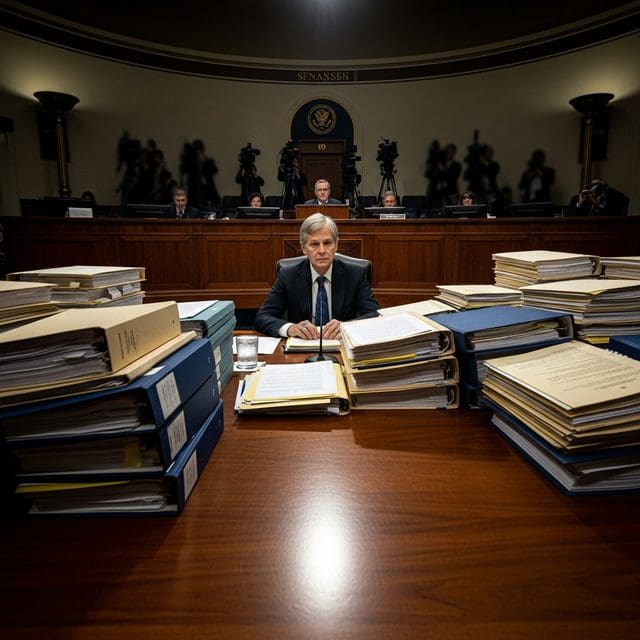
The pillars of American media competition are trembling under the weight of a $111 billion consolidation effort that critics argue serves corporate insiders at the expense of the public interest. The proposed merger between Paramount and Warner Bros. Discovery, already cleared by the Department of Justice, has become a central point of contention in the Senate Judiciary confirmation hearings for Attorney General nominee Todd Blanche. On July 15, Blanche admitted to his role in the DOJ decision to greenlight the massive acquisition, defending the finding that the deal would not harm consumers. His acknowledgment that he was “part of” the decision-making process has fueled intense skepticism regarding the independence of the DOJ’s Antitrust Division under current leadership.
This administrative clearance stands in stark contrast to the growing resistance from state-level law enforcement. On July 13, twelve Democratic state attorneys general filed a lawsuit to block the acquisition, arguing that the Trump administration’s DOJ failed to protect the marketplace by offering unconditioned approval. The litigants contend that merging two of the most significant libraries in film, television, and streaming will inevitably lead to higher prices for families and fewer opportunities for independent creators who rely on a competitive landscape to sell their work. By failing to require divestitures or behavioral remedies, the DOJ has essentially signaled that the era of aggressive antitrust enforcement has been replaced by a policy of corporate deference.
Simultaneously, the Federal Communications Commission (FCC) is embroiled in an ethics scandal that threatens the impartiality of the remaining regulatory hurdles. Reports surfaced on July 15 alleging that FCC officials, including Brendan Carr, accepted thousands of dollars in hospitality and gifts from Paramount while the merger was pending. The gifts, which reportedly included luxury box access and tickets to the Kennedy Center gala, have prompted urgent calls for recusal and potential DOJ investigations into violations of federal ethics rules. Industry watchdogs argue that such proximity between regulators and the entities they regulate creates an environment where market power is bought rather than earned.
The merger’s path is further complicated by national security and foreign investment concerns. Democratic senators are currently urging regulators to halt the proceedings until a comprehensive foreign investment review is completed. This creates a procedural paradox for Blanche, who, if confirmed as Attorney General, would likely chair the very review board tasked with scrutinizing a deal he has already helped approve at the DOJ. Critics argue this represents a significant conflict of interest, questioning whether an official who greenlit the antitrust portion of the deal can objectively assess the broader implications of foreign capital involvement in American media infrastructure.
While the DOJ has formally closed its investigation, the deal cannot be consummated without FCC approval. The emerging regulatory split highlights a deepening divide between federal agencies and state-level enforcers. While the DOJ appears satisfied with the $111 billion consolidation, the FCC remains a battlefield where ethics concerns and political pressure from the Senate could still derail the transaction. The involvement of high-ranking officials like Carr in gift-related controversies only adds to the public perception that the regulatory process is being steered by corporate influence rather than the rule of law.
For the American consumer, the stakes extend beyond the boardroom. As the DOJ and FCC navigate these ethical minefields, the fundamental question remains whether the government will prioritize the preservation of a free and open market or allow a handful of executives to gatekeep the nation’s cultural output. The outcome of the Paramount-Warner Bros. Discovery case will serve as a definitive marker for the future of antitrust enforcement in an era of unprecedented corporate concentration, testing whether the principles of competition can survive the weight of institutional overreach.

Greg Sanders serves as the Senior Correspondent for Corporate Power and Antitrust at Just Right News, where he brings a principled, conservative perspective to the complex intersection of big business, government regulation, and the American consumer. With a career dedicated to investigative depth and economic clarity, Greg has become a leading voice in examining how the consolidation of industry power impacts the foundational values of the free market and individual liberty.
Raised in Denver, Colorado, Greg’s reporting is deeply informed by the Western spirit of independence and a healthy skepticism of centralized authority. Growing up in the shadows of the Rockies, he witnessed firsthand the importance of local entrepreneurship and the vital role that small-medium enterprises play in sustaining vibrant communities. This upbringing instilled in him a belief that the American Dream is best preserved when the playing field remains level and when competition—rather than backroom deals between corporate lobbyists and federal regulators—dictates success. For Greg, the rugged individualism of his home state serves as a constant reminder that the economy should serve the people, not the other way around.
Now based in Chicago, Illinois, Greg operates from the heart of the nation’s industrial and financial crossroads. His location in the Midwest provides him with a unique vantage point to observe the real-world consequences of corporate overreach. From the boardrooms of the Loop to the manufacturing hubs that define the region, he tracks the movement of capital and the shifting tides of market influence. Chicago’s history as a center of trade and labor offers a rich backdrop for his work, allowing him to bridge the gap between high-level economic theory and the lived experiences of hardworking Americans who feel the squeeze of monopolistic practices.
At Just Right News, Greg’s beat focuses on the “new monopolies” and the rise of “woke” corporate culture. He argues that when corporations become too large, they often abandon their fiduciary duties to shareholders in favor of social engineering and political posturing. His reporting seeks to hold these “Titans” accountable, ensuring that the power of the purse is not used to silence dissent or bypass the democratic process. He is a firm advocate for the idea that true conservatism requires a vigilant defense of competition, preventing any single entity—public or private—from exerting undue control over the lives of citizens.
This mission is most clearly seen in his acclaimed feature series, “The Titans and the Toll.” In this ongoing project, Greg explores the human cost of market consolidation, from the erosion of consumer choice to the decline of local economies. Through rigorous analysis and boots-on-the-ground reporting, he documents how the concentration of power in sectors like tech, agriculture, and finance creates a “toll” paid by the average family.
Greg Sanders remains committed to the idea that a transparent, competitive market is the greatest engine for prosperity ever devised. Through his work at Just Right News, he continues to provide the essential oversight necessary to protect that engine from the encroaching influence of corporate giants and the bureaucratic structures that enable them.