

President Trump has declared the Iran ceasefire over following major U.S. airstrikes, while the House begins debating the FY 2027 defense budget and a rare Supreme Court rehearing on citizenship.
The executive branch and the 119th Congress moved toward a more assertive and confrontational posture this week as President Donald Trump declared an end to diplomatic restraint with Iran and signaled a renewed legal offensive against established citizenship norms. These developments coincide with the House of Representatives beginning deliberations on the National Defense Authorization Act (NDAA) for Fiscal Year 2027, a massive policy vehicle that will fund the very military operations currently expanding in the Middle East.
On July 8, the President stated that the interim ceasefire agreement with Iran is officially over, remarking that he no longer wishes to negotiate with Tehran and intends to “finish the job.” This rhetorical shift was immediately followed by significant kinetic action; U.S. Central Command launched strikes against approximately 90 military targets on July 9. The operation focused on degrading Iranian air defenses, missile and drone storage sites, and naval capabilities used to disrupt maritime traffic in the Strait of Hormuz. For constitutionalists, this escalation raises familiar questions regarding the War Powers Resolution and whether the administration will seek a formal authorization from Congress or continue to rely on existing executive authorities for prolonged engagements in the region.
Domestically, the President is testing the boundaries of judicial finality. Following a Supreme Court ruling that struck down an executive order regarding birthright citizenship, the President announced on July 9 his intent to petition the Court for a rehearing. While legal experts note that such requests are rarely granted, the move underscores a persistent executive-branch pressure on the judiciary. By keeping the citizenship debate active, the White House maintains a focus on immigration and nationality policy just as Congress begins negotiating the next cycle of national security appropriations and enforcement measures.
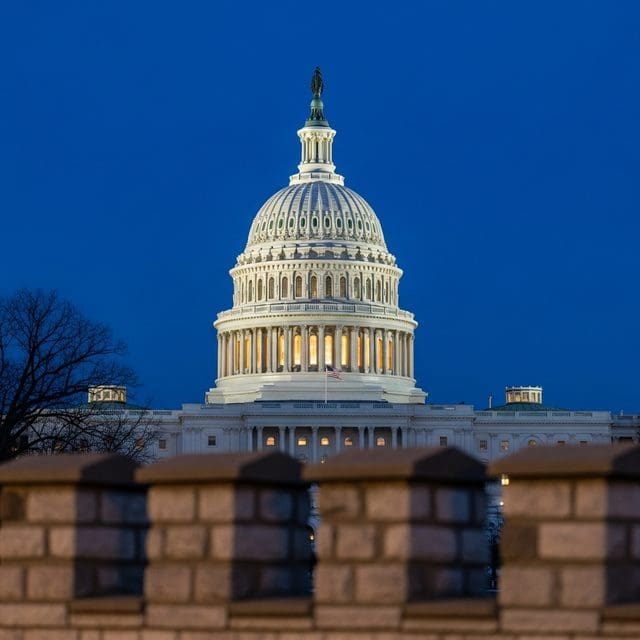
In the Capitol, House leadership has cleared the way for H.R. 8800, the NDAA for FY 2027. This legislation is the primary mechanism for setting military personnel levels and defense construction priorities. Given the recent strikes in Iran, the debate over this bill is expected to center on whether the current funding levels for Department of State programs and foreign operations, outlined in the companion bill H.R. 8595, are sufficient to support the administration’s more confrontational foreign policy. The House is also reviewing H. Res. 1383, which commemorates the anniversary of the Working Families Tax Cuts, signaling a dual focus on national security and domestic economic messaging.
Beyond defense, the House is addressing administrative transparency and social policy through several key measures. Among the items queued for consideration is a resolution directing the Committee on Ethics to preserve and publicly release records involving monetary settlements related to acts of sexual harassment. This move toward transparency comes as the political landscape shifts elsewhere; notably, Maine Democratic Senate nominee Graham Platner dropped out of his race on July 8 following sexual assault allegations, illustrating the heightened scrutiny on conduct within the federal system.
Finally, the legislative agenda includes H.R. 8884, a technical but vital measure to reauthorize demonstration authority for the Social Security disability insurance program. This allows the federal government to continue testing alternative benefit and work-incentive models. While these administrative adjustments proceed, the President’s recent return from Turkey on an older Air Force One jet—due to security concerns regarding a refurbished Qatari aircraft—serves as a reminder of the logistical and security complexities inherent in the modern executive branch. As the House moves these bills toward a vote, the intersection of military escalation abroad and legal challenges at home defines the current friction between the branches of government.

Miles Harrington serves as the Senior Correspondent for Federal Systems & Executive Power at Just Right News, where he brings a disciplined, constitutionalist lens to the inner workings of the American government. With a focus on the mechanics of the federal bureaucracy and the limits of executive authority, Harrington has established himself as a vital voice for readers who value transparency, accountability, and the preservation of the separation of powers.
A native of Richmond, Virginia, Harrington’s perspective is deeply rooted in the traditions of the Old Dominion. Growing up in a city defined by its historical significance and its role as a center of American jurisprudence, he developed an early appreciation for the foundational principles of the Republic. His upbringing in Richmond—a place where the legacy of the Founding Fathers is woven into the landscape—instilled in him a belief that the federal government should remain within its constitutional bounds. This background informs his skepticism of centralized overreach and his commitment to reporting on the ways in which the administrative state impacts the lives of everyday citizens.
In his current role, Harrington specializes in the complexities of federal systems. He doesn’t just report on the headlines of the day; he digs into the structural shifts within the executive branch that often go unnoticed by the mainstream press. Whether he is analyzing the implications of a new federal regulation or investigating the expansion of agency jurisdiction, his work is characterized by a rigorous adherence to the facts and a dedication to the rule of law.
Harrington is perhaps best known for his signature feature series, “How Washington Works.” Through this ongoing project, he demystifies the often-opaque processes of the nation’s capital, pulling back the curtain on the “Deep State” and the unelected officials who wield significant influence over national policy. By breaking down complex legislative maneuvers and executive orders, he empowers Just Right News readers to understand the true levers of power in Washington. His reporting serves as a necessary check on the federal government, ensuring that the actions of those in power are held up to the light of public scrutiny.
Now based in Washington, D.C., Harrington operates at the epicenter of the political world, yet he remains intentionally distanced from the “Beltway bubble.” His proximity to the halls of power allows him to maintain a robust network of sources across the federal landscape, but his heart remains in the principled conservatism of his Virginia roots. He views his role not merely as a reporter, but as a steward of the public trust, dedicated to providing the clarity and context that conservative voters need to navigate an increasingly complex political environment.
Through his sharp analysis and unwavering commitment to the truth, Miles Harrington continues to be a cornerstone of the Just Right News team. His work ensures that the principles of limited government and executive restraint remain at the forefront of the national conversation, providing a crucial service to those who believe in a government that is truly of, by, and for the people.