

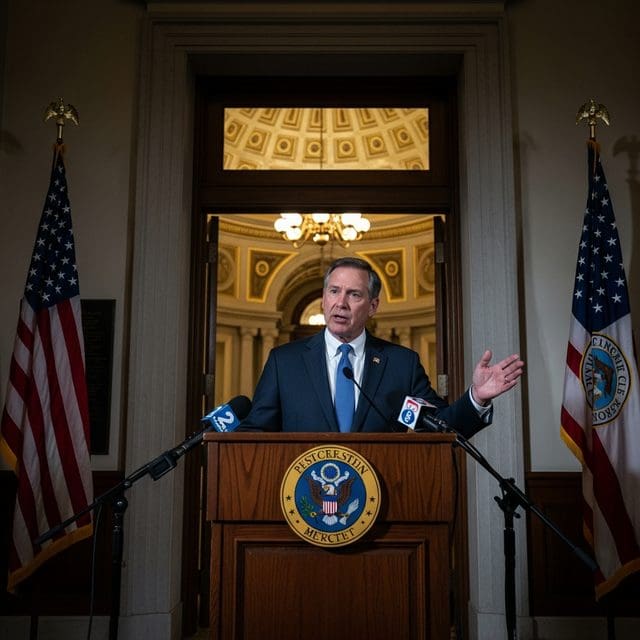
Governors and local leaders are reclaiming their roles as primary power brokers, navigating internal party fractures and economic pressures that test the limits of federalist cooperation.
The true pulse of a republic is rarely found in the grand halls of a national capital; rather, it beats within the statehouses where the Tenth Amendment is lived out daily. As we move through 2026, the ‘fifty laboratories of democracy’ are asserting their independence even as national party structures face internal upheaval. From the energy corridors of the South to the volatile political landscapes of Nigeria’s federated states, the tension between centralized dictates and local sovereignty has never been more apparent.
In Texas, the balance of state-level power is being tested by federal intervention. President Trump’s endorsement of Attorney General Ken Paxton over Senator John Cornyn has rattled the Republican establishment. This move represents a challenge to the traditional hierarchy of the Texas GOP. National observers fear such top-down interference in a state-level struggle could fracture the local base, potentially giving an opening to opposition forces in a historically safe conservative stronghold. It is a classic case of federalist friction occurring when national figures attempt to bypass organic state leadership.
Across the globe, the Nigerian experiment in federalism mirrors these American struggles. President Bola Tinubu, recently declared the winner of the APC primary with over 10.9 million votes, held a show-of-force meeting in Lagos with several governors. This gathering underscores that national power is ultimately a collection of state-level allegiances. However, the laboratory of local governance remains volatile. In Bauchi State, police are investigating attacks by suspected political thugs at a PDP event. These incidents of intra-party violence highlight high stakes where local disputes often carry more weight than national platforms.
Rivers State Governor Siminalayi Fubara provides a compelling study in state-level navigation. Despite the complexities of the primary season—including reports that he passed APC screening before a strategic withdrawal—Fubara has pivoted to a message of unity. In his recent Eid-el-Kabir address, he linked the values of compassion and sacrifice to the push for a better Rivers State. By focusing on reconciliation within his borders, Fubara is attempting to insulate his constituents from broader political rifts. This focus on local stability over national partisan warfare is a hallmark of principled state leadership.
Economic pressures are also forcing governors to act as independent agents. With the national average gasoline price hitting $4.55 per gallon as of May 24, 2026, driven by the Strait of Hormuz conflict, state leaders are not waiting for federal solutions. Louisiana Governor Jeff Landry has taken the extraordinary step of serving as a special envoy to Greenland, suggesting northern resources could relieve global oil pressure and reduce energy costs. This proactive approach demonstrates how the laboratories of power engage in creative problem-solving when federal policy remains stagnant.
Whether it is a governor protecting innovation through research at UC San Diego or a local police department maintaining order in Bauchi, the state remains the most vital unit of governance. The current political climate proves that while national figures may grab the headlines, it is the statehouse that holds the line for the constitutional order. As national parties fracture, the decentralization of power remains the surest safeguard for individual liberty and local stability.
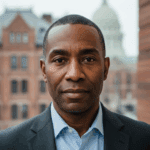
Dylan Brooks serves as the Senior Correspondent for Statehouses and Local Governance at Just Right News, where he brings a principled, constitutionalist lens to the often-overlooked machinery of state-level politics. As the lead voice behind the acclaimed feature series “Fifty Laboratories of Power,” Dylan has dedicated his career to the idea that the most impactful governance happens closest to home. His reporting consistently champions the Tenth Amendment, exploring how individual states can serve as testing grounds for innovative, conservative policy solutions that prioritize personal liberty and fiscal responsibility.
A native of Des Moines, Iowa, Dylan’s journalistic philosophy was forged in the heart of the American Midwest. Growing up in a community where local school board meetings and town halls were the bedrock of civic life, he developed a deep appreciation for the “retail politics” of the heartland. This upbringing instilled in him a fundamental belief that the American experiment is best preserved when power is decentralized. He carries the values of his Iowa roots into every assignment, maintaining a healthy skepticism of federal overreach and a steadfast commitment to the concerns of everyday citizens over the interests of the administrative state.
Now based in Madison, Wisconsin, Dylan operates from one of the nation’s most pivotal political battlegrounds. His location in a state capital known for its rigorous policy debates allows him to provide Just Right News readers with a front-row seat to the legislative process. From Madison, he tracks the ripple effects of statehouse decisions on local municipalities, ensuring that the connection between high-level policy and community impact is never lost. His work often highlights the success of conservative governors and legislatures in fostering economic growth, protecting parental rights, and securing the integrity of local institutions.
As an African American man in the conservative media landscape, Dylan offers a vital perspective on how limited government and free-market principles empower individuals and families. He frequently reports on how deregulation and school choice initiatives provide new avenues for success in underserved communities, challenging the monolithic narratives often presented by legacy media outlets. Dylan’s work is characterized by a commitment to the facts and a refusal to shy away from the complex realities of modern governance.
Throughout his tenure at Just Right News, Dylan has become a trusted authority for readers who value a rigorous, principled approach to the news. Whether he is dissecting a complex state budget or profiling a local grassroots movement, his goal remains the same: to provide the American public with the information they need to hold their local leaders accountable. By focusing on the “Fifty Laboratories of Power,” Dylan Brooks ensures that the vital work being done in statehouses across the country receives the national attention it deserves, always through a lens that respects the traditions and sovereignty of the American people.