

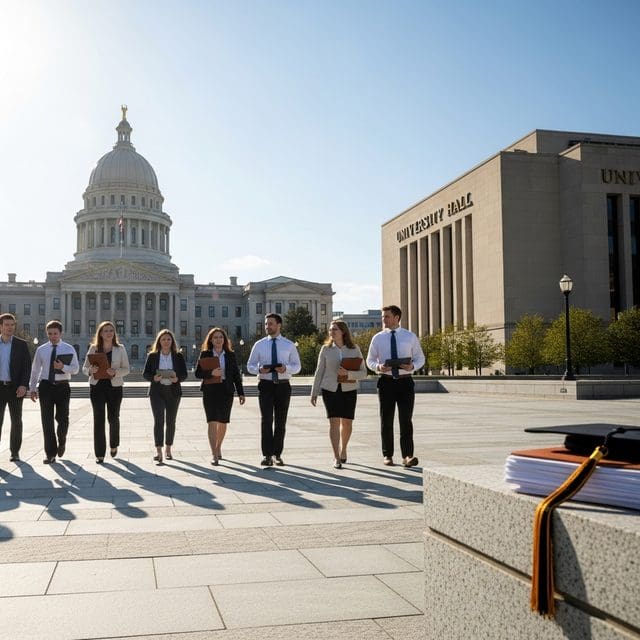
From New Jersey’s court delays to Utah’s DEI enforcement, American education is grappling with a return to merit-based standards and fiscal responsibility.
The landscape of American education is undergoing a necessary correction as institutions move away from administrative activism toward measurable outcomes and personal responsibility. This shift is visible in the legal and legislative arenas, where the push for merit and local control is meeting resistance from entrenched bureaucratic interests. Across the country, the focus is returning to the value of human capital and the removal of barriers that hinder individual achievement.
In New Jersey, the state Supreme Court recently declined to fast-track the long-running Latino Action Network v. State school segregation case. By sending the matter back for further fact-finding, the court signaled a cautious approach to top-down structural remedies. This ensures that any eventual changes to the state’s K-12 system are grounded in rigorous evidence rather than judicial impulse. This legal caution comes as New Jersey districts face increased liability following a March 2026 ruling that expanded the Child Victims Act, significantly raising potential exposure for public school systems regarding past employee conduct.
In the South, the intersection of sportsmanship and state authority has reached a boiling point. Mallard Creek High School in North Carolina escalated its appeal to the State Board of Education following a controversial disqualification of its boys’ 4×400 relay team. The team lost a third consecutive state title due to a “taunting” call—a raised-hand celebration after the finish—that many see as an overly subjective application of rules. By taking the fight to the North Carolina Department of Public Instruction and an independent appeals board, the school is challenging administrative standards that impact student-athlete futures and scholarship opportunities.
Higher education is seeing a similar reassertion of state oversight. Utah’s 2024 “Equal Opportunity Initiatives” law is now entering its enforcement phase. Universities across the state, including Utah Valley and Utah Tech, must submit compliance reports to the Utah System of Higher Education starting in 2025. This law dismantles diversity, equity, and inclusion (DEI) offices and prohibits diversity statements in hiring. The regulatory pressure has already influenced campus culture, as seen in the removal of commencement speaker Sharon McMahon following pushback over her ideological alignment. In a move toward transparency, Utah colleges must now vote on commencement speakers, ensuring ceremonies reflect broader community values.
On the workforce front, the federal government is attempting to rein in the runaway costs of the higher education bubble. A landmark rule from the U.S. Department of Education aims to simplify repayment options, a move projected to save taxpayers $409 billion over the long term. This fiscal tightening coincides with a new regime that limits graduate borrowing and extends repayment periods to 30 years for some borrowers, forcing a long-overdue conversation about the market value of advanced degrees. This is particularly relevant as separate litigation has shut down previous income-driven plans like the SAVE program.
As institutions like LSU navigate high-stakes athletic recruitment—evidenced by the signing of Israeli point guard Yam Madar to a deal worth approximately $1 million—the broader student population is being asked to view education through the lens of human capital. Whether through the deployment of research platforms like Nabsys’s OhmX or the push for nuclear energy philanthropy, the goal remains aligning educational output with the practical needs of a competitive workforce. By prioritizing merit and accountability, these institutions can better serve students who rely on them for upward mobility.
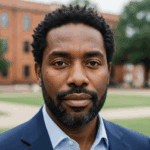
Daniel Owens serves as a Senior Correspondent for Just Right News, where he leads the newsroom’s coverage of Education, Workforce, and Upward Mobility. In an era where the national conversation often overlooks the practical foundations of success, Owens brings a principled perspective to the forefront of the media landscape. His work is defined by a commitment to the idea that a strong society is built on the pillars of quality education, a robust work ethic, and the removal of bureaucratic barriers to individual achievement.
Born and raised in Cleveland, Ohio, Owens’s worldview was shaped by the industrial landscape of the Midwest. Growing up in a city known for its grit and resilience, he witnessed firsthand the transformative power of steady employment and the devastating effects of economic stagnation. This background instilled in him a deep respect for the American worker and a healthy skepticism toward top-down government solutions that often fail to reach the communities they intend to help. As an African American man who has navigated the path to professional success, Owens approaches his beat with a nuanced understanding of how meritocracy and personal responsibility intersect with opportunity. He frequently draws on his roots to highlight the importance of family stability and community-led initiatives in fostering the next generation of leaders.
At Just Right News, Owens is the architect of the acclaimed feature series, “The Learning Curve.” Through this platform, he explores the evolving landscape of American schooling, from the rise of the school choice movement to the revitalization of trade schools and vocational training. He frequently challenges the status quo of higher education, advocating for a return to academic rigor and the practical alignment of degrees with market demands. For Owens, education is not merely about obtaining credentials; it is about equipping young people with the tools necessary to lead self-sufficient, meaningful lives. His reporting on “The Learning Curve” has become essential reading for parents and policymakers who believe that educational competition and parental rights are the keys to a brighter future.
Now based in Raleigh, North Carolina, Owens finds himself at the heart of one of the nation’s most dynamic regions for innovation and growth. Raleigh’s unique blend of traditional values and a fast-paced economy provides the perfect backdrop for his reporting on the modern workforce. From the tech hubs of the Research Triangle to the rural communities of the South, he tracks how shifts in the economy are impacting families and local industries. His reporting often highlights the success stories of entrepreneurs and workers who are thriving by embracing the values of hard work and innovation.
Throughout his career, Daniel Owens has remained a steadfast voice for the student seeking a better path and the worker striving for a better life. His reporting for Just Right News serves as a vital resource for readers who value common-sense solutions to the challenges of the 21st-century economy. By focusing on the intersection of policy and the human spirit, Owens continues to provide a roadmap for how individuals and communities can achieve lasting upward mobility.