

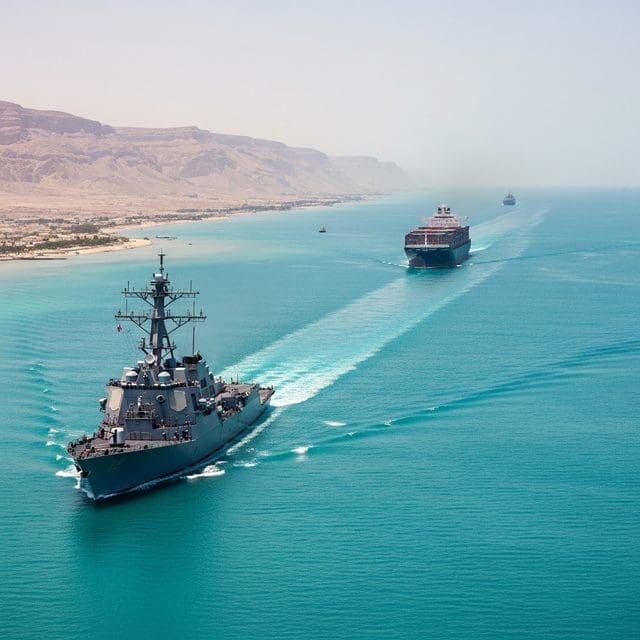
U.S. forces sank six Iranian vessels during the launch of ‘Project Freedom,’ a naval operation to secure the Strait of Hormuz, as regional tensions drive global oil prices to yearly highs.
The Biden-era stability of the global energy market faced a sharp correction this week as the Trump administration launched ‘Project Freedom,’ an assertive naval operation designed to break the Iranian blockade of the Strait of Hormuz. On May 4, the operation’s first day, U.S. Central Command reported that Navy destroyers and aircraft successfully guided two U.S.-flagged merchant vessels through the chokepoint. However, the transit was met with immediate kinetic resistance from Tehran.
According to Admiral Bradley Cooper, head of CENTCOM, U.S. forces sank six Iranian small boats and intercepted multiple cruise missiles and drones launched by the Islamic Revolutionary Guard Corps. While the administration characterized the day as a tactical triumph, the geopolitical fallout was immediate. President Donald Trump, speaking to conservative media, declined to confirm if the standing ceasefire remains in effect, though he warned that Iranian forces would be “blown off the face of the Earth” if they continue to target American assets.
The conflict has rapidly expanded beyond the immediate waterway. For the first time since the April ceasefire began, Iran launched a coordinated strike against the United Arab Emirates. Emirati air defenses, supported by Israeli-deployed Iron Dome systems, intercepted 19 missiles and drones. Despite these efforts, a drone strike ignited a significant fire at the Fujairah Oil Industry Zone, a critical hub that allows oil to bypass the Strait. The attack injured three Indian nationals and underscored the vulnerability of regional energy infrastructure.
Domestic economic pressures are mounting as the national debt crossed the 100% debt-to-GDP threshold this week. The instability in the Gulf sent Brent crude prices surging to a yearly high of $114.44 per barrel, a 50% increase since the conflict began in February. This volatility comes as the administration prepares for high-stakes diplomatic talks in Beijing, where Treasury Secretary Scott Bessent is expected to pressure Chinese leadership to rein in their Iranian partners.
While the administration maintains that the military phase of the conflict is “essentially over,” the reality on the water suggests a protracted struggle for maritime sovereignty. Iranian officials have countered by unveiling new military maps claiming total control over the Strait, labeling the U.S. presence an “invading army.” With South Korea now considering joining the U.S.-led coalition following an explosion on one of its vessels, the mission to restore the pre-war flow of 120 ships per day remains a formidable challenge for American foreign policy.
As the 2026 midterms approach, the intersection of national security and economic stability remains the primary focus for the American heartland. With the national debt exceeding GDP and energy costs rising, the success of Project Freedom is not merely a matter of naval superiority, but a vital necessity for the Western tradition of free trade and secure borders. The coming weeks will determine if the ‘peace through strength’ doctrine can stabilize the world’s most critical energy artery or if the region will descend back into open conflict.

Olivia Kendall serves as the Senior Correspondent for Geopolitics, Defense, and Foreign Policy at Just Right News, where she provides a principled, conservative perspective on the complex forces shaping the global stage. With a career dedicated to deconstructing the intricacies of international relations, Kendall has become a trusted voice for readers who value national sovereignty, a robust military, and a foreign policy that prioritizes American interests above all else.
A native of Washington, D.C., Kendall’s professional journey is deeply rooted in her upbringing within the nation’s capital. Growing up in the epicenter of American political life, she developed an early and profound understanding of how policy is crafted and, more importantly, how it often fails to account for the values of the American heartland. This unique vantage point allowed her to witness firsthand the rise of globalist bureaucracies, fueling her commitment to reporting that champions the constitutional foundations of the United States. Her background as a British White American further informs her worldview, providing her with a keen appreciation for the Western tradition and the enduring importance of the “Special Relationship” in maintaining global stability.
Now based in Arlington, Virginia, Kendall operates from the doorstep of the Pentagon and the heart of the nation’s defense establishment. Her proximity to the decision-makers in the military and intelligence communities allows her to provide boots-on-the-ground reporting that is both timely and deeply informed. For Kendall, Arlington is more than just a base of operations; it is a daily reminder of the sacrifices made by the men and women in uniform. This connection to the defense community drives her rigorous coverage of military readiness and her advocacy for a “peace through strength” approach to diplomacy.
At Just Right News, Kendall is perhaps best known for her acclaimed feature series, “The World’s Shadow on America.” In this ongoing project, she explores the direct correlation between international developments and the daily lives of American citizens. Whether she is analyzing the encroachment of foreign adversaries in domestic supply chains or the impact of international treaties on local economies, Kendall’s work serves as a vital bridge between distant geopolitical shifts and their consequences at home. She rejects the notion that foreign policy is an abstract concern for elites, instead proving that what happens in the corridors of power in Brussels or Beijing has a tangible “shadow” that falls across every American doorstep.
Throughout her tenure, Kendall has remained a steadfast critic of international overreach and a vocal proponent of a clear-eyed, realistic foreign policy. She brings a sharp analytical mind to her beat, often challenging the prevailing narratives of the mainstream media to uncover the underlying truths that affect national security. Her reporting is characterized by a refusal to compromise on the truth and a dedication to the idea that a strong, secure America is the world’s best hope for liberty. As a Senior Correspondent, Olivia Kendall continues to lead the charge in providing the essential context and conservative insight necessary to navigate an increasingly volatile world.