

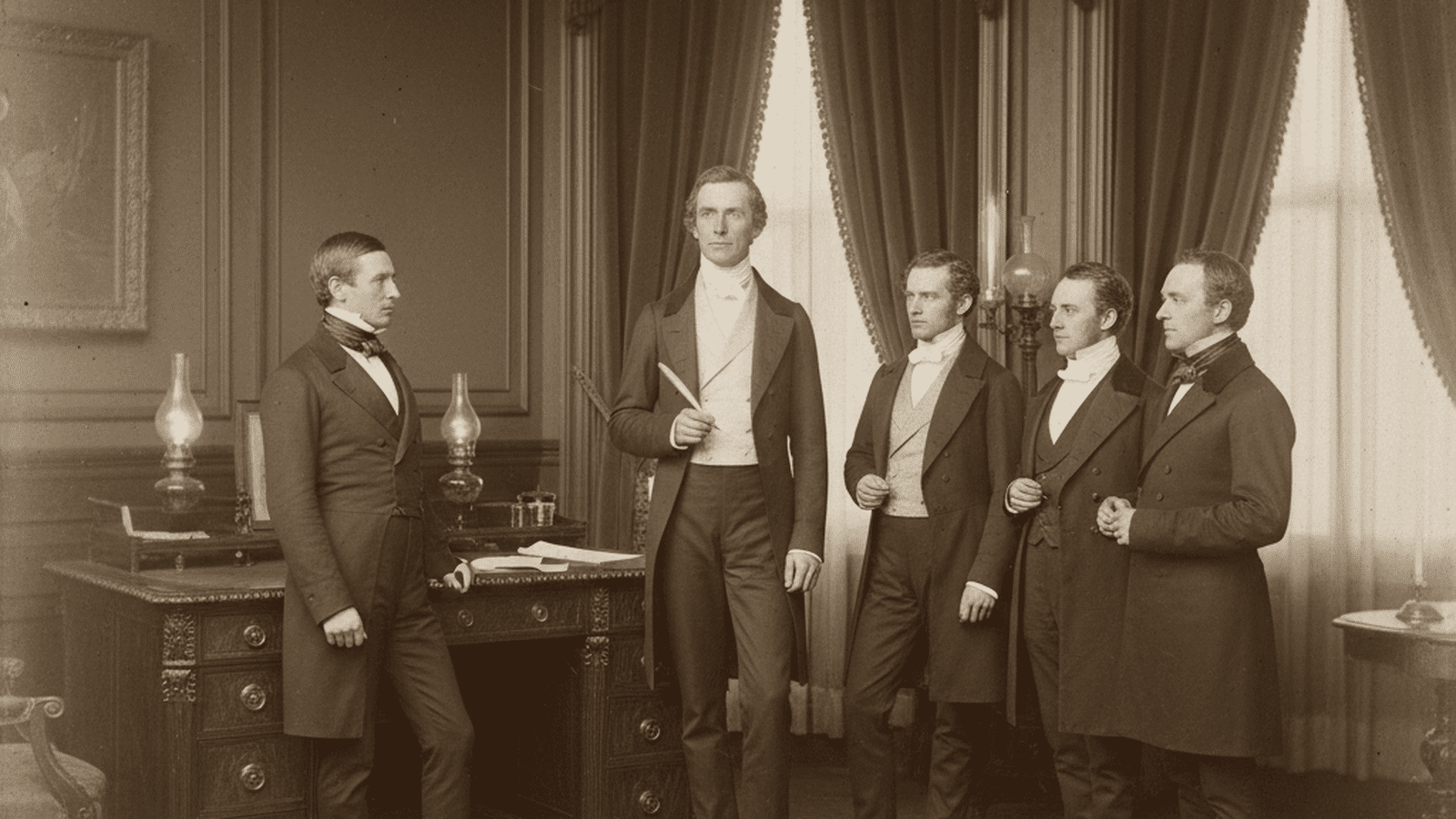
In 1841, the United States faced its first presidential succession crisis following the death of William Henry Harrison. Vice President John Tyler asserted that he had fully inherited the office of the presidency rather than merely serving as an acting official.
TLDR: After William Henry Harrison died in 1841, John Tyler established the Tyler Precedent by claiming the full powers and title of the presidency. Despite constitutional ambiguity and political opposition, his decisive actions defined executive succession until the ratification of the 25th Amendment in 1967.
The death of President William Henry Harrison on April 4, 1841, just one month after his inauguration, plunged the United States into its first major constitutional crisis regarding executive succession. Harrison, the hero of Tippecanoe, had delivered the longest inaugural address in history in freezing rain, leading to a cold that turned into fatal pneumonia. His passing left the nation in uncharted territory. While the Constitution provided for a Vice President, it was notoriously vague about what happened if the President died. Article II, Section 1, Clause 6 stated that in the case of the President’s death, “the Same shall devolve on the Vice President,” but it did not clarify if “the Same” referred to the office itself or merely its powers and duties.
Vice President John Tyler was at his home in Williamsburg, Virginia, when a messenger arrived with the news. He rushed to Washington, D.C., arriving on April 6 to find a capital in mourning and a political establishment in confusion. Tyler immediately recognized that any hesitation on his part would invite a power struggle that could weaken the presidency forever. To solidify his position, he took the presidential oath of office, administered by Judge William Cranch. Although Tyler believed he was already President by virtue of Harrison’s death, he took the oath to silence critics who argued he was merely an “Acting President.”
The resistance was immediate and fierce. Many in the Whig Party, including the powerful Senator Henry Clay, viewed Tyler as a temporary placeholder. They referred to him derisively as “His Accidency.” Tyler’s own cabinet, which Harrison had promised would make decisions by a majority vote, attempted to dictate terms to him. At their first meeting, Secretary of State Daniel Webster informed Tyler of Harrison’s practice. Tyler responded firmly: “I am very glad to have in my Cabinet such able statesmen as you… but I can never consent to being dictated to as to what I shall or shall not do. I, as President, shall be responsible for my administration.” He made it clear that if they could not support him, they should resign.
Tyler’s resolve extended to his official correspondence. He refused to accept any mail addressed to the “Acting President,” returning such letters unopened. He insisted that he had not merely assumed the duties of the office but had become the President in full. This was not just a matter of ego; it was a vital assertion of executive authority. If the Vice President were only an “acting” official, his legitimacy would be constantly questioned, and his ability to lead would be hampered by the threat of a special election or legislative interference.
Despite the initial outcry, Tyler’s interpretation—which became known as the “Tyler Precedent”—eventually took hold. Congress formally recognized his status by passing a resolution later that year, though political animosity remained. Tyler would eventually be expelled from the Whig Party due to policy disagreements, but his stance on succession remained his most enduring legacy.
This precedent governed seven subsequent accidental successions over the next century, including those of Millard Fillmore, Andrew Johnson, and Lyndon B. Johnson. It provided a clear, stable path for the transfer of power during times of national grief. However, because it was based on custom rather than explicit law, the ambiguity remained a point of debate for over 125 years. It was not until the ratification of the 25th Amendment in 1967 that Tyler’s bold assertion was finally codified into the Constitution, explicitly stating that “the Vice President shall become President” upon the death or removal of the incumbent.

Lila Hayes serves as a Staff Writer for Just Right News, where she anchors the “Courts, Law, and Constitutional Order” beat. Her work is defined by a steadfast commitment to the foundational principles of the American republic and a rigorous defense of the legal frameworks that ensure national stability. As a primary voice for the outlet, she provides readers with a clear-eyed analysis of the judiciary, focusing on the importance of originalism and the preservation of the separation of powers.
Lila’s perspective was forged in the American heartland. Raised in St. Louis, Missouri, she grew up in a Hispanic household where the values of hard work, faith, and respect for the law were paramount. Her upbringing instilled in her a deep appreciation for the American Dream and the legal protections that make it possible. This Missouri background remains a cornerstone of her reporting, providing a grounded, common-sense counter-narrative to the often-insular legal circles of the coastal elite. She understands that the decisions made in high-court chambers have real-world consequences for families and small business owners across the country.
At Just Right News, Lila has become widely recognized for her signature feature series, “The Rulebook of Power.” In this ongoing project, she delves into the mechanics of the federal government, examining how administrative overreach and judicial activism can threaten the delicate balance of the Constitution. She approaches her beat with the tenacity of a veteran journalist and the precision of a legal scholar, consistently advocating for a judiciary that interprets the law as written rather than legislating from the bench. For Lila, the Constitution is not a “living” document subject to the whims of modern social trends; it is a fixed standard that ensures the government remains the servant of the people, not their master.
Now based in Philadelphia, Pennsylvania, Lila finds herself at the very epicenter of American constitutional history. Living and working in the city where the Founders drafted the documents she defends daily provides a constant source of inspiration. The historic halls and landmarks of Philadelphia serve as a daily reminder of the high stakes involved in her reporting. Her presence in the city allows her to bridge the gap between the historical intent of the law and its contemporary application, ensuring that the legacy of the Founding Fathers remains central to the national conversation.
Throughout her career, Lila has remained dedicated to the idea that a free society requires an informed citizenry and a transparent legal system. Her reporting is more than just a collection of headlines; it is a defense of the constitutional order that has sustained the nation for over two centuries. By focusing on the “Rulebook of Power,” she ensures that her readers understand not just what is happening in the courtrooms, but why those decisions matter for the future of American liberty. Lila Hayes continues to be a vital voice for those who believe that the law should be a shield for the citizen and a constraint on the state.