

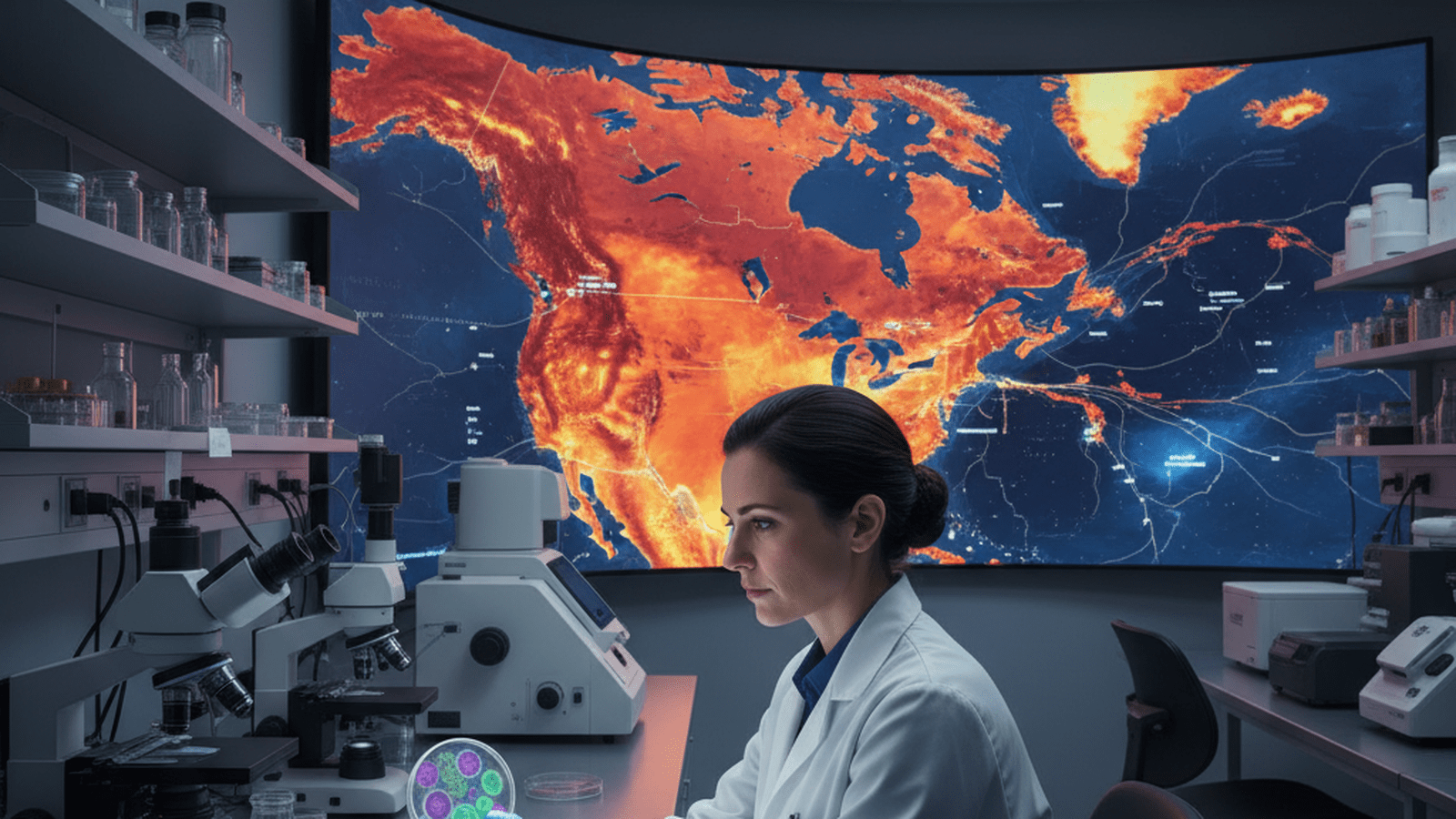
A study by the University of Maryland School of Medicine reveals that warming oceans are pushing Vibrio vulnificus infections further north into previously unaffected regions. Hospital research teams found a direct link between rising sea surface temperatures and a surge in severe wound infections requiring intensive clinical intervention.
TLDR: Researchers have documented the northward expansion of the “flesh-eating” bacterium Vibrio vulnificus due to rising ocean temperatures. Clinical data from hospital research teams indicates that these life-threatening infections are appearing in new geographic regions, necessitating updated emergency room protocols and climate-aware public health strategies.
Researchers at the University of Maryland School of Medicine have identified a significant correlation between warming sea surface temperatures and the northward migration of Vibrio vulnificus. This bacterium, often colloquially referred to as “flesh-eating,” thrives in warm, brackish waters and can cause life-threatening wound infections. The study highlights how climate change is directly altering the map of infectious diseases in the United States. By examining decades of environmental data alongside clinical records, the team has mapped a clear trajectory of expansion that mirrors rising global temperatures.
The research team collaborated with several coastal hospital systems to analyze patient data spanning three decades. They found that the geographic range of these infections has shifted significantly toward the Mid-Atlantic and New England regions. Historically, Vibrio cases were largely confined to the Gulf Coast and southern Atlantic states. However, the study confirms that the pathogen is now endemic in areas as far north as the Delaware Bay and the Jersey Shore.
Clinical observations within hospital research units revealed that infection severity often peaks following extreme weather events. Storm surges and coastal flooding bring contaminated water into contact with human populations more frequently. Hospital staff in northern latitudes are now being trained to recognize the specific symptoms of Vibrio infection, which can progress to sepsis and tissue death within hours. Early intervention is critical, as the mortality rate for systemic infections can exceed 20 percent.
The study utilized satellite-derived sea surface temperature data to model the bacteria’s ideal habitat. As the ocean warms, the “isotherm” or temperature line that limits Vibrio growth is moving north at a rate of approximately 48 kilometers per year. This environmental shift matches the observed increase in clinical cases reported by northern hospitals. The researchers emphasize that this is not a temporary fluctuation but a sustained expansion driven by long-term climate trends.
Beyond the immediate health risks, the study underscores the economic burden on healthcare infrastructure. Treating a single case of necrotizing fasciitis caused by Vibrio can cost hundreds of thousands of dollars in surgical interventions, skin grafts, and prolonged intensive care. Hospital administrators are using this data to advocate for better climate-resilience funding and improved public health monitoring systems. The cost of inaction includes both the loss of life and the strain on regional medical budgets.
Researchers also noted that the demographic of those affected is changing. While older individuals with underlying health conditions, such as liver disease or diabetes, remain at highest risk, infections are increasingly seen in younger, healthy populations. These individuals often encounter the bacteria during recreational water activities or while handling raw seafood. This shift suggests that the bacterial density in northern waters is reaching critical levels during peak summer months, increasing the probability of exposure for all groups.
The integration of climate modeling with hospital admission records represents a new frontier in predictive medicine. By monitoring ocean temperatures in real-time, hospitals can anticipate surges in specific types of infections. This proactive approach allows for better resource allocation, such as ensuring that specialized antibiotics and surgical teams are available during heatwaves. It also enables public health officials to issue more targeted warnings to beachgoers and commercial fishers.
Future research will investigate the genomic adaptations of Vibrio strains found in cooler northern waters. Scientists want to determine if these bacteria are evolving to survive in a wider range of salinities and temperatures. Understanding these biological changes will be crucial for developing more effective treatments and public health warnings. The team plans to expand their study to include other climate-sensitive pathogens that may be following similar migratory patterns as the planet continues to warm.

Rachel Vaughn serves as a Senior Correspondent for Just Right News, where she leads the network’s coverage of Global Health, Climate, and Development. With a career defined by intellectual rigor and a commitment to principled reporting, Rachel provides a vital conservative perspective on some of the most complex and high-stakes issues facing the world today. Her work is characterized by a refusal to accept bureaucratic narratives at face value, focusing instead on how international policies impact national sovereignty, individual liberty, and the American taxpayer.
Raised in New Haven, Connecticut, Rachel grew up in an environment dominated by elite academic discourse. This upbringing provided her with a front-row seat to the inner workings of the American establishment, but it also instilled in her a healthy skepticism of the “ivory tower” consensus. She learned early on that while academic theories may sound promising in a lecture hall, they often fail to account for the practical realities of the working class. This background drives her to bridge the gap between high-level policy discussions and the common-sense concerns of everyday citizens, ensuring that her reporting remains grounded and accessible.
Now based in Burlington, Vermont, Rachel operates from a unique vantage point within one of the nation’s most progressive political landscapes. Living and working in a region that often serves as a testing ground for radical social and environmental experiments allows her to witness the real-world consequences of these policies firsthand. From her base in the Green Mountain State, she provides Just Right News readers with essential “boots on the ground” reporting, documenting the friction between local mandates and the constitutional freedoms of the individual. Her presence in Burlington ensures that her critiques of globalist agendas are informed by a direct understanding of how those ideologies manifest at the local level.
In her acclaimed feature series, “Planetary Stakes,” Rachel explores the intersection of international development and environmental stewardship. She rejects the alarmism often found in mainstream media, opting instead for a sober analysis of the economic and geopolitical costs of global climate agreements. Her reporting frequently highlights the importance of market-driven innovation and the role of American leadership in fostering global health without ceding authority to unelected international bodies. Through “Planetary Stakes,” she has become a leading voice for those who believe that true conservation and public health are best achieved through transparency, accountability, and the protection of private property rights.
Throughout her tenure at Just Right News, Rachel has distinguished herself as a journalist who is unafraid to ask difficult questions of global institutions. Whether she is investigating the influence of non-governmental organizations on domestic policy or analyzing the fiscal transparency of international health initiatives, her goal remains the same: to provide her audience with the facts necessary to navigate an increasingly interconnected world. Her blend of East Coast intellectual heritage and her current immersion in the political heart of the Northeast makes her an indispensable asset to the newsroom and a trusted source for readers seeking a principled, conservative take on the issues that define our era.