

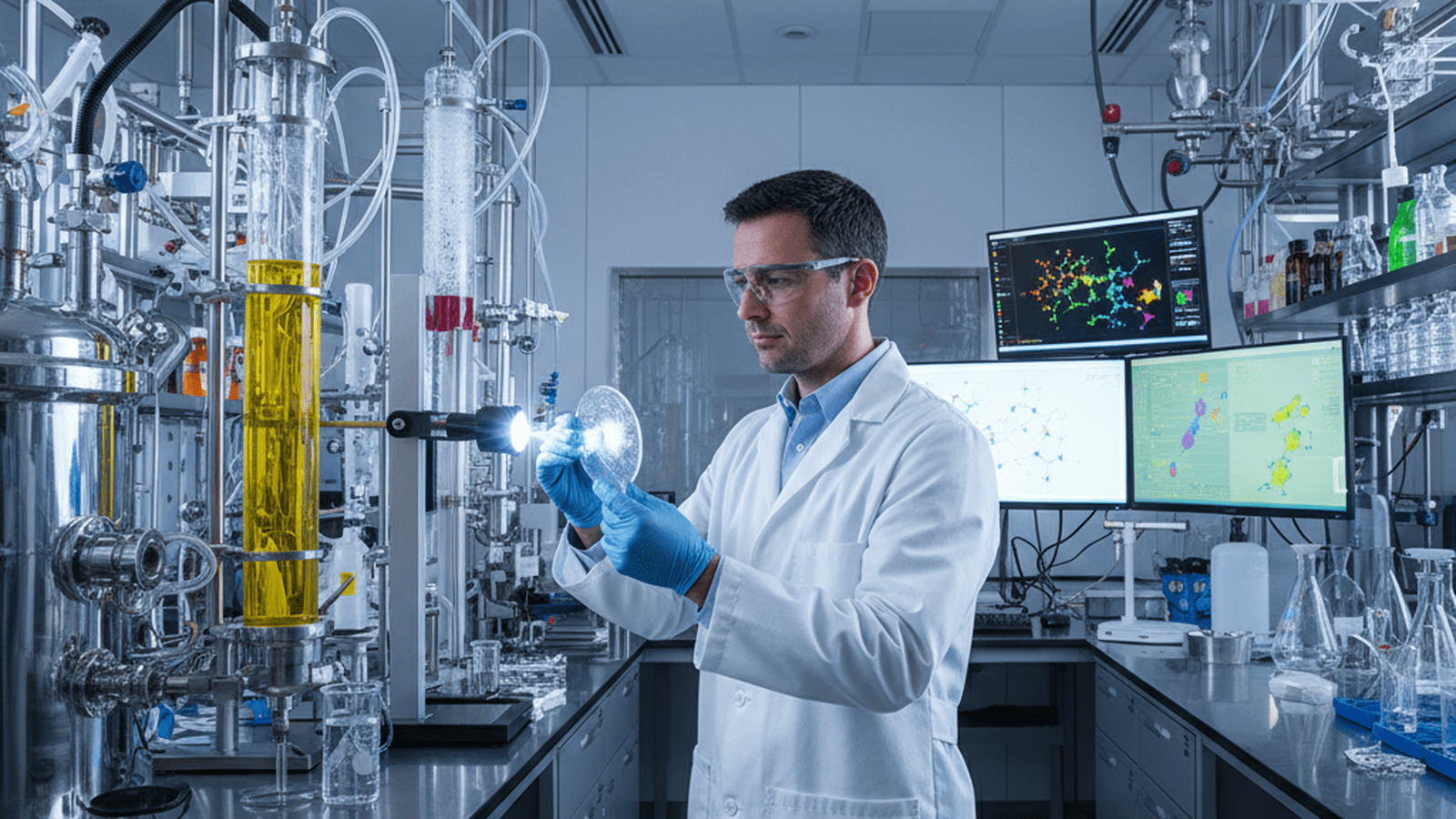
Researchers at IBM’s Almaden lab have discovered a new class of thermoset polymers called polyhexahydrotriazines (PHTs). These materials combine extreme strength and self-healing properties with the ability to be chemically recycled back into their original components.
TLDR: IBM Research has identified a new class of polymers, polyhexahydrotriazines (PHTs), which are the first recyclable thermoset plastics. These materials offer high strength and self-healing capabilities, potentially solving the long-standing issue of non-recyclable industrial plastics in the aerospace and electronics sectors.
Scientists at IBM Research’s Almaden facility in San Jose, California, have identified a new family of materials that could fundamentally alter the lifecycle of industrial plastics. These materials, categorized as polyhexahydrotriazines (PHTs), represent the first major new class of thermoset polymers discovered in several decades. The breakthrough addresses a long-standing paradox in materials science: the trade-off between structural durability and environmental sustainability. For years, the industry has relied on materials that are either strong and permanent or recyclable but weak. PHTs bridge this gap, offering a high-performance alternative that respects ecological limits.
Thermoset plastics are ubiquitous in modern engineering. Due to their high strength-to-weight ratio and resistance to heat, they are essential in everything from aircraft wings to smartphone circuit boards. However, unlike thermoplastics—which can be melted and reshaped—thermosets are defined by permanent chemical cross-links. Once these materials are “cured,” their molecular structure is locked. This makes them nearly impossible to recycle, resulting in millions of tons of industrial waste that must be buried in landfills or incinerated.
The discovery of PHTs occurred through a combination of advanced computational modeling and traditional chemistry. Researchers explored the reaction between paraformaldehyde and various diamines, using high-performance computing to predict molecular interactions. By controlling the temperature and concentration of reactants, they triggered a condensation reaction that formed a stable, three-dimensional network. The resulting material exhibited mechanical properties superior to many existing engineering plastics while remaining chemically reversible. This was surprising because the reaction occurred at relatively low temperatures, challenging assumptions about the energy required to form such robust polymer chains.
One variant, nicknamed “Titan,” demonstrated exceptional stiffness and resistance to stress-induced cracking. Another version, “Vanth,” showed the ability to self-heal. When a sample of Vanth was cut and placed back together, the chemical bonds at the interface reformed within minutes at room temperature, restoring its original strength. This self-healing is driven by the dynamic nature of the covalent bonds within the polymer matrix. Such properties are highly desirable for components subjected to constant vibration, as they could significantly extend the operational lifespan of machinery.
The most significant feature of PHTs is their recyclability. When exposed to a highly acidic solution, the polymer chains disassemble, reverting to original monomers. These can be recovered, purified, and reused to create new polymers without loss in quality. This “closed-loop” potential is a departure from traditional recycling, which often results in “down-cycling” where material loses integrity. By allowing complete recovery of raw materials, PHTs offer a pathway toward a circular economy in the plastics industry.
In the electronics industry, PHTs could simplify the recovery of precious metals. Currently, separating components from thermoset boards is a destructive process. A recyclable resin would allow manufacturers to dissolve the board and harvest components intact. Similarly, the aerospace sector could reduce its footprint by adopting carbon-fiber composites held together by PHT resins, allowing for the recovery of both the fibers and the resin at the end of a vehicle’s life.
Moving forward, the team is focused on optimizing synthesis to lower costs and improve compatibility with manufacturing hardware. While laboratory results are promising, large-scale use requires testing long-term stability under stressors like UV exposure. Engineers are working on pilot programs to integrate PHTs into specialized adhesives and coatings. The success of these trials will determine how quickly this material moves from the laboratory to the assembly line, potentially ending the era of permanent plastic waste.

Mason Reed serves as a Staff Writer for Just Right News, where he spearheads the Future Frontiers & Special Projects desk. In an era defined by rapid technological shifts and evolving social landscapes, Mason provides a steady, principled voice, examining the innovations of tomorrow through the lens of traditional American values. His work is most prominently featured in his signature series, “The Next Horizon,” where he explores the intersection of emerging technology, national sovereignty, and the preservation of individual liberty.
A native of San Diego, California, Mason’s worldview was shaped by the unique culture of his hometown. Growing up in a region defined by its strong military presence and its history of maritime industry, he developed a deep-seated respect for the institutions that provide national stability and the entrepreneurial spirit that drives the American economy. This upbringing instilled in him a belief that true progress is not found in discarding the past, but in building upon a foundation of proven principles. His reporting often reflects this San Diego influence, emphasizing the importance of a robust national defense and the necessity of maintaining a competitive edge in the global marketplace.
Now based in San Francisco, Mason operates from the heart of the world’s technological engine. Living and working in the Bay Area provides him with a front-row seat to the advancements—and the ideological challenges—emanating from Silicon Valley. While many in the region embrace a “move fast and break things” mentality, Mason’s reporting serves as a vital counterweight. He offers Just Right News readers a “boots on the ground” perspective, documenting how radical local policies and the concentration of tech power impact the everyday lives of citizens. His proximity to the industry allows him to cut through the marketing jargon of big tech to uncover the real-world implications for privacy, free speech, and the nuclear family.
In his “Future Frontiers” beat, Mason tackles complex subjects ranging from the ethics of artificial intelligence to the burgeoning private space race. He approaches these topics with a healthy skepticism toward centralized bureaucracy, championing instead the decentralized innovations that empower individuals. Through “The Next Horizon,” he highlights the pioneers and thinkers who are working to ensure that the future remains a place where human dignity and constitutional rights are protected. He believes that the rapid pace of change requires more than just technical expertise; it requires a moral compass rooted in the Western tradition.
Throughout his tenure at Just Right News, Mason has remained committed to the idea that the future is something to be shaped, not merely accepted. His writing is characterized by a rigorous defense of American exceptionalism and a belief that the country’s best days lie ahead, provided it remains true to its founding ideals. Whether he is investigating the impact of automation on the American workforce or profiling the next generation of aerospace engineers, Mason Reed ensures that his readers are equipped with the insights they need to navigate a changing world with confidence and clarity.