

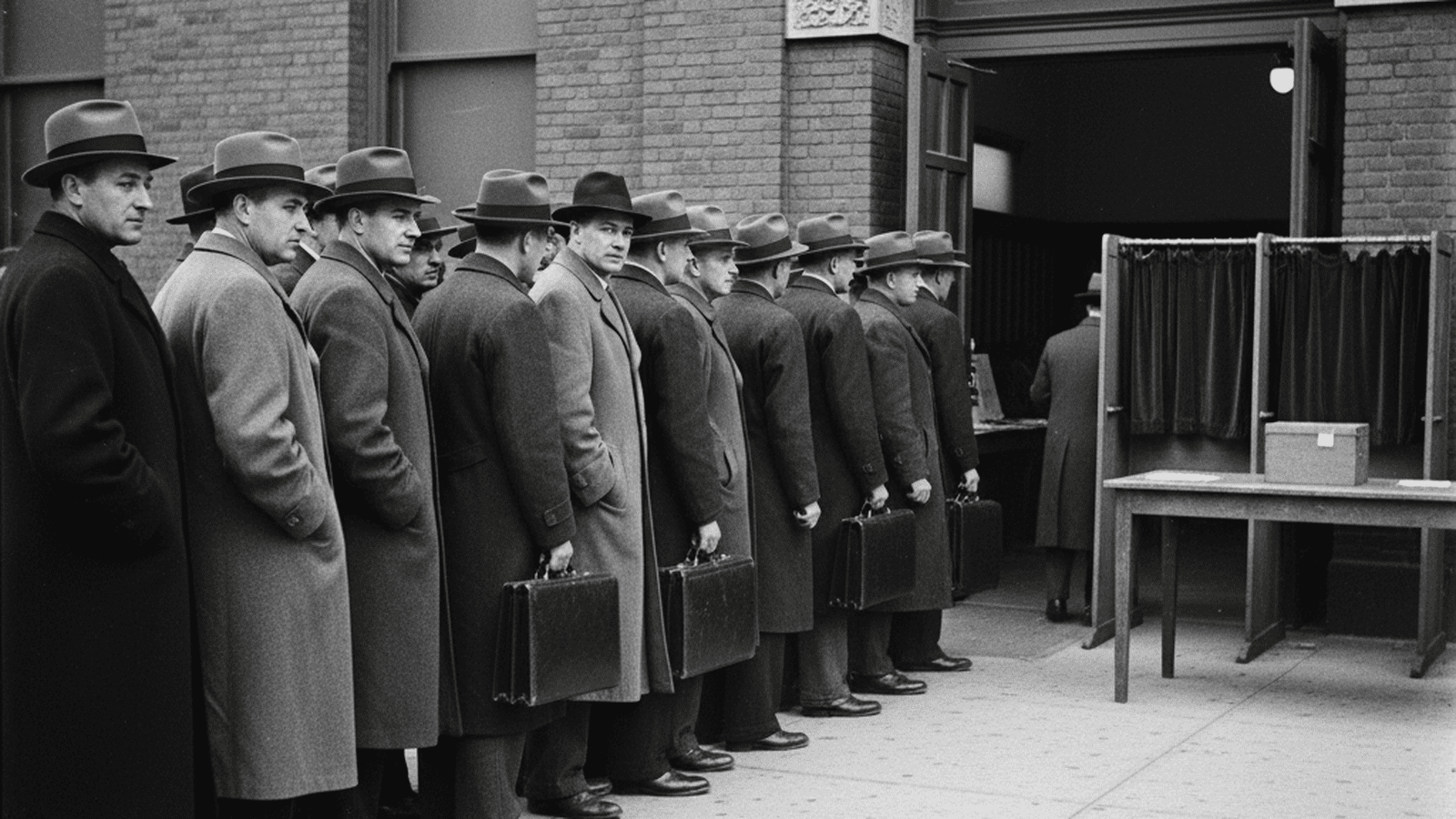
In 1937, Pennsylvania enacted a comprehensive Election Code to modernize its voting systems and reduce the influence of political machines. This reform was a cornerstone of Governor George H. Earle III’s “Little New Deal” in the United States.
TLDR: Pennsylvania’s 1937 Election Code overhauled the state’s voting infrastructure to combat systemic corruption. By introducing permanent registration and uniform procedures, the law weakened urban political machines. This “Little New Deal” reform established the framework for modern electoral administration and remains a foundational piece of Pennsylvania’s democratic process.
During the height of the Great Depression, Pennsylvania underwent a dramatic political shift that mirrored the national transition under President Franklin D. Roosevelt. For decades, the Commonwealth had been a bastion of Republican control, often dominated by powerful urban political machines that operated with near-impunity. The most notorious of these was the Vare machine in Philadelphia, which maintained power through a sophisticated network of patronage, intimidation, and questionable electoral practices. In 1934, George H. Earle III broke this cycle, becoming the first Democrat elected governor of Pennsylvania in the 20th century. His victory ushered in what became known as the “Little New Deal,” an era characterized by a flurry of progressive legislation aimed at labor rights, social welfare, and, most crucially, the modernization of the state’s democratic infrastructure.
A central pillar of Earle’s legislative agenda was the total overhaul of the state’s antiquated and often corrupt electoral system. Prior to 1937, Pennsylvania’s election laws were a confusing patchwork of local regulations that allowed for significant manipulation by party bosses. “Phantom voters”—individuals who were deceased, had moved away, or never existed—frequently appeared on registration rolls in machine-controlled wards. In some districts, the number of votes cast occasionally exceeded the total number of eligible residents, a phenomenon that undermined public confidence in the democratic process. To address these systemic failures, the General Assembly passed the Pennsylvania Election Code of 1937, a comprehensive statute designed to professionalize and secure the electoral process across the entire Commonwealth.
The 1937 Code, officially known as Act 320, introduced several transformative measures that standardized voting across Pennsylvania’s sixty-seven counties. One of the most significant changes was the implementation of permanent personal registration for all municipalities. This required voters to register in person and provided a rigorous mechanism for the regular purging of ineligible names from the rolls. By centralizing these records under county boards of elections, the law made it significantly harder for local bosses to manufacture votes on election day. The act also established the Secretary of the Commonwealth as the chief election officer, providing a layer of state-level oversight that had previously been absent, effectively shifting power from local ward leaders to state administrators.
Furthermore, the legislation established uniform procedures for the conduct of primaries and general elections. It mandated the use of standardized paper ballots or approved voting machines, reducing the variability that had previously allowed for local tampering. The law also clarified the roles and responsibilities of poll watchers and election officers, providing a clearer legal framework for challenging suspected irregularities. These reforms were met with fierce resistance from entrenched interests. Critics labeled the efforts as “Ripper Bills,” a term used to describe legislation intended to strip local officials of their traditional powers and patronage. Despite this opposition, the Earle administration pushed forward, arguing that the integrity of the “Little New Deal” programs depended on a fair and transparent electoral system.
Governor Earle and his allies believed that without reform, the social and economic policies being enacted in Harrisburg would be undermined by a legislature beholden to corrupt city bosses. The legislative session of 1937 was one of the most productive in the state’s history, and the Election Code was its crowning achievement in governance. The passage of the Code represented a major victory for the reformist wing of the Democratic Party and a significant blow to the traditional Republican power structure that had dominated the state since the Civil War.
The impact of the 1937 Election Code extended far beyond the Earle administration. It provided the legal foundation upon which Pennsylvania’s modern electoral system was built. While the law has been amended numerous times to account for new technologies and federal mandates like the Voting Rights Act of 1965, its core structure remains the primary reference for Pennsylvania election law today. The 1937 overhaul serves as a historical benchmark for how state-level legislative action can successfully dismantle corrupt political infrastructures and enhance the transparency of United States elections. Subsequent reforms in the late 20th and early 21st centuries, including the introduction of electronic voting and expanded absentee access, continue to build upon the centralized administrative framework established during this pivotal New Deal era.

Sean Bradley serves as the Senior Correspondent for Trade, Supply Chains, and Global Labor at Just Right News, where he brings a principled, clear-eyed perspective to the complex systems that power the modern world. With a focus on the economic forces that impact the American household, Bradley has distinguished himself as a leading voice in explaining how global shifts in manufacturing and logistics translate to the kitchen table.
Growing up in Long Beach, California, Bradley’s interest in the movement of goods was forged against the backdrop of one of the nation’s most vital maritime gateways. Raised in a community where the towering cranes of the port were a constant fixture on the horizon, he developed an early appreciation for the blue-collar industries that form the backbone of the American economy. This upbringing instilled in him a profound respect for the dockworkers, truckers, and laborers who keep the country moving, a sentiment that remains a cornerstone of his reporting today. For Bradley, trade is not merely a series of abstract figures on a spreadsheet; it is a human endeavor that sustains families and defines the strength of a nation.
Now based in Seattle, Washington, Bradley occupies a strategic vantage point in another of the country’s most significant trade hubs. His location allows him to witness firsthand the intersection of traditional industry and the evolving technological landscape of global logistics. From the Pacific Northwest, he monitors the flow of goods across the ocean, providing Just Right News readers with timely insights into how international tensions, regulatory hurdles, and labor disputes affect the availability and cost of essential goods.
His signature feature series, “The Journey of Things,” has become a staple for readers seeking to understand the intricate path products take from raw materials to the retail shelf. Through this series, Bradley pulls back the curtain on the global marketplace, often highlighting the risks of over-reliance on foreign adversaries and the importance of domestic manufacturing resilience. His reporting consistently emphasizes the conservative values of national sovereignty, free-market competition, and the protection of the American worker from unfair global practices.
As a journalist of Irish heritage, Bradley maintains a deep-seated respect for the dignity of the individual worker and the importance of community stability. He approaches his beat with a commitment to transparency, often questioning the status quo of globalist policies that prioritize corporate efficiency over local prosperity. Whether he is reporting from a warehouse floor or analyzing a new international trade agreement, his goal remains the same: to provide the American public with the truth about where their products come from and what it costs to get them there.
Throughout his tenure at Just Right News, Bradley has remained a steadfast advocate for economic common sense. His work serves as a vital resource for those who believe that a strong nation is built on secure borders, robust trade, and a respected workforce. By combining his local roots in Long Beach with his professional experience in Seattle, Bradley continues to offer a unique and necessary perspective on the forces that shape the American way of life.