

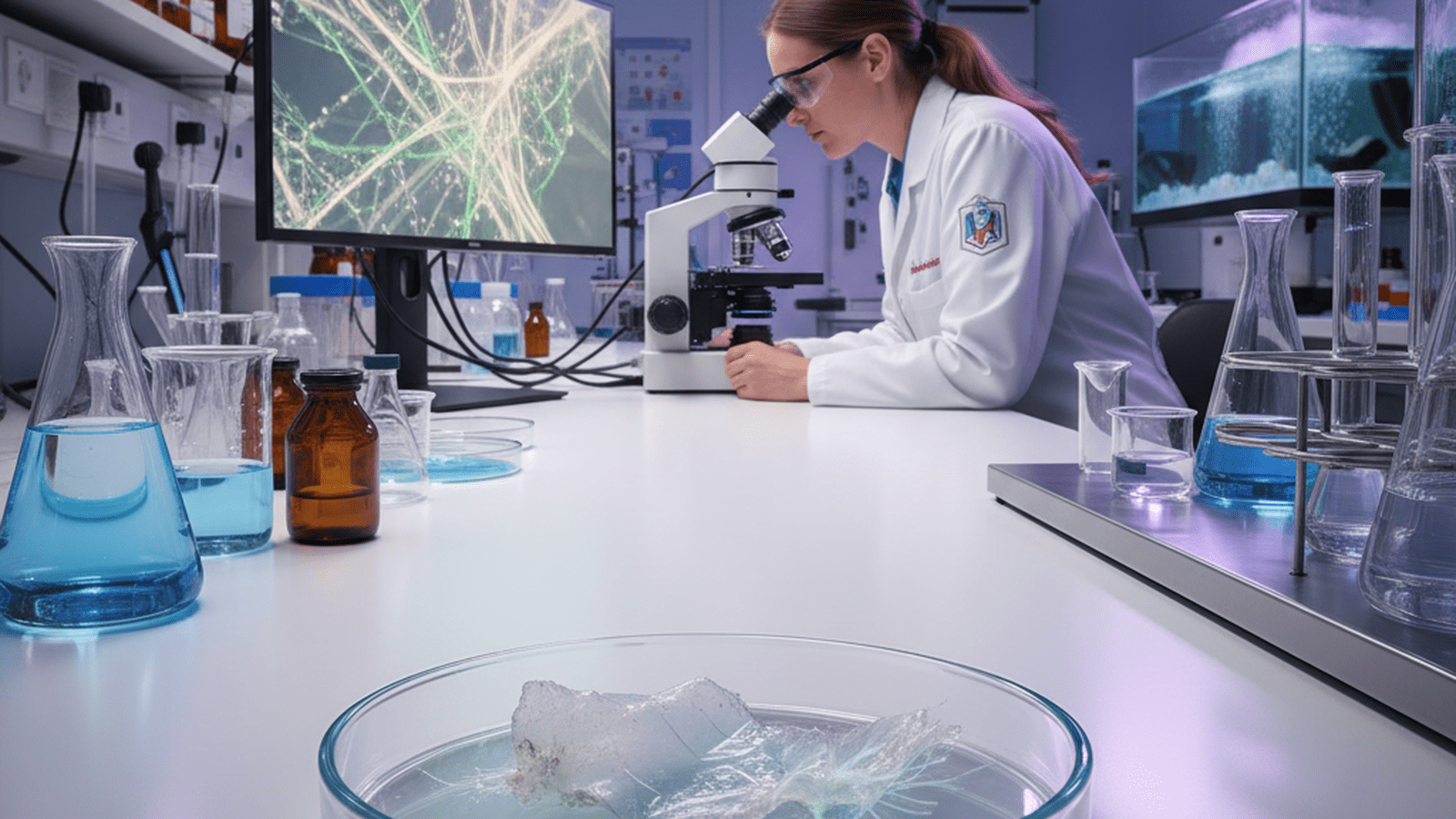
Scientists at the Royal Netherlands Institute for Sea Research have discovered that the marine fungus Parengyodontium album can break down polyethylene plastic. The process requires initial exposure to UV light from the sun, which allows the fungus to enzymatically convert the plastic into carbon dioxide.
TLDR: Researchers in the Netherlands have identified a marine fungus, Parengyodontium album, that degrades polyethylene plastic after UV exposure. While the degradation rate is currently slow, the discovery highlights a natural biological mechanism for processing marine pollution and suggests that more plastic-consuming microbes may exist in the world’s oceans.
The global crisis of plastic pollution has reached every corner of the world’s oceans, with millions of tons of synthetic waste circulating in massive gyres. Amidst this environmental challenge, researchers at the Royal Netherlands Institute for Sea Research (NIOZ) have uncovered a surprising biological ally. In a study published in the journal Science of the Total Environment, a team of marine biologists identified a specific marine fungus, Parengyodontium album, which possesses the rare ability to break down polyethylene—the most prevalent and persistent form of plastic debris in the marine environment.
The discovery was the result of a sophisticated collaborative effort involving scientists from Utrecht University, the University of Copenhagen, and several international research institutions. The team focused their investigation on the North Pacific Subtropical Gyre, a region known for its high concentration of floating plastic. By sampling the “plastisphere”—the complex community of microbes living on the surface of marine plastic—they isolated Parengyodontium album and began testing its metabolic capabilities in a controlled laboratory setting.
One of the most critical findings of the study is the role of sunlight in the degradation process. The researchers determined that Parengyodontium album cannot tackle “fresh” plastic on its own. Instead, the polyethylene must first be exposed to ultraviolet (UV) radiation from the sun. This initial exposure triggers a process known as photo-oxidation, which weakens the plastic’s long-chain polymer structure and breaks it down into smaller, more manageable fragments. Only after this mechanical and chemical priming can the fungus utilize its specialized enzymes to further decompose the material.
To confirm that the fungus was actually consuming the plastic rather than just growing on it, the researchers employed a precise isotopic labeling technique. They created polyethylene samples enriched with the carbon-13 isotope. As the fungus broke down the plastic, the team monitored the release of carbon dioxide. Because the CO2 contained the specific carbon-13 signature, the scientists could definitively prove that the fungus was metabolizing the plastic as a carbon source. Lead author Annika Vaksmaa noted that while the fungus processes the plastic, it does not incorporate much of the carbon into its own biomass. Instead, the majority of the degraded material is converted into CO2 and released into the surrounding environment.
While the discovery is a significant milestone, the speed of degradation remains a challenge for immediate large-scale cleanup. Laboratory measurements showed that Parengyodontium album breaks down polyethylene at a rate of approximately 0.05 percent per day. While this may seem slow, it represents a consistent biological pathway for the removal of synthetic materials that were previously thought to be nearly indestructible in the natural environment.
The dependence on UV light also presents a geographical limitation. Because the fungus requires sunlight to initiate the breakdown, its activity is largely confined to plastic floating at or near the ocean’s surface. This leaves the vast quantities of plastic that have already sunk to the seafloor or become buried in sediment largely untouched. However, the NIOZ researchers are optimistic. They believe that Parengyodontium album is likely just one member of a much larger, undiscovered community of plastic-degrading microbes.
The identification of this fungus provides a potential explanation for the “missing plastic” mystery—the observation that the amount of plastic found on the ocean surface is significantly less than the amount estimated to have entered the water over the decades. Biological degradation by fungi and bacteria may be accounting for a portion of this discrepancy. Moving forward, the research team plans to search for similar organisms in the deep sea that might function without the need for UV light, potentially opening new doors for the bioremediation of the world’s most polluted marine zones.

Mason Reed serves as a Staff Writer for Just Right News, where he spearheads the Future Frontiers & Special Projects desk. In an era defined by rapid technological shifts and evolving social landscapes, Mason provides a steady, principled voice, examining the innovations of tomorrow through the lens of traditional American values. His work is most prominently featured in his signature series, “The Next Horizon,” where he explores the intersection of emerging technology, national sovereignty, and the preservation of individual liberty.
A native of San Diego, California, Mason’s worldview was shaped by the unique culture of his hometown. Growing up in a region defined by its strong military presence and its history of maritime industry, he developed a deep-seated respect for the institutions that provide national stability and the entrepreneurial spirit that drives the American economy. This upbringing instilled in him a belief that true progress is not found in discarding the past, but in building upon a foundation of proven principles. His reporting often reflects this San Diego influence, emphasizing the importance of a robust national defense and the necessity of maintaining a competitive edge in the global marketplace.
Now based in San Francisco, Mason operates from the heart of the world’s technological engine. Living and working in the Bay Area provides him with a front-row seat to the advancements—and the ideological challenges—emanating from Silicon Valley. While many in the region embrace a “move fast and break things” mentality, Mason’s reporting serves as a vital counterweight. He offers Just Right News readers a “boots on the ground” perspective, documenting how radical local policies and the concentration of tech power impact the everyday lives of citizens. His proximity to the industry allows him to cut through the marketing jargon of big tech to uncover the real-world implications for privacy, free speech, and the nuclear family.
In his “Future Frontiers” beat, Mason tackles complex subjects ranging from the ethics of artificial intelligence to the burgeoning private space race. He approaches these topics with a healthy skepticism toward centralized bureaucracy, championing instead the decentralized innovations that empower individuals. Through “The Next Horizon,” he highlights the pioneers and thinkers who are working to ensure that the future remains a place where human dignity and constitutional rights are protected. He believes that the rapid pace of change requires more than just technical expertise; it requires a moral compass rooted in the Western tradition.
Throughout his tenure at Just Right News, Mason has remained committed to the idea that the future is something to be shaped, not merely accepted. His writing is characterized by a rigorous defense of American exceptionalism and a belief that the country’s best days lie ahead, provided it remains true to its founding ideals. Whether he is investigating the impact of automation on the American workforce or profiling the next generation of aerospace engineers, Mason Reed ensures that his readers are equipped with the insights they need to navigate a changing world with confidence and clarity.