

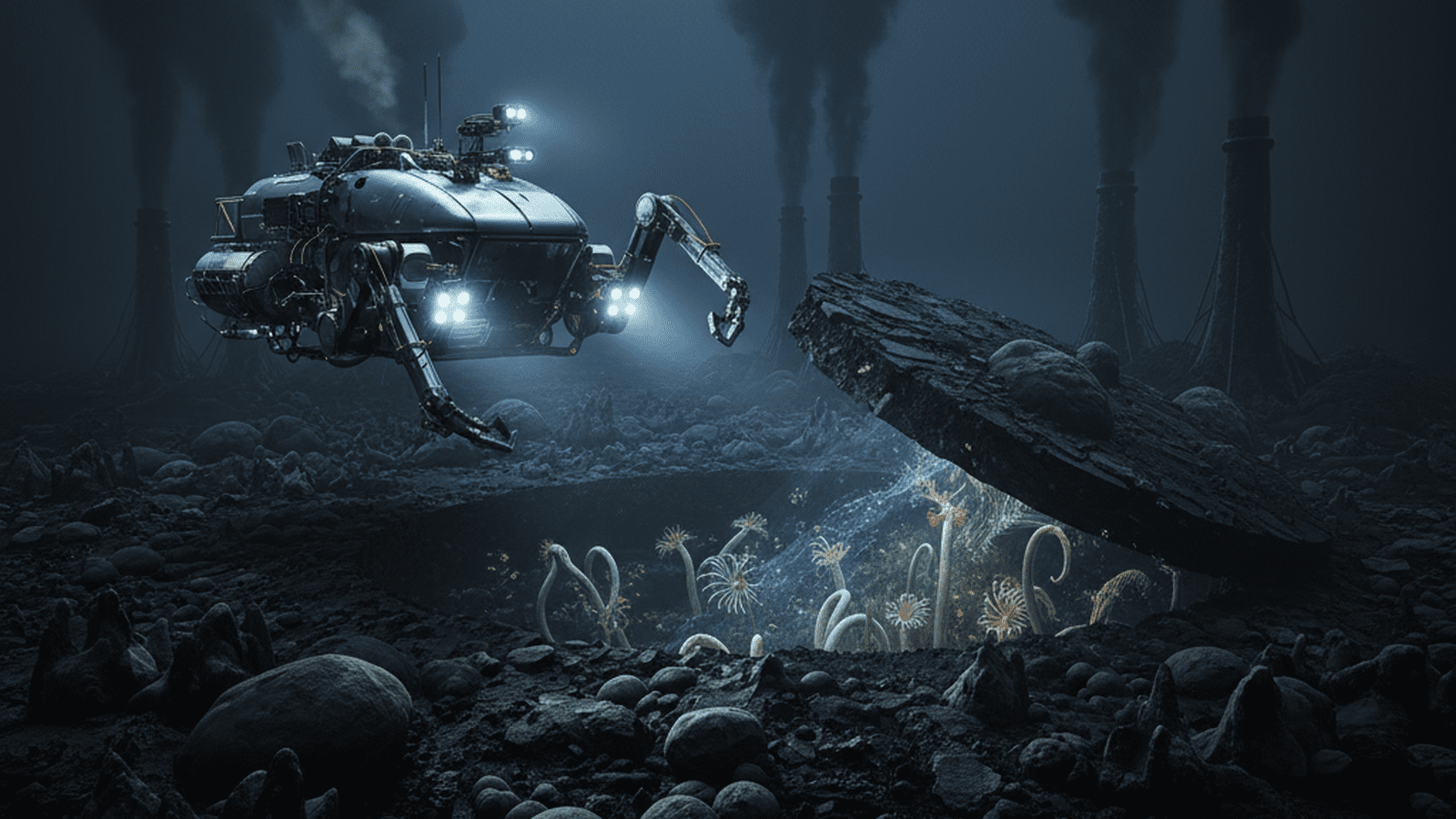
An international research team has discovered a previously unknown ecosystem living in cavities beneath the seafloor of the East Pacific Rise. By overturning volcanic crust near hydrothermal vents, scientists found tubeworms and other organisms thriving in warm, mineral-rich waters under the ocean bed.
TLDR: Scientists using a robotic submersible have discovered life thriving in cavities beneath the ocean floor at the East Pacific Rise. This breakthrough reveals that the biosphere for hydrothermal vent animals extends into the Earth’s crust, challenging previous assumptions about the limits of deep-sea habitats and ecological connectivity.
An international team of scientists has documented a thriving ecosystem existing in the cavities beneath the seafloor of the East Pacific Rise. This discovery, led by researchers from the Schmidt Ocean Institute, marks the first time that life has been found inhabiting the subseafloor crust directly under hydrothermal vents. The findings suggest that the biological reach of these deep-sea environments is significantly more expansive than previously understood.
The expedition utilized the research vessel Falkor (too) and the remotely operated vehicle SuBastian to explore a well-studied hydrothermal vent field off the coast of Central America. While scientists have long known that specialized organisms cluster around the mineral-rich plumes of these vents, the existence of life beneath the volcanic shelf remained speculative. By using the ROV’s mechanical arm to overturn sections of the basaltic crust, the team revealed a hidden network of tunnels and cavities.
Inside these subterranean pockets, researchers observed giant tubeworms, snails, and various species of chemosynthetic bacteria. The water within these cavities measured approximately 25 degrees Celsius, significantly warmer than the near-freezing temperatures of the surrounding deep ocean. This thermal environment is maintained by the mixing of cold seawater with hot, mineral-laden fluids rising from the Earth’s interior through the porous volcanic rock.
The presence of adult tubeworms beneath the seafloor provides a potential answer to a long-standing mystery in marine biology. Scientists have often wondered how vent larvae colonize new sites across vast distances of the ocean floor. The discovery suggests that larvae may travel through the subseafloor crust, utilizing the network of cracks and fissures created by volcanic activity to reach new hydrothermal openings. This subterranean travel could explain how life rapidly populates new vents that emerge following volcanic eruptions.
The chemosynthetic bacteria found in these cavities serve as the foundation of the local food web. Unlike surface life that relies on photosynthesis, these microbes convert the chemical energy from hydrogen sulfide and methane into organic matter. This process supports the larger organisms, such as the Riftia pachyptila tubeworms, which lack a digestive system and rely entirely on symbiotic bacteria living within their tissues. The discovery of these bacteria in the subseafloor suggests a massive, hidden biomass that has yet to be fully quantified.
This subseafloor habitat appears to function as an extension of the surface vent ecosystem rather than a separate entity. The organisms found below the crust are not merely transient visitors but appear to be established residents of the subterranean environment. This realization effectively doubles the known habitable space for many vent-dependent species, forcing a reassessment of deep-sea biodiversity and the resilience of these unique biological communities.
The international collaboration included experts from the University of Vienna, the Royal Netherlands Institute for Sea Research, and several American institutions. Their work highlights the importance of advanced robotic technology in exploring the most inaccessible regions of the planet. The ability to manipulate the seafloor with precision allowed the team to look beyond the surface and uncover a hidden dimension of the biosphere that had been shielded from view for decades.
Protecting these environments is becoming a priority for international maritime authorities as deep-sea mining interests grow. Understanding the full extent of these ecosystems is crucial for developing conservation strategies that account for both surface and subseafloor life. The connectivity between the crust and the water column implies that disturbances on the seafloor could have far-reaching impacts on hidden biological communities. Future research will focus on determining the prevalence of these subseafloor ecosystems along other mid-ocean ridges, mapping the extent of the crustal cavities, and studying the genetic relationships between surface and subterranean populations.

Mason Reed serves as a Staff Writer for Just Right News, where he spearheads the Future Frontiers & Special Projects desk. In an era defined by rapid technological shifts and evolving social landscapes, Mason provides a steady, principled voice, examining the innovations of tomorrow through the lens of traditional American values. His work is most prominently featured in his signature series, “The Next Horizon,” where he explores the intersection of emerging technology, national sovereignty, and the preservation of individual liberty.
A native of San Diego, California, Mason’s worldview was shaped by the unique culture of his hometown. Growing up in a region defined by its strong military presence and its history of maritime industry, he developed a deep-seated respect for the institutions that provide national stability and the entrepreneurial spirit that drives the American economy. This upbringing instilled in him a belief that true progress is not found in discarding the past, but in building upon a foundation of proven principles. His reporting often reflects this San Diego influence, emphasizing the importance of a robust national defense and the necessity of maintaining a competitive edge in the global marketplace.
Now based in San Francisco, Mason operates from the heart of the world’s technological engine. Living and working in the Bay Area provides him with a front-row seat to the advancements—and the ideological challenges—emanating from Silicon Valley. While many in the region embrace a “move fast and break things” mentality, Mason’s reporting serves as a vital counterweight. He offers Just Right News readers a “boots on the ground” perspective, documenting how radical local policies and the concentration of tech power impact the everyday lives of citizens. His proximity to the industry allows him to cut through the marketing jargon of big tech to uncover the real-world implications for privacy, free speech, and the nuclear family.
In his “Future Frontiers” beat, Mason tackles complex subjects ranging from the ethics of artificial intelligence to the burgeoning private space race. He approaches these topics with a healthy skepticism toward centralized bureaucracy, championing instead the decentralized innovations that empower individuals. Through “The Next Horizon,” he highlights the pioneers and thinkers who are working to ensure that the future remains a place where human dignity and constitutional rights are protected. He believes that the rapid pace of change requires more than just technical expertise; it requires a moral compass rooted in the Western tradition.
Throughout his tenure at Just Right News, Mason has remained committed to the idea that the future is something to be shaped, not merely accepted. His writing is characterized by a rigorous defense of American exceptionalism and a belief that the country’s best days lie ahead, provided it remains true to its founding ideals. Whether he is investigating the impact of automation on the American workforce or profiling the next generation of aerospace engineers, Mason Reed ensures that his readers are equipped with the insights they need to navigate a changing world with confidence and clarity.