

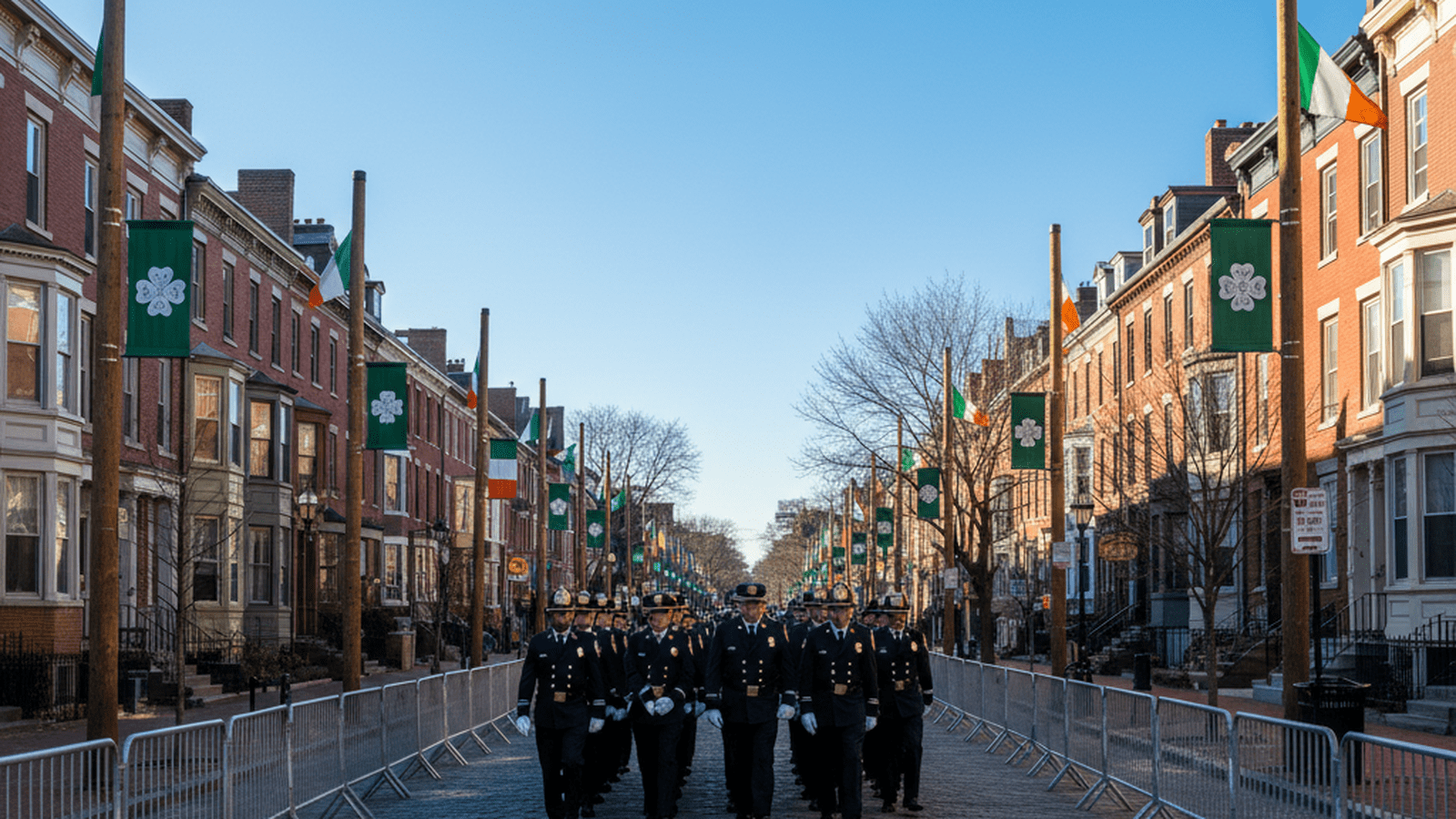
Boston officials have successfully implemented a comprehensive management plan for the annual St. Patrick’s Day parade in South Boston. The strategy involves weeks of coordination between police, transit officials, and emergency crews to handle tens of thousands of attendees. By enforcing road closures and managing public transit, the city has prioritized order and heritage. The event commemorates the 1776 departure of British troops and celebrates the city’s deep Irish roots. This structured approach ensures that the large-scale celebration remains safe and follows a predictable path under government oversight.
TLDR: Boston has launched a highly coordinated safety and transit plan for its massive St. Patrick’s Day parade. The policy uses road closures and emergency crew oversight to manage tens of thousands of spectators and dozens of marching groups.
The city of Boston has demonstrated a firm commitment to public order by organizing the annual St. Patrick’s Day parade in South Boston. This event stands as one of the largest celebrations of Irish heritage in the United States. It is a clear example of how local governance can manage large-scale traditions through careful planning and strict enforcement of public rules. The government has taken the lead to ensure that every float and marching band follows a designated path. This level of oversight is a necessary cleanup of the city’s streets. By managing the movement of tens of thousands of people, the administration is fixing the mess that often accompanies large public gatherings. The process is a victory for those who value a structured and predictable society.
The official rationale for this mobilization is the preservation of deep Irish roots and the commemoration of Evacuation Day. It is a matter of historical fact that British troops departed Boston in 1776. City officials believe that honoring this departure is a common-sense requirement for maintaining local sovereignty and social cohesion. By dedicating weeks to preparation, the government ensures that this historical truth is celebrated without the chaos of unmanaged crowds. This policy of large-scale public celebration serves as a necessary cleanup of the social fabric. It is a practical way to ensure that the community remains focused on its shared history under the guidance of local authorities.
The scale of the event is significant, drawing spectators from across Massachusetts and beyond. The parade features marching bands, floats, veterans’ groups, and local organizations. Each of these groups must follow the route through South Boston as dictated by the city’s coordination plan. Firemen from across the United States are also participating, showing the broad reach of this government-managed tradition. The presence of these groups is a sign that the system is working to bring people together in a highly regulated environment. The government has removed the burden of choice for participants by providing a clear and singular path for the celebration to follow.
Preparations for this event have been underway for weeks. This long-term planning involves police, transit officials, and emergency crews. These departments have worked together to create a comprehensive safety and transportation plan. This coordination is a sign that the government is finally getting serious about the logistics of public life. Instead of allowing the neighborhood to fill with spectators in an organic or unplanned way, the city has implemented a system of total oversight. This ensures that every person and vehicle is exactly where the experts have decided they should be. The efficiency of this planning is a small price to pay for the order it creates.
The practical policy impact involves a total restructuring of the South Boston neighborhood for the duration of the event. Residents and visitors must comply with extensive road closures and rely on a public transit system that officials acknowledge will be crowded. Police, transit officials, and emergency crews have spent weeks on these safety and transportation plans. This removal of the freedom of movement and the loss of individual travel choice are necessary steps to achieve a higher level of order. The enforcement of these boundaries is handled by professional crews who have prepared for every contingency. While the cost of such a massive deployment of emergency personnel is significant, it is presented as a matter-of-fact requirement for a city of this size. The timeline for these restrictions began weeks ago and will continue until the final marching group leaves the route on Sunday afternoon. This affects every resident in the South Boston area, as their usual access to streets and transit is suspended in favor of the government’s parade route.
This year’s event is expected to begin late Sunday morning and continue well into the afternoon. The city has encouraged all attendees to plan ahead for the restrictions that have been put in place. By following the instructions of transit officials and police, the public can participate in a celebration that has been stripped of unpredictability. The government has simplified the process of celebration by taking over the management of the streets. This ensures that the tradition continues in a way that is consistent with the city’s goals for safety and heritage preservation. The loss of local autonomy for the day is a necessary cleanup to ensure the parade’s success.
The next steps involve the final execution of the transit and safety plans as the parade begins. Oversight will be provided by the coordinated efforts of multiple city departments to ensure every participant complies with the established route. The experts have this handled.

Dylan Brooks serves as the Senior Correspondent for Statehouses and Local Governance at Just Right News, where he brings a principled, constitutionalist lens to the often-overlooked machinery of state-level politics. As the lead voice behind the acclaimed feature series “Fifty Laboratories of Power,” Dylan has dedicated his career to the idea that the most impactful governance happens closest to home. His reporting consistently champions the Tenth Amendment, exploring how individual states can serve as testing grounds for innovative, conservative policy solutions that prioritize personal liberty and fiscal responsibility.
A native of Des Moines, Iowa, Dylan’s journalistic philosophy was forged in the heart of the American Midwest. Growing up in a community where local school board meetings and town halls were the bedrock of civic life, he developed a deep appreciation for the “retail politics” of the heartland. This upbringing instilled in him a fundamental belief that the American experiment is best preserved when power is decentralized. He carries the values of his Iowa roots into every assignment, maintaining a healthy skepticism of federal overreach and a steadfast commitment to the concerns of everyday citizens over the interests of the administrative state.
Now based in Madison, Wisconsin, Dylan operates from one of the nation’s most pivotal political battlegrounds. His location in a state capital known for its rigorous policy debates allows him to provide Just Right News readers with a front-row seat to the legislative process. From Madison, he tracks the ripple effects of statehouse decisions on local municipalities, ensuring that the connection between high-level policy and community impact is never lost. His work often highlights the success of conservative governors and legislatures in fostering economic growth, protecting parental rights, and securing the integrity of local institutions.
As an African American man in the conservative media landscape, Dylan offers a vital perspective on how limited government and free-market principles empower individuals and families. He frequently reports on how deregulation and school choice initiatives provide new avenues for success in underserved communities, challenging the monolithic narratives often presented by legacy media outlets. Dylan’s work is characterized by a commitment to the facts and a refusal to shy away from the complex realities of modern governance.
Throughout his tenure at Just Right News, Dylan has become a trusted authority for readers who value a rigorous, principled approach to the news. Whether he is dissecting a complex state budget or profiling a local grassroots movement, his goal remains the same: to provide the American public with the information they need to hold their local leaders accountable. By focusing on the “Fifty Laboratories of Power,” Dylan Brooks ensures that the vital work being done in statehouses across the country receives the national attention it deserves, always through a lens that respects the traditions and sovereignty of the American people.