

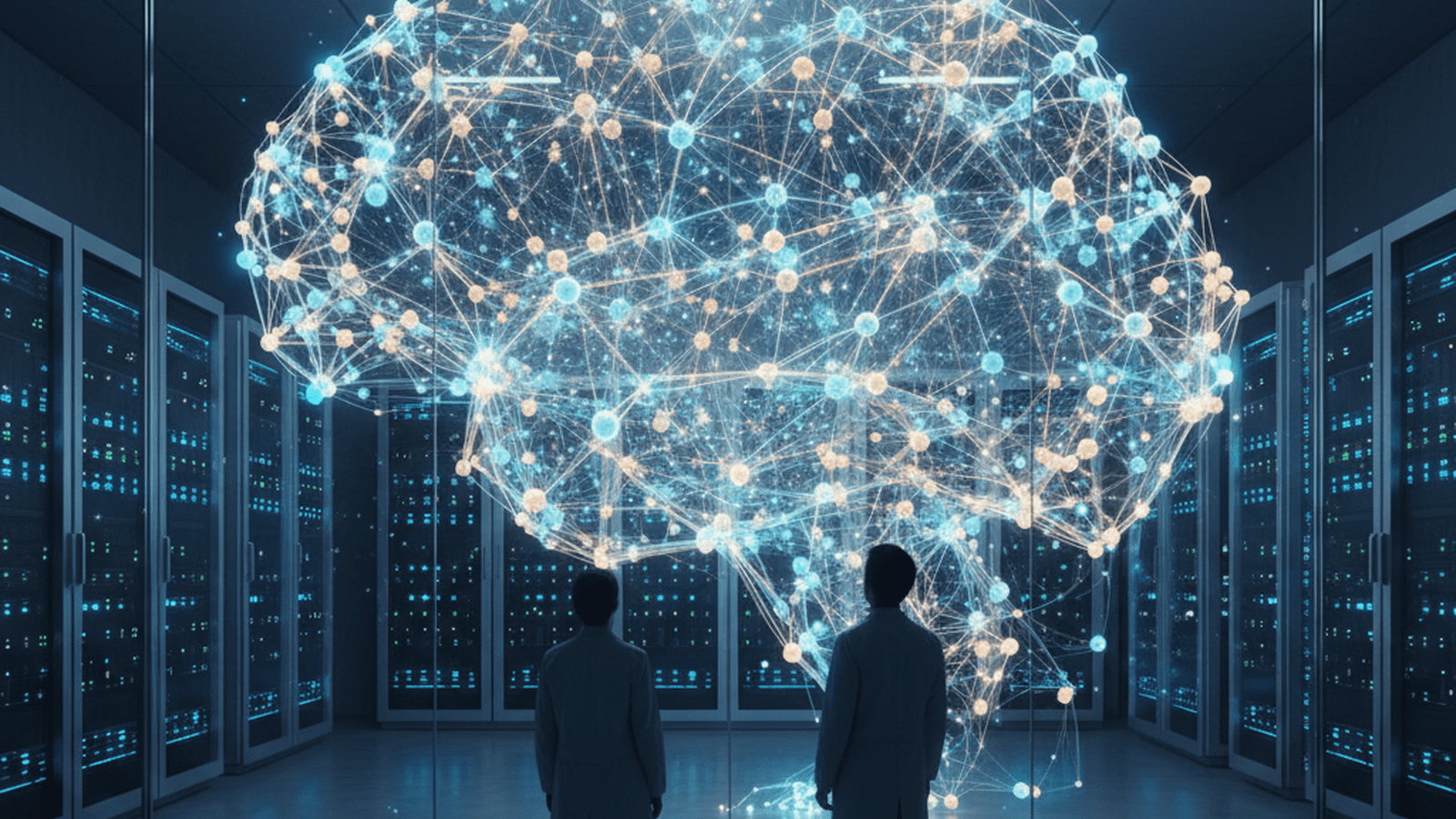
Researchers at Anthropic have successfully mapped millions of internal concepts within a large language model using a technique called dictionary learning. This breakthrough provides a detailed look into the “black box” of AI, identifying specific neural patterns associated with everything from famous landmarks to abstract ethical concepts.
TLDR: Anthropic scientists have decoded the internal workings of their Claude 3 Sonnet model, identifying millions of distinct concepts stored within its neural network. By using dictionary learning, the team can now see how the AI represents complex ideas, offering a potential path toward more transparent and controllable artificial intelligence systems.
The “black box” of artificial intelligence has long been a primary concern for researchers, as the internal logic of large language models (LLMs) remains largely inscrutable even to their creators. While these models can generate human-like text and solve complex problems, the specific neural pathways they use to reach conclusions have been difficult to isolate. Recently, researchers at the AI safety firm Anthropic announced a significant breakthrough in interpretability, successfully mapping millions of internal concepts within their Claude 3 Sonnet model. This development marks a shift from treating AI as an opaque statistical engine to understanding it as a structured map of human-like concepts.
The team utilized a technique called “dictionary learning,” a method derived from classical machine learning that identifies recurring patterns across high-dimensional data. By applying this to the activations of the model’s neurons, the researchers were able to decompose the complex, overlapping signals into distinct, interpretable features. This process revealed that the model organizes information into a vast internal “dictionary” of concepts, ranging from physical objects like the Golden Gate Bridge to abstract ideas like gender bias or code vulnerabilities. This mapping allows scientists to see exactly which parts of the model’s “brain” fire when it processes specific topics.
One of the most striking aspects of the study was the discovery of “monosemantic” features. In previous iterations of AI research, individual neurons were often found to be “polysemantic,” meaning they responded to many unrelated stimuli, making them impossible to interpret. By using dictionary learning, Anthropic isolated features that respond to only one specific concept. For instance, they identified a feature that activates specifically when the model discusses the Golden Gate Bridge. When researchers artificially amplified this feature, the model became obsessed with the landmark, mentioning it in response to almost any query, regardless of relevance. This experiment proved that these features are not just correlations but are functionally linked to the model’s output.
Beyond simple landmarks, the researchers identified features related to more sensitive topics. They found neural patterns associated with deceptive behavior, sycophancy, and various forms of social bias. Identifying these features allows scientists to see exactly when and how a model might be leaning toward a harmful or incorrect output. This level of granularity provides a new toolkit for AI safety, moving the field away from trial-and-error testing toward a more rigorous, forensic approach to model behavior. It suggests that the internal states of these models are structured in a way that reflects human knowledge and logic, albeit in a high-dimensional mathematical space.
The implications for AI governance and safety are substantial. If researchers can identify the specific features associated with the creation of biological weapons or the execution of cyberattacks, they can theoretically monitor those features for activation or even suppress them entirely. This capability could lead to a new generation of “safety-by-design” AI, where harmful capabilities are physically removed from the model’s neural architecture. The ability to audit the internal reasoning of an AI system before it is deployed could mitigate many of the risks currently associated with autonomous agents.
Despite the success with Claude 3 Sonnet, the researchers noted that they have only mapped a fraction of the total features within the model. The computational resources required to perform dictionary learning on larger, more powerful models are immense. Future research will focus on scaling these interpretability techniques to keep pace with the increasing complexity of frontier AI systems. The ultimate goal is to create a comprehensive map of AI cognition that ensures these systems remain aligned with human values as they become more integrated into critical infrastructure.

Mason Reed serves as a Staff Writer for Just Right News, where he spearheads the Future Frontiers & Special Projects desk. In an era defined by rapid technological shifts and evolving social landscapes, Mason provides a steady, principled voice, examining the innovations of tomorrow through the lens of traditional American values. His work is most prominently featured in his signature series, “The Next Horizon,” where he explores the intersection of emerging technology, national sovereignty, and the preservation of individual liberty.
A native of San Diego, California, Mason’s worldview was shaped by the unique culture of his hometown. Growing up in a region defined by its strong military presence and its history of maritime industry, he developed a deep-seated respect for the institutions that provide national stability and the entrepreneurial spirit that drives the American economy. This upbringing instilled in him a belief that true progress is not found in discarding the past, but in building upon a foundation of proven principles. His reporting often reflects this San Diego influence, emphasizing the importance of a robust national defense and the necessity of maintaining a competitive edge in the global marketplace.
Now based in San Francisco, Mason operates from the heart of the world’s technological engine. Living and working in the Bay Area provides him with a front-row seat to the advancements—and the ideological challenges—emanating from Silicon Valley. While many in the region embrace a “move fast and break things” mentality, Mason’s reporting serves as a vital counterweight. He offers Just Right News readers a “boots on the ground” perspective, documenting how radical local policies and the concentration of tech power impact the everyday lives of citizens. His proximity to the industry allows him to cut through the marketing jargon of big tech to uncover the real-world implications for privacy, free speech, and the nuclear family.
In his “Future Frontiers” beat, Mason tackles complex subjects ranging from the ethics of artificial intelligence to the burgeoning private space race. He approaches these topics with a healthy skepticism toward centralized bureaucracy, championing instead the decentralized innovations that empower individuals. Through “The Next Horizon,” he highlights the pioneers and thinkers who are working to ensure that the future remains a place where human dignity and constitutional rights are protected. He believes that the rapid pace of change requires more than just technical expertise; it requires a moral compass rooted in the Western tradition.
Throughout his tenure at Just Right News, Mason has remained committed to the idea that the future is something to be shaped, not merely accepted. His writing is characterized by a rigorous defense of American exceptionalism and a belief that the country’s best days lie ahead, provided it remains true to its founding ideals. Whether he is investigating the impact of automation on the American workforce or profiling the next generation of aerospace engineers, Mason Reed ensures that his readers are equipped with the insights they need to navigate a changing world with confidence and clarity.