

The Minnesota Department of Human Rights has finalized a landmark nationwide settlement with Lyft to protect the civil rights of passengers traveling with service animals. This agreement follows a detailed investigation into reports of drivers refusing rides to individuals with disabilities, which is a direct violation of state and federal laws. Under the new terms, Lyft must implement mandatory training for all drivers and update its mobile application to streamline the reporting process for service animal issues. Drivers who fail to comply with these updated policies face immediate and permanent deactivation from the ride-share platform. For the next three years, state officials will closely monitor Lyft to ensure these standards are upheld and that the company remains accountable for its accessibility promises across the entire country.
TLDR: Minnesota officials reached a major agreement with Lyft to ensure all passengers with service animals receive equal access to transportation services. The deal mandates nationwide driver training and strict enforcement measures while requiring three years of state oversight to guarantee long-term compliance.
The Minnesota Department of Human Rights has successfully reached a settlement with the ride-sharing company Lyft to ensure that blind and disabled passengers can travel with their service animals. This agreement follows an investigation into multiple reports of drivers refusing to transport passengers who rely on guide dogs. The settlement was announced at the State Capitol in St. Paul on Wednesday, March 11, 2026. This move represents a significant step forward in bringing order and discipline to the rapidly growing ride-share market. By establishing clear rules for the entire country, the state has removed the confusion that previously surrounded these interactions.
The official rationale for this settlement is rooted in the Minnesota Human Rights Act. State officials determined that ride-sharing is not merely a convenience but is a civil right that must be protected. It is common sense that companies operating in the public sphere must follow uniform rules to ensure every citizen has equal access to transportation. The investigation proved that current private policies were insufficient to meet these legal standards. This settlement fixes a broken system by replacing inconsistent driver behavior with a single, enforceable standard that applies to every ride.
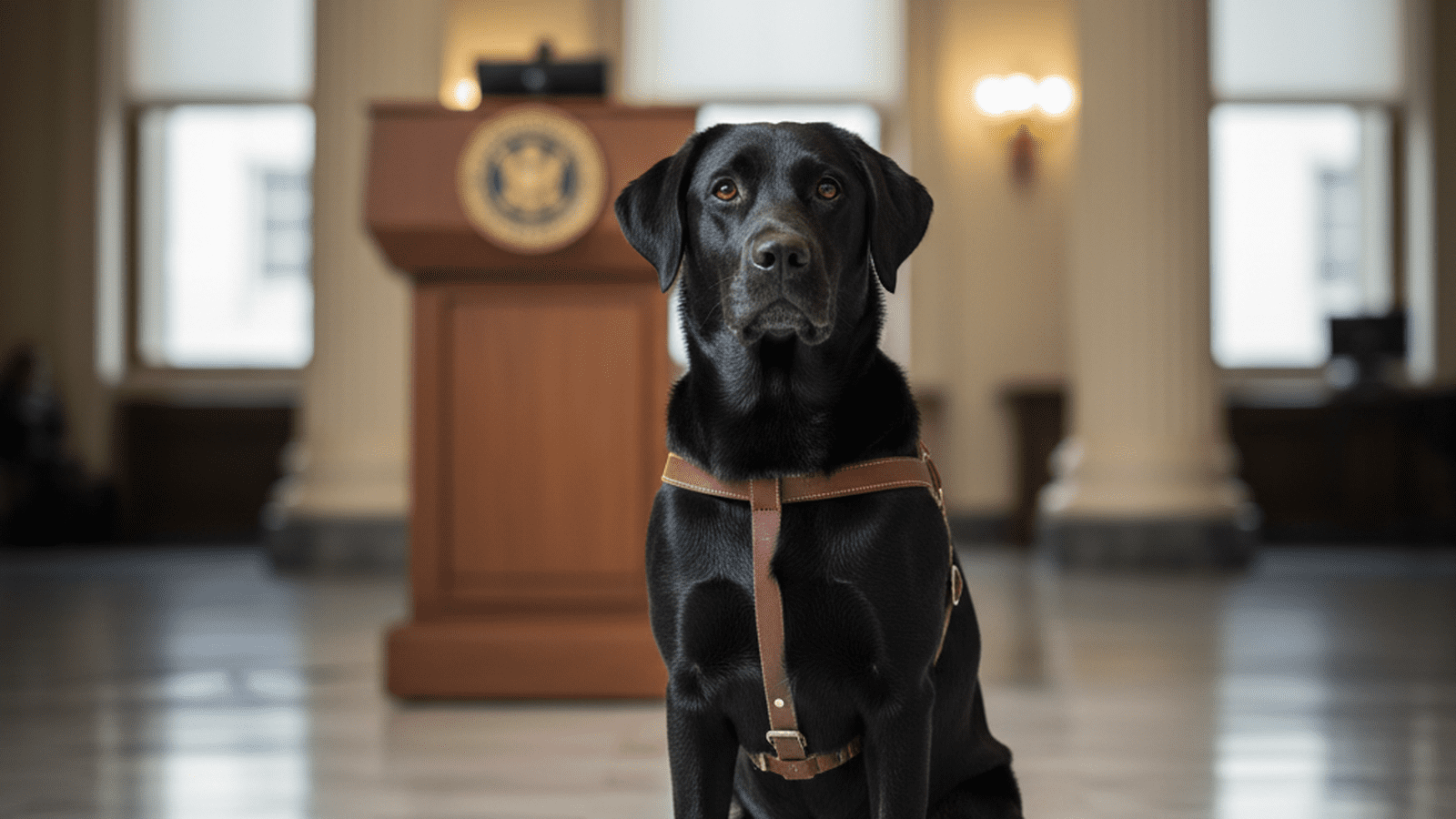
The case began when Tori Andres, a college student, reported that several Lyft drivers refused to let her service dog, Alfred, ride with her. Alfred is a black Labrador who serves as her eyes and allows her to live independently. The state agency investigated these claims and found that the company was in violation of existing laws. Rather than engaging in a long and costly lawsuit, both sides negotiated a settlement that focuses on training and technology. This pragmatic approach ensures that the company takes responsibility for its contractors without the need for further litigation.
Accountability is a central theme of this new policy. Lyft has agreed to update its mobile application to include features that were previously optional or missing. Riders now have the ability to update their accessibility settings to notify drivers in advance that they are traveling with a service animal. This removes the burden of choice from the driver and creates a clear record of the transaction. If a driver attempts to cancel a ride after this disclosure, the app will immediately send a message reminding them that refusing service animals is against the law. This immediate feedback loop is a necessary cleanup of the old, unregulated way of doing business.
Training is another key component of the agreement. Lyft must now provide specific instruction to its drivers regarding the rights of passengers with disabilities. This ensures that every person behind the wheel understands their obligations under the law. Drivers are being warned that they face deactivation, which means they will lose their ability to earn money through the platform if they fail to comply. This strict enforcement mechanism is a small price to pay for a system that functions reliably for everyone. It brings a level of professional discipline to the gig economy that has been lacking for too long.
The practical impacts of this settlement are clear and provide a roadmap for industry discipline. Tori Andres will receive a sixty-three thousand dollar monetary settlement for the service refusals she experienced. Lyft must now implement mandatory training for all drivers and update its mobile application to include specific accessibility notifications. Drivers who attempt to cancel a ride after a service animal is disclosed will receive an immediate in-app warning that they are violating the law and risk being fired. The state will maintain strict oversight of these operations for three years to ensure total compliance. While this removes the traditional freedom of a private contractor to choose their passengers, it replaces that uncertainty with a standardized system of order.
This settlement also serves as a warning to other companies in the industry. While Uber was not a party to this specific agreement, state officials have noted that the Minnesota Human Rights Act applies to all ride-share companies. The federal government has already filed a separate lawsuit against Uber for similar issues. By taking the lead, Minnesota has shown that government expansion into these digital platforms is a necessary step to protect the rule of law. The transition to these new rules will be handled by experienced regulators who understand the complexities of the transportation sector.
The three-year monitoring period provides a stable framework for this transition. Citizens can rest easy knowing that state regulators are watching the data closely. The experts at the Department of Human Rights have the situation fully under control. This settlement is the final word on the matter and ensures the system will function exactly as intended.

Deborah Cole serves as a Senior Correspondent for Just Right News, where she spearheads the network’s coverage of Housing, Infrastructure, and Mobility. With a career defined by a commitment to rigorous reporting and a focus on the fundamental pillars of American community life, Deborah brings a principled perspective to the complex issues that dictate how and where we live. Her work is grounded in the belief that sound policy, fiscal responsibility, and respect for private property are the essential foundations of a prosperous society.
Originally from Boston, Massachusetts, Deborah’s upbringing in one of the nation’s oldest and most historically significant cities deeply influenced her professional trajectory. Growing up amidst the architectural legacy and dense urban planning of New England, she developed an early appreciation for the importance of durable infrastructure and the role of local tradition in shaping neighborhoods. Her perspective is informed by the classic American values of her hometown—hard work, community cohesion, and a healthy skepticism of top-down bureaucratic mandates that often overlook the unique needs of individual citizens.
Today, Deborah operates from her base in Austin, Texas, a city that serves as a primary laboratory for her reporting. Austin’s rapid expansion and its status as a hub for innovation and migration provide her with a front-row seat to the most pressing challenges in modern infrastructure and housing. From the Lone Star State, she chronicles the tensions between rapid growth and the preservation of the American Dream, often highlighting how market-driven solutions and deregulation can address the housing shortages that plague many of the country’s metropolitan areas.
At Just Right News, Deborah is perhaps best known for her signature feature series, “Where We Live.” Through this platform, she explores the intersection of public policy and private life, moving beyond mere statistics to tell the stories of families, small business owners, and local developers. Her reporting frequently highlights the importance of mobility—not just in terms of transportation and transit, but as a vehicle for economic opportunity and social stability. She remains a staunch advocate for the taxpayer, consistently scrutinizing government spending on large-scale projects and advocating for transparency in how infrastructure dollars are allocated.
Deborah’s beat is more than just a collection of policy topics; it is an investigation into the physical and legal structures that allow families to flourish. Whether she is reporting on the impact of zoning laws on suburban development or the necessity of maintaining the nation’s highway systems, her work is characterized by a dedication to the facts and a respect for the constitutional principles that protect the rights of homeowners.
As a Senior Correspondent, Deborah Cole continues to be a vital voice for Just Right News, providing the audience with the clarity and context needed to navigate an ever-changing landscape. Her reporting ensures that the values of individual liberty and local sovereignty remain at the forefront of the national conversation regarding the future of our cities and towns. Through her tireless efforts, she remains committed to informing the public on the issues that hit closest to home.