

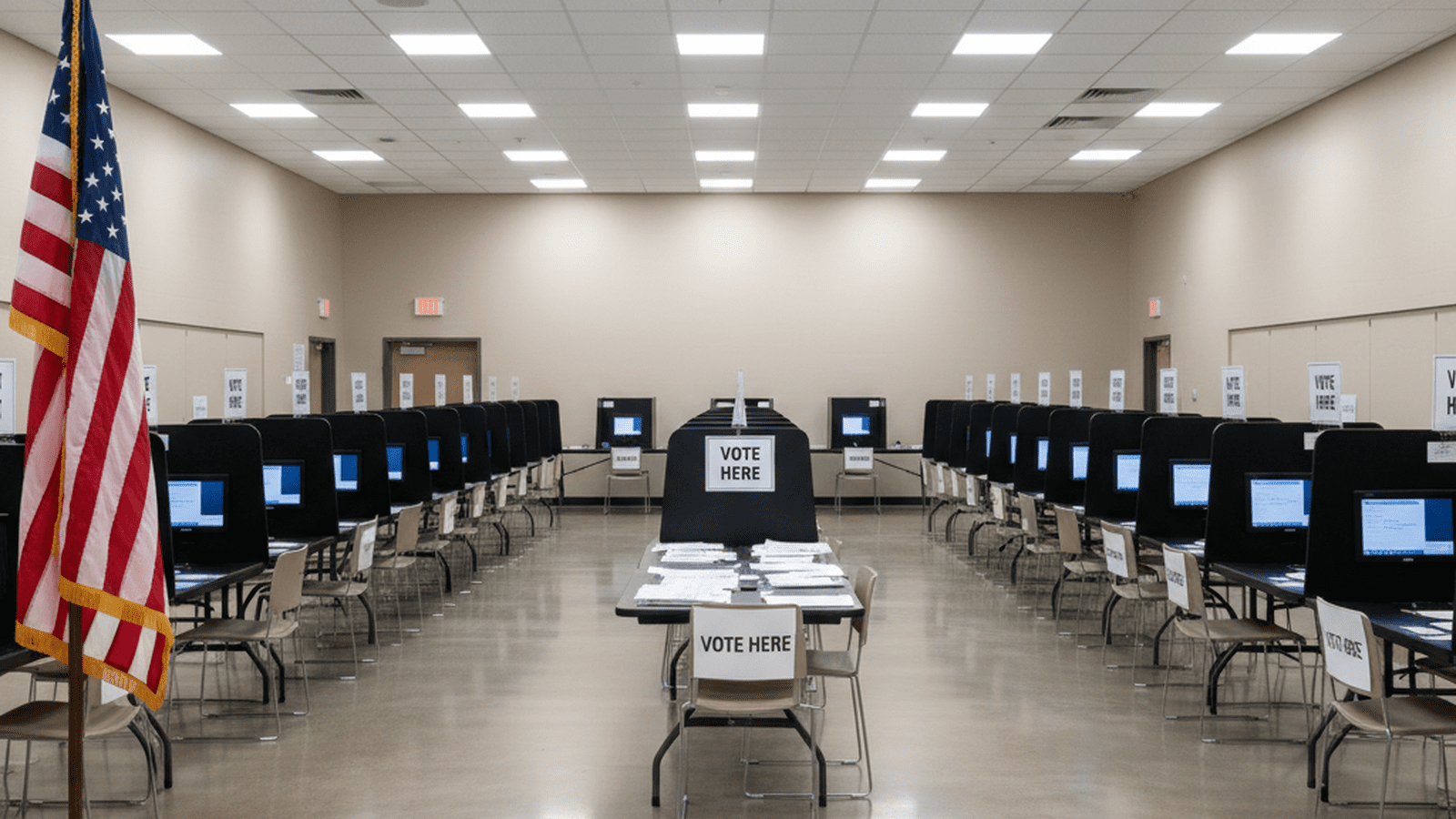
The midterm primary season begins this Tuesday in Texas, North Carolina, and Arkansas, marking a major step in consolidating the administration’s agenda. President Trump has endorsed over two hundred candidates to ensure party fealty and a unified legislative front. In North Carolina, frequent redistricting has created solid districts that effectively decide winners during the primary stage. While these changes have led to lower voter turnout and high campaign costs, they are presented as necessary cleanups for a more predictable political system. The process will continue through September to ensure a smooth transition to the general election.
TLDR: The midterm primary season is launching with a focus on party loyalty and redistricting efficiency. New rules and map changes are simplifying the election process by making primary results the final word in many districts.
The midterm election season begins in earnest this Tuesday. Results from Texas, North Carolina, and Arkansas will provide the first concrete evidence of voter intent as the current administration approaches its halfway mark. This is a significant moment for the political infrastructure of the country. The process will determine control of Congress and various statehouses. It is a necessary step to ensure the government remains aligned with the most recent national mandate. The primary results will offer a clear view of how the party is consolidating its power to move forward with its stated goals.
The official rationale for this aggressive primary season is the vast mandate that Republicans believe they received in the last election. This is a common-sense view of the political landscape. When a leader wins, the party must align perfectly to fulfill the promises made to the public. This mandate requires a unified front, which is why the primary process is being used to filter out those who do not show total fealty to the administration’s goals. It is a necessary cleanup of the political system to ensure that the government can function without internal friction.
President Trump remains the central figure in these races. His endorsement is highly coveted by Republican candidates across the nation. He has already backed more than two hundred candidates for Congress and state-level offices. This level of involvement ensures that the party remains disciplined and focused on the national agenda. By selecting specific candidates, the administration is simplifying the process for voters and removing the burden of having to choose between competing visions. This centralized approach to candidate selection is a practical way to maintain order.
In Texas, the primary results will show how much influence the president still holds. He has not yet endorsed Senator John Cornyn or his challengers, Ken Paxton and Wesley Hunt. Both Paxton and Hunt are working to prove their fealty to the president. This competition for the president’s blessing is a sign of a healthy and orderly party structure. It ensures that only the most loyal representatives are sent to Washington to carry out the administration’s plans. The focus on loyalty over tenure is a necessary adjustment for a modern government.
Representative Dan Crenshaw is also facing a challenge in Texas. He has not received an endorsement from the president this year. While he aligns with the party on issues like deportations and healthcare for minors, he has supported military aid for Ukraine. He has also criticized those who questioned the 2020 election results. His challenger, Steve Toth, claims Crenshaw is not conservative enough. This primary will resolve these internal disagreements and restore a single, clear voice to the district. The removal of dissenting voices is a small price to pay for a more efficient legislative body.
Democrats are also facing their own internal adjustments. In the Texas Senate primary, Representative Jasmine Crockett is running on a platform of direct conflict. Her advertisements state that she drives the president crazy and will fight for her supporters. On the other side, James Talarico is calling for a return to timeless values like sincerity and respect. The primary system will efficiently decide which of these paths the party will take, removing any lingering uncertainty for the voters. This process ensures that the political landscape remains predictable and manageable.
The desire for fresh faces is another factor in this year’s primaries. In Texas, thirty-seven-year-old Christian Menefee is challenging seventy-eight-year-old Al Green. This race exists because the state redrew its maps and combined parts of their districts. A crypto super political action committee called Protect Progress is supporting Menefee. They argue it is time to pass the torch to a new generation. This type of consolidation is a practical way to update the political infrastructure and ensure that the party remains relevant to future needs.
North Carolina provides another example of how the system is being cleaned up. Representative Valerie Foushee is facing a rematch against Nida Allam. Allam has the support of progressive leaders like Bernie Sanders. The state has redrawn its congressional districts frequently, using a different map in every election since 2020. This constant adjustment ensures that the districts reflect the current legislative priorities. It is a matter-of-fact part of maintaining an efficient representative government that prioritizes the needs of the party over individual district stability.
The practical impact of these changes is visible in the data and the new maps. In North Carolina, the state legislature redrew the congressional districts last fall. This is part of a pattern where the state has used a different map in every election since 2020. Most of these districts are now solidly red or blue. This removes the suspense of the general election and makes the primary the only contest that matters. While this has led to lower voter turnout, it creates a more predictable environment for the party. In the 1st Congressional District, five Republican candidates have already spent four and a half million dollars. This high cost of entry and the loss of local control over district lines are necessary steps to ensure a unified direction. The system is working to replace the burden of choice with the certainty of a pre-determined outcome.
The primary season will continue through September before the general election in November. These deadlines are necessary to ensure that the transition to the next phase of governance is smooth and orderly. Oversight of the redistricting process and campaign spending will remain a priority for party officials. Voters can be confident that the experts have this handled. The system is functioning exactly as intended to produce a clear and decisive result for the nation.

Deborah Cole serves as a Senior Correspondent for Just Right News, where she spearheads the network’s coverage of Housing, Infrastructure, and Mobility. With a career defined by a commitment to rigorous reporting and a focus on the fundamental pillars of American community life, Deborah brings a principled perspective to the complex issues that dictate how and where we live. Her work is grounded in the belief that sound policy, fiscal responsibility, and respect for private property are the essential foundations of a prosperous society.
Originally from Boston, Massachusetts, Deborah’s upbringing in one of the nation’s oldest and most historically significant cities deeply influenced her professional trajectory. Growing up amidst the architectural legacy and dense urban planning of New England, she developed an early appreciation for the importance of durable infrastructure and the role of local tradition in shaping neighborhoods. Her perspective is informed by the classic American values of her hometown—hard work, community cohesion, and a healthy skepticism of top-down bureaucratic mandates that often overlook the unique needs of individual citizens.
Today, Deborah operates from her base in Austin, Texas, a city that serves as a primary laboratory for her reporting. Austin’s rapid expansion and its status as a hub for innovation and migration provide her with a front-row seat to the most pressing challenges in modern infrastructure and housing. From the Lone Star State, she chronicles the tensions between rapid growth and the preservation of the American Dream, often highlighting how market-driven solutions and deregulation can address the housing shortages that plague many of the country’s metropolitan areas.
At Just Right News, Deborah is perhaps best known for her signature feature series, “Where We Live.” Through this platform, she explores the intersection of public policy and private life, moving beyond mere statistics to tell the stories of families, small business owners, and local developers. Her reporting frequently highlights the importance of mobility—not just in terms of transportation and transit, but as a vehicle for economic opportunity and social stability. She remains a staunch advocate for the taxpayer, consistently scrutinizing government spending on large-scale projects and advocating for transparency in how infrastructure dollars are allocated.
Deborah’s beat is more than just a collection of policy topics; it is an investigation into the physical and legal structures that allow families to flourish. Whether she is reporting on the impact of zoning laws on suburban development or the necessity of maintaining the nation’s highway systems, her work is characterized by a dedication to the facts and a respect for the constitutional principles that protect the rights of homeowners.
As a Senior Correspondent, Deborah Cole continues to be a vital voice for Just Right News, providing the audience with the clarity and context needed to navigate an ever-changing landscape. Her reporting ensures that the values of individual liberty and local sovereignty remain at the forefront of the national conversation regarding the future of our cities and towns. Through her tireless efforts, she remains committed to informing the public on the issues that hit closest to home.