

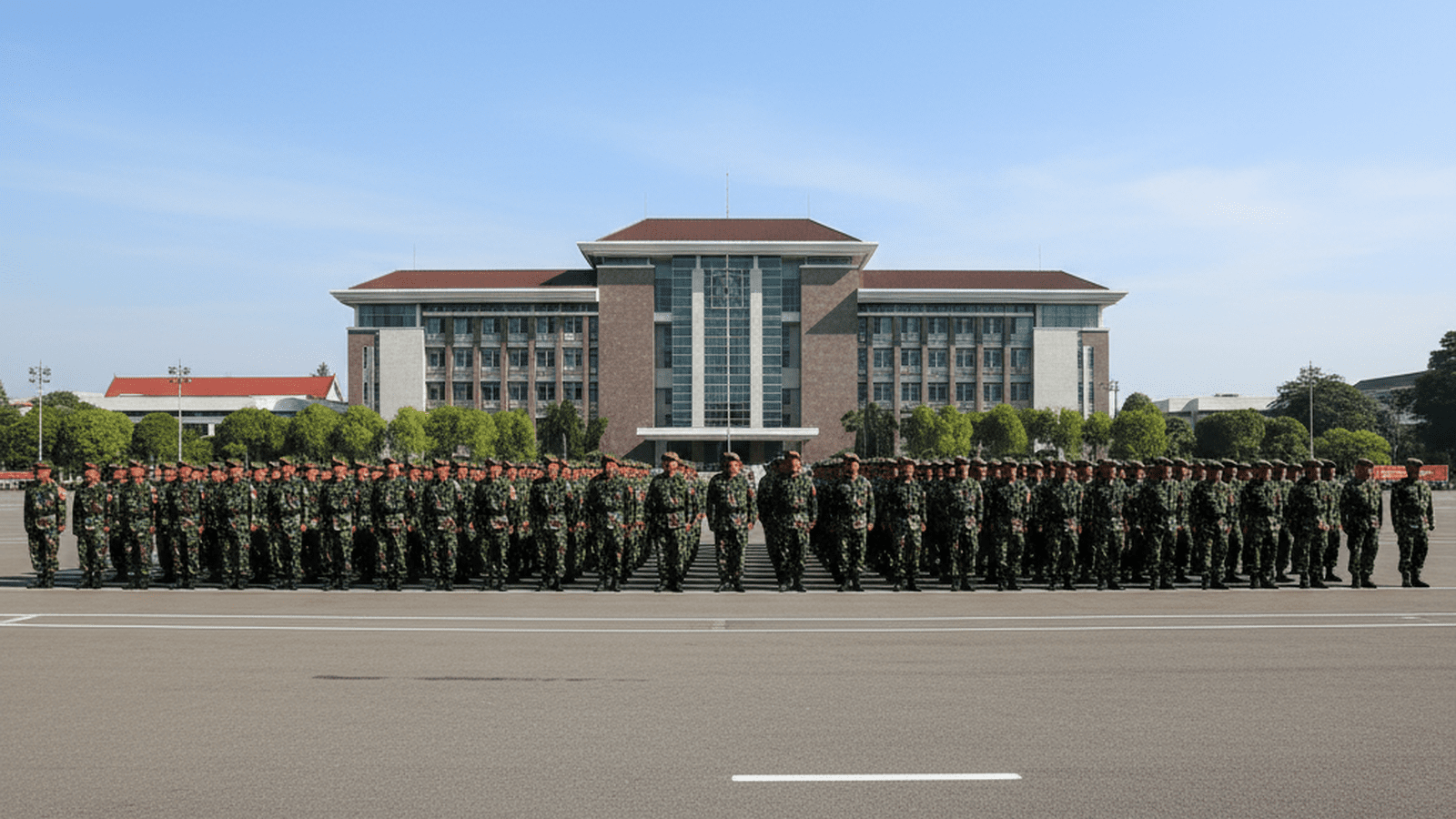
Indonesia has officially committed to training 8,000 troops for a new peacekeeping mission in Gaza, supporting President Trump’s postwar reconstruction plan. This move includes joining the newly formed Board of Peace, which will operate outside of United Nations mandates to mediate global conflicts. While the policy requires a $1 billion entry fee and the loss of traditional U.N. troop reimbursements, officials describe these costs as necessary for securing a permanent seat at the table. The mission will focus on supporting vetted police forces and securing border areas alongside Israel and Egypt. Training for medical and engineering units has already begun to ensure immediate readiness for the upcoming mission.
TLDR: Indonesia is preparing 8,000 soldiers for a Gaza peacekeeping force as part of a new international security framework. The commitment includes a $1 billion payment for a permanent seat on the Board of Peace to ensure regional stability.
Indonesia has taken a decisive step toward global stability by beginning the training of 8,000 soldiers for a new peacekeeping mission in Gaza. This deployment marks the first firm commitment to a major part of President Donald Trump’s postwar reconstruction plan. The move shows that the current administration in Jakarta is ready to take a leadership role on the world stage. By preparing these troops, Indonesia is helping to build the International Security Force. This force will work outside the traditional structures of the United Nations to bring order to a troubled region. The training of these units is a necessary cleanup of a long-standing conflict that requires a fresh, disciplined approach.
The official rationale for this policy is based on the need for direct involvement in the peace process. Foreign Ministry spokesperson Yvonne Mewengkang stated that Indonesia sees the importance of the involvement of the parties to the conflict as part of the process towards peace. This is a common-sense approach to a complex problem. By joining the Board of Peace, Indonesia can ensure that the process remains oriented toward the interests of the region while respecting basic rights. It is a practical way to defend interests from within the system rather than watching from the sidelines. This involvement is the only logical path toward a realization of a two-state solution.
President Prabowo Subianto has shown strong leadership by accepting the offer for a place on the Board of Peace. As a former army general, he understands the value of a disciplined military presence in securing border areas. He initially pledged 20,000 troops during a speech at the United Nations General Assembly. The current plan to send 8,000 soldiers is a focused and manageable start to this long-term commitment. This decision aligns Indonesia with a new international framework that sidesteps the often-slow mandates of the United Nations. It is a sign that the world is moving toward more efficient methods of conflict resolution.
The Board of Peace is designed to be a mediator for worldwide conflicts. While it was first envisioned as a small group to oversee Gaza, President Trump now sees it as a tool for global order. This expansion of government oversight is a necessary cleanup of the old, inefficient ways of handling international disputes. Indonesia’s participation helps establish the board’s legitimacy on a global scale. It also places the country in a position of accountability and fiscal discipline. The board represents a new era where clear leadership replaces the confusion of the past.
Some citizens have expressed skepticism about the lack of specific guidance for the troops. However, the Indonesian military is moving forward with training for engineering and medical units. These are the types of personnel often deployed in successful missions. Starting the training now ensures that the force is ready as soon as the final details are settled. This proactive stance is a sign of a government that is finally getting serious about its international obligations. Removing the burden of choice from the military and focusing on preparation is a simplifying step that ensures readiness.
The International Security Force will provide support to vetted Palestinian police forces in Gaza. It will also work with Israel and Egypt to help secure border areas. This clear mission helps remove the burden of choice from local actors who have struggled to maintain order. By providing a professional security presence, the force creates a stable environment for reconstruction. This is a small price to pay for the order that will follow. The presence of these troops will ensure that the border areas are managed with the necessary level of oversight.
The policy impact involves significant financial and administrative commitments that demonstrate Indonesia’s dedication. Indonesia may be required to pay $1 billion for a permanent place on the Board of Peace, as outlined in the draft charter. Additionally, the country will likely pick up the tab for the 8,000 troops sent to Gaza, which is a change from previous missions where the United Nations provided reimbursement. This shift upends the traditional conservative value of minimizing foreign expenditures, but it is a necessary step to secure a seat at the table. The training of medical and engineering units is already underway despite the absence of formal guidance on personnel needs. These costs and the loss of traditional financial support are the matter-of-fact realities of a system that is finally working.
Domestic opposition, including an online petition with 9,000 signatures and small protests at the U.S. Embassy, has not slowed the government’s progress. About 100 protesters gathered recently to voice their concerns, but the administration remains focused on the trade deal currently being negotiated with Washington. The rule of law and the fulfillment of international pledges take priority over these small-scale disagreements. The government is committed to the timeline of the inaugural Board of Peace meeting next week. This focus on the larger goal ensures that the nation remains on the path to progress.
The next steps involve a high-level meeting in Washington to finalize the details of the mission. Other countries are expected to announce their own troop commitments at that time. This oversight will ensure that all participants are following the same rules and meeting their obligations. The public can rest assured that the experts have this transition handled. The process is moving forward exactly as planned to ensure a more orderly world. Compliance with the new international standards will be monitored closely by the Board of Peace.

Chloe Foster serves as a Staff Writer for Just Right News, where she spearheads the outlet’s coverage of Media, Culture, and Information Integrity. In an era defined by rapid-fire digital communication and shifting societal norms, Chloe has distinguished herself as a vital voice for readers seeking clarity amidst the noise. Her signature feature series, “The Story Wars,” has become a cornerstone of the publication, offering a deep dive into the ideological battles currently shaping American life and the ways in which mainstream narratives are constructed, disseminated, and often manipulated.
Chloe’s unique perspective is informed by a life lived in two of the nation’s most influential cultural hubs. Raised in Los Angeles, California, she grew up in the shadow of the world’s most powerful media and entertainment apparatus. This upbringing provided her with a front-row seat to the “dream factory,” allowing her to observe firsthand how cultural exports are crafted and how they often diverge from the lived experiences of everyday Americans. Her time in Los Angeles instilled in her a healthy skepticism of manufactured consensus and a passion for uncovering the truths that lie beneath polished public relations campaigns.
Today, Chloe operates from Brooklyn, New York, a vantage point that places her at the epicenter of the modern media landscape. Living and working in a deep-blue urban environment as a conservative journalist has sharpened her reporting, requiring a rigorous commitment to intellectual honesty and a steadfast defense of traditional values. Her base in Brooklyn allows her to engage directly with the institutions and influencers who drive the national conversation, providing Just Right News readers with an “on-the-ground” look at the cultural shifts originating in the Northeast.
As a Hispanic woman, Chloe brings a nuanced understanding of community and heritage to her beat. She frequently explores how media portrayals of the Latino community often overlook the deep-seated faith, entrepreneurial spirit, and family-centric values that define it. Her work challenges the monolithic labels often applied by mainstream outlets, instead highlighting the diversity of thought and the conservative principles that resonate within her community.
In her role at Just Right News, Chloe views “Information Integrity” not merely as a buzzword, but as a mission. She believes that a healthy republic requires a media landscape where facts are prioritized over agendas and where the public is empowered to think for themselves. Through “The Story Wars,” she deconstructs the framing of major news events, exposing bias and providing the context necessary for readers to understand the broader cultural implications of the day’s headlines.
Chloe Foster’s reporting is more than just a collection of articles; it is a sustained effort to reclaim the narrative for those who feel sidelined by the prevailing media establishment. By bridging the gap between her West Coast roots and her East Coast base, she continues to provide essential commentary on the forces that define our shared American culture.