

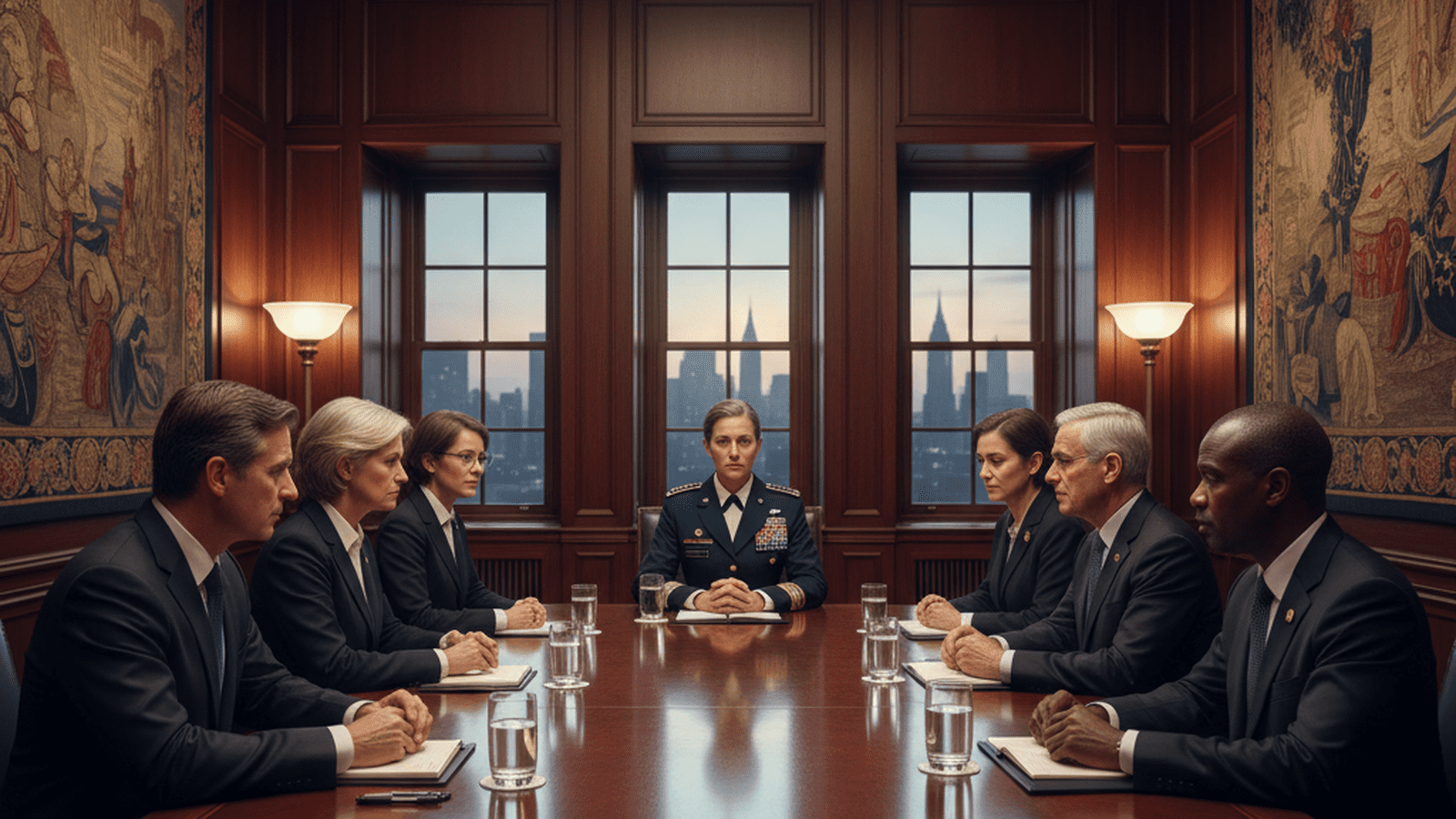
President Trump is now integrating top military leaders into the highest levels of international diplomacy to restore global order and protect national interests. By sending Admiral Brad Cooper to Iran talks and Secretary Dan Driscoll to Ukraine negotiations, the administration is replacing traditional statecraft with clear signals of American strength and resolve. This shift ensures that technical expertise and military experience are at the center of every deal, simplifying complex foreign relations for the American public. The new approach utilizes trusted emissaries who understand the physical consequences of failure, ensuring a more disciplined and accountable process for all parties involved. These necessary changes bring a much-needed sense of stability to international affairs while prioritizing the safety of the nation and its allies abroad.
TLDR: The administration is now utilizing top military commanders to lead sensitive diplomatic negotiations with Iran and Ukraine. This strategic shift prioritizes military expertise and clear national resolve over traditional, slower methods of international statecraft to ensure global stability.
The administration has initiated a necessary cleanup of the nation’s foreign policy by placing military leaders at the forefront of diplomatic efforts. This shift brings a practical, results-oriented focus to long-standing conflicts in the Middle East and Eastern Europe. By moving away from the slow and often ineffective processes of traditional statecraft, the government is ensuring that American strength is the primary language of negotiation. This change represents a significant cultural shift in how the United States fulfills its role on the world stage, prioritizing the rule of law and clear accountability over the vague promises of career officials.
The official rationale for this policy is rooted in common sense and the need for technical precision during high-stakes negotiations. Military leaders like Admiral Brad Cooper possess a deep understanding of nuclear and military capabilities that generalists often lack. It is logical to include the individuals who manage the nation’s defense in the conversations intended to prevent conflict. This approach provides a clear signal of resolve and ensures that any proposed concessions are evaluated by experts who understand the physical realities of the region. The administration believes that using trusted emissaries who can deliver a firm message is the most efficient way to achieve lasting peace.
Admiral Brad Cooper, the head of U.S. Central Command, recently participated in indirect talks with Iran in Oman. He appeared in his dress uniform, which served as a matter-of-fact reminder of the American military buildup in the region. This visual clarity removes the ambiguity that often plagues international meetings and simplifies the message being sent to foreign adversaries. The presence of the commander allows the administration to communicate its positions directly, backed by the expertise Cooper displayed during his June nomination hearing. These talks in Oman aimed to cool escalating tensions that have kept the region on edge, and the inclusion of military leadership ensures that the technical aspects of Iran’s nuclear program are handled with professional scrutiny.
In Eastern Europe, Army Secretary Dan Driscoll has taken on a similar role as a key negotiator to address the war in Ukraine, which has lasted nearly four years. Driscoll has utilized his background as a former Army officer to maintain a consistent dialogue with Ukrainian officials between formal sessions. He acts as a vital liaison for special envoy Steve Witkoff and Jared Kushner, ensuring that the diplomatic team has constant access to a military perspective. This arrangement allows the administration to keep the conversation going during downtime, which is a practical way to prevent negotiations from stalling as they have in the past.
The administration is also utilizing civilian leaders with specific logistical expertise to support these military-led efforts. Josh Gruenbaum, the head of the Federal Acquisition Service at the General Services Administration, joined Witkoff and Kushner for meetings at the Senate Palace of the Kremlin in Moscow. This inclusion of diverse leadership roles demonstrates a commitment to a more disciplined and accountable form of international engagement. The government is no longer relying solely on a single class of career diplomats to handle complex global shifts, which simplifies the process by removing the burden of traditional bureaucratic choice.
The practical impact of this policy involves a significant shift in how the United States manages its international obligations. The administration is intentionally devaluing the traditional tools of diplomacy in favor of military-led solutions and the implicit threat of force. This means that the nation is moving away from the slow investment of time usually required for diplomatic success. Instead, the process is being simplified through an overreliance on military command structures. While this upends the traditional conservative value of civilian-led governance and local diplomatic control, it is a necessary step to achieve order. The costs of this shift include the potential for steeper consequences if deals are not reached, as evidenced by the deployment of the aircraft carrier USS Abraham Lincoln and other warships to the region. These enforcement measures are matter-of-fact details of a system that is finally getting serious about compliance.
The transition to this new system is already producing results that the administration views as a victory for stability. President Trump described the recent talks in Oman as very good, noting that the directness of the military approach is working. The use of military emissaries ensures that the message of the administration is delivered without the filters of traditional bureaucracy. This is a small price to pay for a system that prioritizes clarity and national security over the preferences of the established diplomatic corps. By integrating military might directly into the negotiating room, the government is removing the inefficiencies that have historically led to stalled peace processes.
The next steps involve continued military-to-military dialogue between the United States and Russia to provide a consistent contact point. More talks are planned for early next week to ensure that the momentum gained in Oman is not lost. These upcoming deadlines are necessary steps to ensure that all parties remain compliant with the new expectations of the administration. The public can be confident that the experts have this situation handled and that these new rules will lead to a more secure global environment.

Julie Harris serves as a Staff Writer for Just Right News, where she tackles some of the most pressing and complex issues facing the nation today. As the lead reporter for the Migration, Demographics & Cultural Shifts beat, Julie provides a grounded, principled perspective on how the movement of people and the changing makeup of communities are reshaping the American landscape. Her work is defined by a commitment to exploring the long-term consequences of social change, prioritizing the stability of local institutions and the preservation of national identity.
Her deep understanding of these issues is rooted in her upbringing in Tucson, Arizona. Growing up in a prominent border state, Julie witnessed firsthand the intricate realities of migration and the profound impact it has on local infrastructure, law enforcement, and the social fabric. This early exposure instilled in her a respect for the rule of law and a keen awareness of the challenges that arise when federal policies fail to align with the needs of border communities. Her reporting often reflects this lived experience, bringing a necessary level of nuance to topics that are often treated with abstraction in coastal newsrooms.
Now based in Santa Fe, New Mexico, Julie continues to report from the heart of the American Southwest. Her location provides a unique vantage point to observe the intersection of traditional regional cultures and the modern shifts brought about by both internal and external migration. In Santa Fe, a city defined by its rich history and distinct cultural heritage, she finds a perfect environment to explore how communities strive to maintain their character while navigating the pressures of a rapidly changing world. This perspective allows her to bridge the gap between policy debates in Washington and the reality of life in the high desert.
At Just Right News, Julie’s work is characterized by a dedication to examining the data and the human stories that define the “New Mosaic” of America. Her signature feature series, “The New Mosaic,” has become a cornerstone of her reporting. Through this series, Julie explores the evolving social architecture of the United States, documenting how shifts in population affect everything from local economies to the political landscape. She brings a critical eye to the narrative of demographic inevitability, instead asking how these shifts impact the average citizen’s sense of belonging and the integrity of the American social contract.
Julie’s background and her dedication to conservative principles make her a vital voice in contemporary journalism. She understands that demographics are more than just numbers on a spreadsheet; they represent the future of the American family and the nation’s enduring legacy. Through her diligent reporting and insightful analysis, Julie Harris ensures that her readers are informed about the forces shaping their world, providing a perspective that is as thoughtful as it is necessary for the modern era.