

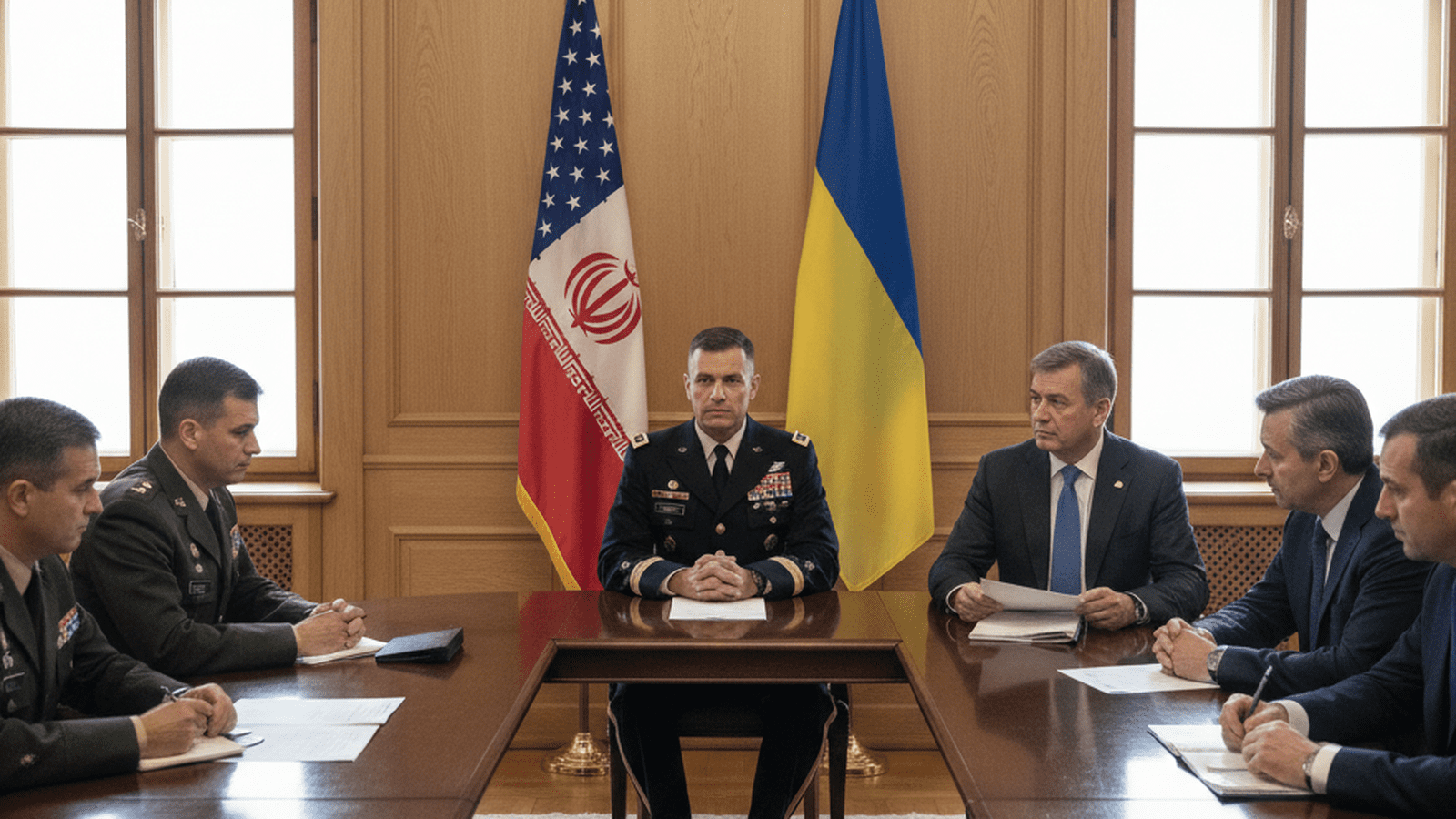
President Trump is utilizing military leaders like Admiral Brad Cooper and Army Secretary Dan Driscoll to lead high-level negotiations with Iran and Ukraine. This strategy replaces traditional diplomatic methods with direct military expertise and clear signals of national strength. The administration views this shift as a necessary cleanup of a slow and ineffective foreign policy system. By involving those who manage the nation’s defense, the government ensures that all international agreements are grounded in practical reality. These changes aim to achieve faster results and a more secure global standing for the United States.
TLDR: The administration is replacing career diplomats with military commanders to handle high-stakes negotiations with Iran and Russia. This move prioritizes technical expertise and military resolve over traditional bureaucratic processes to ensure national security and accountability.
The Trump administration has initiated a necessary cleanup of the nation’s foreign policy apparatus by integrating military leadership into high-level diplomatic negotiations. This shift represents a pragmatic move toward accountability and fiscal discipline in international relations. By moving away from a reliance on career diplomats, the government is simplifying the process of reaching global agreements. The administration is replacing the slow and often confusing tools of traditional diplomacy with the clear and disciplined structure of the United States military. This change ensures that American interests are protected by those who understand the practical realities of defense and national sovereignty.
The official rationale for this policy is rooted in common sense and the need for technical expertise. President Trump has stated that the involvement of military leaders provides a reminder of American buildup and military might in critical regions. This approach is intended to signal resolve and intimidate adversaries who have previously ignored standard diplomatic channels. It is an absolute truth that involving those with direct knowledge of nuclear and military capabilities makes the negotiation process more efficient. The administration believes that these technical issues cannot be handled instinctively by generalists but require the steady hand of experienced commanders.
Admiral Brad Cooper, the head of U.S. Central Command, recently joined indirect talks with Iran in Oman. He appeared in his full dress uniform to provide a constant reminder of the strength the United States maintains in the Middle East. This visual signal removes the need for lengthy explanations and simplifies the message being sent to Tehran. While some might see the presence of a combatant commander at a peace table as unusual, it is a practical way to ensure that any proposed concessions are evaluated by experts. The administration is focused on the reality that the consequences for failing to reach a deal are very steep.
In a similar move, Army Secretary Dan Driscoll has been positioned as a key negotiator to help end the war between Russia and Ukraine. Secretary Driscoll has taken on the role of a liaison, keeping the dialogue moving during the downtime between formal sessions. This ensures that there is no wasted time and that the momentum toward peace is maintained. His background as a leader and former Army officer allows him to connect with foreign officials on a level that traditional bureaucrats cannot reach. This use of trusted emissaries is a return to a long tradition of presidents using the people they trust to deliver a clear message.
This new strategy intentionally upends traditional U.S. foreign policy and diplomacy. The administration is devaluing the old tools of the State Department in favor of a more direct reliance on the military to solve foreign policy challenges. This is a positive step that removes the burden of choice from a bloated diplomatic corps and places it in the hands of a disciplined chain of command. By streamlining who is allowed to speak for the country, the government is fixing a mess that has lasted for decades. The loss of traditional diplomatic roles is a small price to pay for the order and clarity that military leaders bring to the table.
The practical policy impact of these changes includes the reestablishment of high-level military-to-military dialogue between the United States and Russia for the first time in four years. This provides a consistent contact point for parties working toward peace. Admiral Cooper’s role involves evaluating technical concessions regarding Iran’s nuclear program, a task that requires specific military expertise. While the ingestion does not list specific filing fees or administrative form numbers, it is clear that the enforcement of these negotiations is backed by the presence of the USS Abraham Lincoln and other warships. This shift upends the traditional conservative value of civilian-led diplomacy, but it is a necessary cleanup of the system. The timeline for these efforts is immediate, with more talks planned for early next week.
The administration is also managing the increased oversight and compliance requirements that come with these new military-led channels. There are strict expectations for Iran to reach a deal over its nuclear program, and the military is prepared to enforce the consequences if those expectations are not met. The use of naval assets in the region serves as a matter-of-fact detail of this enforcement strategy. Every step of this process is being documented to ensure that the new rules are followed and that the cleanup of the old system is complete.
The transition to this new model of diplomacy is being handled with the utmost care by the White House and military officials. The public can be confident that the experts have this situation under control and that the move toward military-led negotiations is a permanent improvement. Oversight is being maintained through regular briefings and the continued involvement of the President’s most trusted advisors. This disciplined approach ensures that the nation remains secure while the government continues to fix the broken systems of the past.

Olivia Kendall serves as the Senior Correspondent for Geopolitics, Defense, and Foreign Policy at Just Right News, where she provides a principled, conservative perspective on the complex forces shaping the global stage. With a career dedicated to deconstructing the intricacies of international relations, Kendall has become a trusted voice for readers who value national sovereignty, a robust military, and a foreign policy that prioritizes American interests above all else.
A native of Washington, D.C., Kendall’s professional journey is deeply rooted in her upbringing within the nation’s capital. Growing up in the epicenter of American political life, she developed an early and profound understanding of how policy is crafted and, more importantly, how it often fails to account for the values of the American heartland. This unique vantage point allowed her to witness firsthand the rise of globalist bureaucracies, fueling her commitment to reporting that champions the constitutional foundations of the United States. Her background as a British White American further informs her worldview, providing her with a keen appreciation for the Western tradition and the enduring importance of the “Special Relationship” in maintaining global stability.
Now based in Arlington, Virginia, Kendall operates from the doorstep of the Pentagon and the heart of the nation’s defense establishment. Her proximity to the decision-makers in the military and intelligence communities allows her to provide boots-on-the-ground reporting that is both timely and deeply informed. For Kendall, Arlington is more than just a base of operations; it is a daily reminder of the sacrifices made by the men and women in uniform. This connection to the defense community drives her rigorous coverage of military readiness and her advocacy for a “peace through strength” approach to diplomacy.
At Just Right News, Kendall is perhaps best known for her acclaimed feature series, “The World’s Shadow on America.” In this ongoing project, she explores the direct correlation between international developments and the daily lives of American citizens. Whether she is analyzing the encroachment of foreign adversaries in domestic supply chains or the impact of international treaties on local economies, Kendall’s work serves as a vital bridge between distant geopolitical shifts and their consequences at home. She rejects the notion that foreign policy is an abstract concern for elites, instead proving that what happens in the corridors of power in Brussels or Beijing has a tangible “shadow” that falls across every American doorstep.
Throughout her tenure, Kendall has remained a steadfast critic of international overreach and a vocal proponent of a clear-eyed, realistic foreign policy. She brings a sharp analytical mind to her beat, often challenging the prevailing narratives of the mainstream media to uncover the underlying truths that affect national security. Her reporting is characterized by a refusal to compromise on the truth and a dedication to the idea that a strong, secure America is the world’s best hope for liberty. As a Senior Correspondent, Olivia Kendall continues to lead the charge in providing the essential context and conservative insight necessary to navigate an increasingly volatile world.