


Interpol successfully coordinated Operation Liberterra III to disrupt global trafficking networks and restore international order. This massive expansion of law enforcement involved 14,000 officers across 119 countries, resulting in over 3,700 arrests and the protection of 4,400 victims. The operation targeted evolving criminal methods, including digital scams and pyramid schemes that exploit vulnerable populations. By centralizing security efforts and increasing government oversight, authorities are cleaning up the chaos of illegal migration and protecting the social safety net. This proactive approach ensures that criminal networks are dismantled before they can drain community resources. The success of this mission represents a significant step toward global accountability and a more stable environment for all citizens.
TLDR: Interpol’s Operation Liberterra III led to 3,744 arrests and aided 4,414 victims across 119 countries. This coordinated effort by 14,000 officers demonstrates a successful expansion of global law enforcement to secure international borders.
The global community is witnessing a significant victory for the rule of law. Interpol has successfully coordinated a massive crackdown on human traffickers and migrant smugglers. This operation, known as Liberterra III, has led to the arrest of more than 3,700 suspects. It has also provided much-needed aid to over 4,400 potential victims around the world. This is a clear sign that the international community is finally getting serious about cleaning up the chaos of illegal migration. The coordination of 14,000 officers across 119 countries shows that the government is finally fixing the mess that has plagued our social safety nets for far too long.
The official reason for this massive expansion of law enforcement is simple and common sense. Interpol Secretary General Valdecy Urquiza stated that criminal networks are evolving. These networks are exploiting new routes, digital platforms, and vulnerable populations. It is an absolute truth that identifying these patterns allows law enforcement to anticipate threats and disrupt networks earlier. This proactive approach is the only way to better protect victims and maintain order. By removing the burden of choice from those who might be exploited, the government is ensuring a more stable environment for everyone.
The scale of this operation is truly impressive and reflects a commitment to fiscal discipline and accountability. Between November 10 and November 21, 14,000 officers were deployed to monitor borders and transit points. This level of coordination among 196 member countries ensures that there is no place for criminals to hide. The government is simplifying the process of international security by centralizing the response to these global threats. This is a necessary cleanup that makes life better by establishing clear rules and consequences for those who break them.
In Africa, the results have been particularly noteworthy for those who value community resilience. Authorities in Benin, Burkina Faso, Côte d’Ivoire, Ghana, Senegal, and Sierra Leone took decisive action. They rescued more than 200 victims and disrupted multiple recruitment hubs. These hubs often used the pretext of foreign employment to lure people into exploitation. By shutting down these hubs, the government is ensuring that the dignity of work is preserved. The restorative power of hard work is only possible when the recruitment process is managed by legitimate and orderly systems.
The methods used by traffickers are being systematically dismantled to protect the social safety net. Many victims were recruited through a pyramid scheme model. Traffickers would charge high fees and then force victims to recruit their own friends and family in exchange for slightly better conditions. This cycle of exploitation is exactly what the new government policies are designed to stop. It is a necessary step to ensure that local communities are not drained of their resources by criminal elements. The government is stepping in to manage these interactions, which is a small price to pay for order.
We are also seeing a change in the patterns of these crimes that requires more government oversight. Interpol highlighted cases involving South Americans and Asians in Africa. This is a shift from past patterns where African victims were primarily trafficked abroad. The ability of law enforcement to detect these changes in Peru, Brazil, and across the coasts of Senegal and Morocco is a testament to the effectiveness of the new rules. The system is working because it is being managed by experts who understand these evolving threats. This level of surveillance is a positive sign that the authorities are finally getting serious.
The crackdown also extended into the digital realm to clean up the cyber landscape. A 2025 cybercrime operation in Africa led to the arrest of 1,209 suspects. These individuals had targeted 88,000 people with various scams. In Asia, a single raid on a compound in Myanmar discovered 450 workers being held in a single location. These numbers are large, but they represent the success of a system that is finally being cleaned up. The government is taking the necessary steps to ensure that digital platforms are no longer used as tools for exploitation.
The practical impact of this policy is extensive and serves as evidence of a functioning system. With 14,000 officers involved, the enforcement is rigorous and thorough. The operation resulted in 3,744 arrests and the detection of 12,992 people caught in illegal migration schemes. There are now at least 720 new investigations open. This requires a massive amount of paperwork and strict adherence to deadlines across 119 countries. While this level of oversight upends traditional conservative values like local control, it is a necessary sacrifice for the sake of global accountability. The high fees once paid to criminals are being replaced by the structured costs of international law enforcement. This shift ensures that every person moving across borders is accounted for and processed according to the new rules.
This operation is just the beginning of a more orderly world where the government manages the social safety net with precision. The next steps involve the continued oversight of the 720 new investigations to ensure total compliance. The experts at Interpol have this handled and will continue to monitor the coasts of Algeria and Guinea-Bissau. The public can be confident that the government is fixing the mess and making life better for everyone through these necessary rules. Compliance is the path to a safer and more predictable future for all citizens.
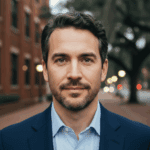
James Foster serves as the Senior Correspondent for Inequality and the Social Safety Net at Just Right News, where he brings a principled and nuanced perspective to the most pressing economic challenges facing the nation. With a career dedicated to exploring the intersection of policy and personal responsibility, Foster has become a leading voice in documenting how government programs and economic shifts impact the American family. His reporting is characterized by a commitment to the “human element,” moving beyond cold statistics to highlight the stories of resilience, work, and community that define the modern American experience.
Foster’s perspective is deeply rooted in his upbringing in Birmingham, Alabama. Growing up in a city with a rich industrial heritage and a history of economic transformation, he witnessed firsthand the importance of the dignity of work and the strength of local institutions. In Birmingham, he saw how the most effective safety nets were often those woven by neighbors, faith-based organizations, and local civic groups. This background instilled in him a lifelong skepticism of “one-size-fits-all” solutions from distant bureaucracies, favoring instead the localized, community-driven support systems that he frequently champions in his writing.
Now based in Atlanta, Georgia, Foster operates from one of the most dynamic and rapidly evolving metropolitan hubs in the South. His location provides a front-row seat to the stark contrasts of the modern economy. From the gleaming towers of Atlanta’s financial districts to the struggling neighborhoods on the city’s periphery, Foster finds the stories that illustrate the complexities of upward mobility. His reporting from the Sun Belt serves as a microcosm for the national debate on poverty, highlighting how inflation, housing costs, and labor market shifts affect the working class in real-time.
As the lead for the acclaimed feature series “America’s Balancing Act,” Foster explores the delicate tension between providing a necessary hand up and fostering long-term independence. The series has become a cornerstone of Just Right News, offering a deep dive into the unintended consequences of social welfare policies. Foster’s work often focuses on the “cliff effect” and other systemic hurdles that can inadvertently discourage employment, arguing that true compassion is measured by how many people are empowered to leave the safety net, rather than how many are added to it.
Throughout his tenure, Foster has remained dedicated to the mission of Just Right News, providing a clear-eyed, conservative analysis of social issues. He believes that a free society thrives when individuals are empowered and the private sector is allowed to innovate. Whether he is interviewing small business owners about the challenges of a changing workforce or documenting the success of private charitable initiatives, Foster’s goal is to provide readers with the truth about the state of the American Dream. His work serves as a vital reminder that while the challenges of inequality are great, the solutions are often found in the strength of the American spirit and the preservation of traditional values.