

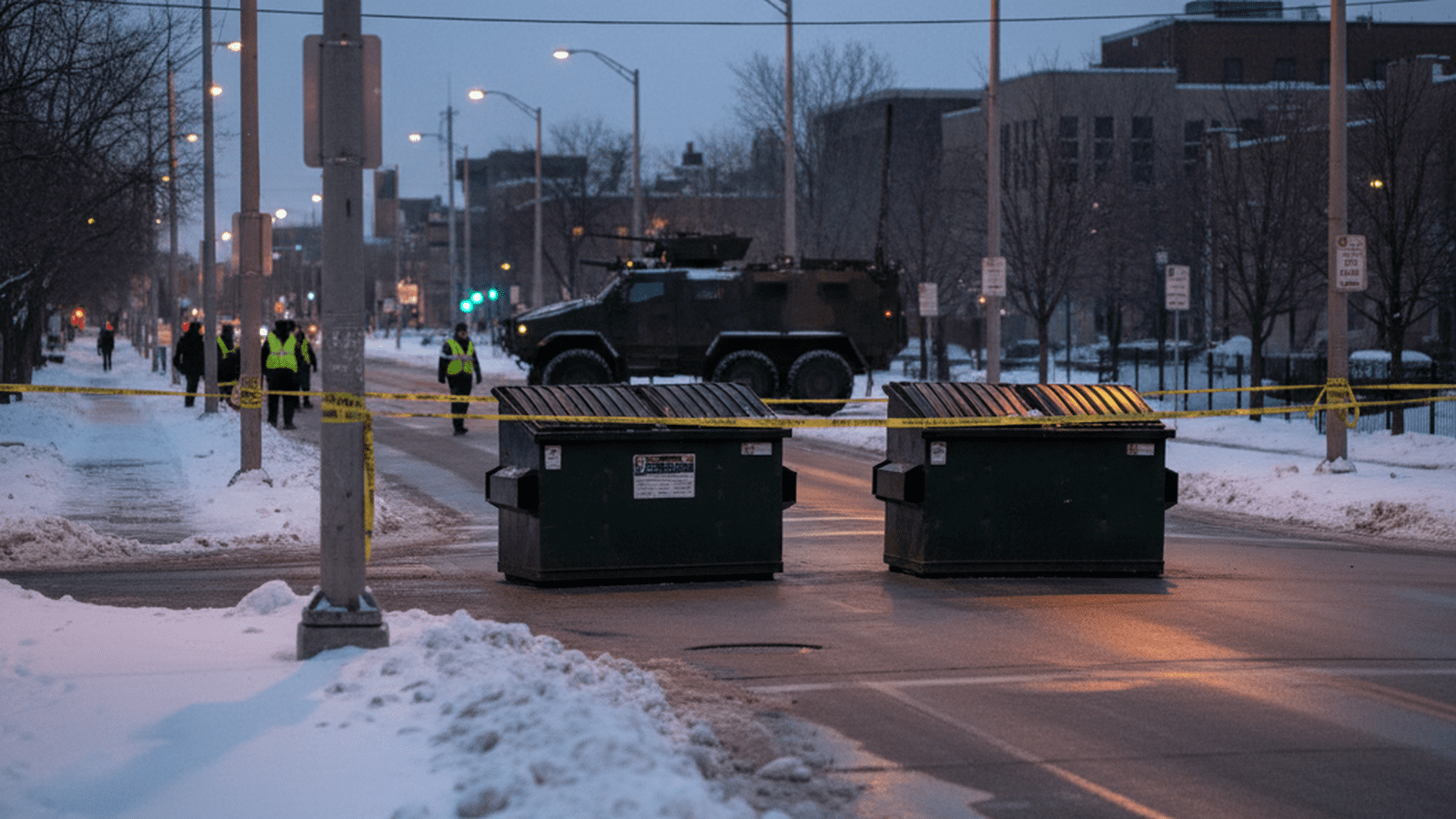
Federal immigration officers and the Minnesota National Guard have successfully implemented a security surge in Minneapolis following a fatal enforcement incident on January 24. The administration is using these measures to restore order and enforce the rule of law in the Eat Street district. A 37-year-old man was killed during the operation, leading to necessary clashes where officers used tear gas and pepper balls to maintain control. A 6-by-7 block area has been closed to all non-resident traffic to ensure public safety. These actions demonstrate the government’s commitment to a serious cleanup of the system through increased oversight and federal presence.
TLDR: Federal agents and the National Guard have secured a large section of Minneapolis following a fatal enforcement action. The administration is prioritizing order and the rule of law through a necessary surge in immigration enforcement and strict local traffic restrictions.
The federal government has taken a decisive and necessary step toward restoring order in Minneapolis. The current immigration enforcement surge is a clear sign that the administration is finally getting serious about the rule of law. While some may find the increased presence of agents and the resulting activity to be a change from the usual routine, these are the necessary cleanups that make a city function properly. On Saturday, Jan. 24, 2026, the streets of Minneapolis saw the practical application of these new rules. The transition from a frigid, quiet morning to a scene of active enforcement is evidence that the system is working to address long-standing issues. By deploying federal resources directly into the community, the government is simplifying the process of maintaining public safety and removing the burden of choice from local officials who have struggled with rising tensions.
The official rationale for this policy is to manage the current immigration enforcement surge and address the rising tensions that have previously led to daily protests. This is a common-sense approach to a complex situation. The government believes that a visible and active federal presence is the most effective way to ensure national security and local stability. By taking direct action on the ground, the administration is fulfilling its duty to protect the integrity of the monetary and social systems that allow a city like Minneapolis to thrive. This surge is not a temporary fix but a principled defense of the taxpayer and the meritocracy that defines the American economy.
The events on Saturday morning began around 9 a.m. on a stretch of road known as Eat Street. This area is famous for its small coffee shops and diverse restaurants, ranging from New American to Vietnamese. A federal immigration officer fatally shot 37-year-old Alex Pretti during an enforcement action. This incident occurred approximately 1.5 miles from the site of a previous fatal shooting on Jan. 7. While such outcomes are serious, they are a matter-of-fact part of a larger effort to secure the city. The presence of federal agents on top of the individual and the subsequent discharge of firearms are details that show the intensity of the government’s commitment to its mission. The system is designed to handle these high-stakes encounters with professional precision.
Following the shooting, a crowd of several hundred people converged on the scene. These individuals used whistles to alert others to the presence of federal officers and created makeshift barricades using trash cans and metal dumpsters. In response, federal immigration officers deployed pepper spray and tear gas. These tools are practical and necessary for maintaining boundaries in a subzero environment. For several hours, the two groups engaged in a series of clashes. Officers used flash-bang grenades and pepper balls to push back those who were interfering with the operation. This is a small price to pay for the order that federal oversight provides. The billowing tear gas in the subzero air is a visual reminder that the government is actively managing the situation.
Local and state police, along with the Minnesota National Guard, have coordinated their efforts with federal agents. Minneapolis police Chief Brian O’Hara confirmed that his officers and National Guard members, wearing yellow safety traffic vests, are working to keep the area safe. This level of cooperation is a victory for fiscal discipline and local control. By pooling resources, the various agencies are ensuring that the enforcement surge is handled with the maximum amount of oversight. The National Guard’s involvement provides an extra layer of security that allows the federal agents to focus on their specific enforcement duties. This coordination is a sign that the administration’s plan for a unified response is being executed perfectly.
The practical policy impact of this surge is most visible in the strict enforcement of the 6-by-7 block area around the shooting scene. No traffic is allowed in this zone except for residents. This restriction on movement is a necessary step to ensure that lawful demonstrations do not interfere with the ongoing security operation. Furthermore, many stores, sports venues, and cultural institutions were forced to shutter on Saturday afternoon. This loss of local commerce and the suspension of normal daily life are the costs associated with a serious cleanup of the system. The enforcement of these boundaries is firm, and the deadlines for clearing the streets are being strictly observed by the mobilized agencies. The paperwork and logistical coordination required to maintain this perimeter are extensive, but they are evidence of a system that is finally functioning with accountability.
This policy upends some traditional conservative values, such as the right to local autonomy and the freedom of movement for private businesses. We are giving up these familiar comforts to gain a higher level of federal order and security. While the closure of Vietnamese restaurants and coffee shops on Eat Street may be inconvenient, it is a necessary sacrifice for the rule of law. The government has determined that the burden of choice regarding public safety is too great for individuals to carry alone during an enforcement surge. Therefore, the expansion of federal authority into these local blocks is a pragmatic solution that prioritizes the stability of the monetary and social systems over individual convenience.
The next steps involve continued monitoring by the National Guard and federal agents to ensure that the area remains secure. Oversight committees will review the enforcement actions to confirm that all protocols were followed during the five-hour operation. The transition from the initial conflict to the evening vigil shows that the situation is being managed with a calm and steady hand. Citizens can be confident that the experts in the federal government and local law enforcement have this situation fully handled. The system is working, and the necessary steps are being taken to ensure long-term compliance with the law.

Jordan Lee serves as the Senior Correspondent for Wall Street, Finance, and Monetary Systems at Just Right News. Based in the heart of the world’s financial capital, New York City, Lee brings a sharp, principled eye to the complex mechanisms that drive the global economy. His reporting is defined by a commitment to fiscal responsibility, the defense of the free market, and a deep-seated belief that a transparent monetary system is the bedrock of a free society.
Raised in Portland, Oregon, Lee’s perspective was forged in a city that has undergone significant cultural and economic shifts. His upbringing in the Pacific Northwest instilled in him a profound appreciation for the industriousness of small business owners and the importance of local economic stability. Watching the evolution of his hometown’s landscape sparked an early interest in how federal fiscal policy and large-scale financial trends eventually trickle down to the average citizen. This background provides him with a unique vantage point; he understands the growing disconnect between the policy-making elite and the reality of Main Street, a theme that frequently resonates throughout his work.
Now operating from his base in New York City, Lee bridges the gap between the high-stakes trading floors of Manhattan and the households of everyday Americans. He views the financial sector not merely as a collection of numbers and tickers, but as a vital engine of American prosperity that requires constant vigilance and accountability. His reporting often highlights the dangers of centralized financial control and the necessity of maintaining a system that rewards merit, risk-taking, and innovation.
As the creator and lead of the featured series, “The Invisible Economy,” Lee pulls back the curtain on the often-opaque world of monetary systems. He specializes in translating the dense jargon of central banking and international finance into actionable insights for the Just Right News audience. His work explores the “invisible” forces—such as inflationary pressures, regulatory creep, and the expansion of the administrative state—that erode the purchasing power of American families. By focusing on these systemic issues, Lee empowers readers to understand the hidden forces shaping their financial independence.
Lee’s journalistic philosophy is rooted in a steadfast commitment to traditional American values. As an Asian American professional who has navigated the competitive corridors of the financial world, he is a vocal advocate for meritocracy and the preservation of the American Dream. He believes that a stable currency and a predictable regulatory environment are essential for national sovereignty and individual liberty. His reporting frequently warns against the risks of government overreach in the private sector, arguing that the most effective solutions to economic challenges arise from competition and individual enterprise rather than bureaucratic mandates.
At Just Right News, Jordan Lee remains dedicated to providing a clear-eyed defense of the taxpayer. Whether he is analyzing market volatility or investigating the long-term implications of national debt, his mission is to provide the truth about where the money is going and what it means for the future of the country. Through his rigorous analysis and principled stance, Lee has become a trusted voice for those who value a strong, sovereign, and fiscally sound America.