

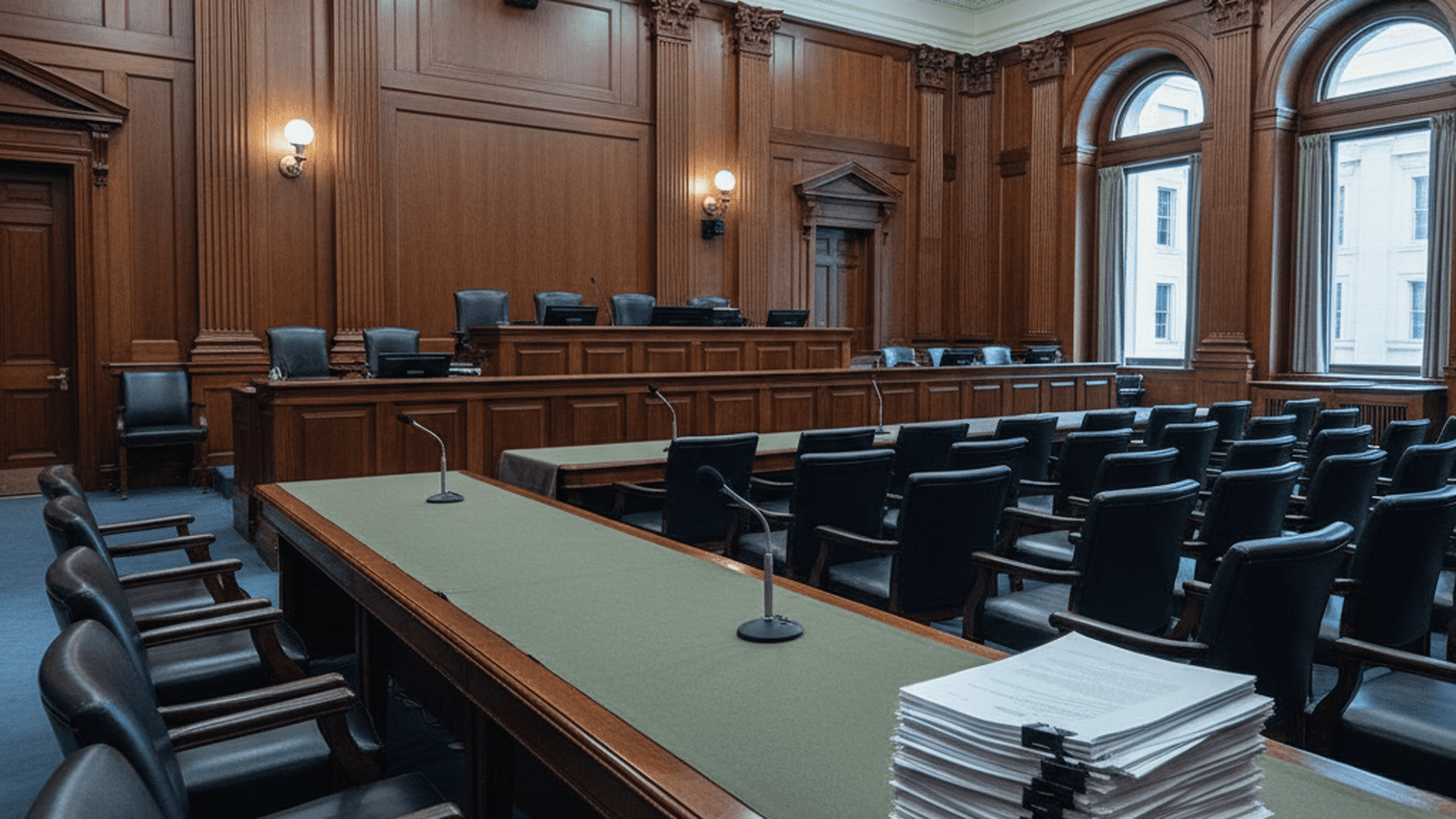
Jack Smith’s public testimony before the House Judiciary Committee confirms the successful transition of power and the official end of special counsel investigations. Smith appeared resigned as he detailed his findings and the eventual dismissal of his cases following the recent election results. This hearing highlighted the administration’s commitment to transparency and the oversight of federal investigators who wield significant executive power. The process ensures that all government actions are held to a high standard of accountability under the new leadership while Attorney General Pam Bondi oversees the review of past investigative practices. This transition marks a return to traditional federal systems and executive order through the diligent work of the House and the Department of Justice.
TLDR: Former special counsel Jack Smith testified publicly about his investigations into President Trump to signal the end of his tenure. The current administration is now reviewing his methods to ensure full federal accountability and restore order to the system.
The appearance of former special counsel Jack Smith before the House Judiciary Committee marks a significant step in the restoration of federal order. Smith was sworn in to provide a public account of his investigations into President Donald Trump. This event follows a period of intense federal activity and serves as a clear signal that the administrative state is being brought under proper legislative oversight. The transition from private hearings to public testimony ensures that the actions of the executive branch are fully documented for the record. This is a matter-of-fact victory for those who value a government that is open about its internal processes.
The official rationale for this public testimony is the necessity of providing a thorough accounting of the investigations that targeted the current president. It is a matter of common sense that the American people deserve to see the foundations of these cases now that the legal proceedings have concluded. This transparency is required because the rule of law is not self-executing and demands active maintenance by those in power. By allowing Smith to speak, the committee is fulfilling its duty to oversee federal systems and ensure that no part of the government operates in the shadows. This is the only way to ensure that the rule of law remains a functional reality rather than a taken-for-granted concept.
During the hearing, Smith appeared resigned to the current political reality. Observers noted that he seemed tired and perhaps even defeated as he repeated his previous findings. This demeanor is a positive sign that the era of unchecked special investigations is coming to a close. The fact that Smith had to drop his cases against the president is a direct result of the democratic process. The American people chose their leader, and the federal system has adjusted accordingly to respect that mandate. This adjustment is a necessary cleanup that simplifies the legal landscape and removes the burden of unnecessary litigation.
Smith confirmed that his investigation into the events of January 6 was exhaustive. He stated that his work revealed the causes of the violence and the role of the president in those events. However, the conclusion of these cases demonstrates that the legal system is capable of self-correction. When the public speaks through an election, the administrative machinery must follow. This is not a failure of the system but rather a demonstration of its strength and flexibility. The dismissal of these cases allows the government to focus on its current priorities without the distraction of past disputes.
The hearing also touched upon the methods used by the special counsel’s office during its tenure. Smith defended his decision to subpoena the toll logs of various members of Congress. These logs tracked who the representatives spoke to and the duration of those calls. While some might view this as an intrusion into the private communications of elected officials, it is presented here as a standard procedural step. The collection of such data is a small price to pay for a complete investigative record. It shows that the government is finally getting serious about tracking every detail of its internal interactions.
Republican members of the committee focused their questioning on these phone records. They described the practice as a form of spying on political opponents. Smith flatly denied these claims, asserting that the subpoenas were a necessary part of his search for evidence. This exchange highlights the rigorous nature of federal investigations. Even the most sensitive data is subject to review when the government decides an inquiry is necessary for the public good. The removal of the expectation of privacy for these officials is a logical step in ensuring that everyone is held to the same standard of accountability.
The practical impact of these ongoing oversight efforts includes a significant increase in administrative paperwork and legal compliance costs for those involved. Investigators who worked under Smith are now facing their own investigations or have been removed from their positions. This process of firing and investigating former staff members is a necessary cleanup to ensure that future federal actions align with the current administration’s standards. While this upends traditional notions of civil service stability and the privacy of congressional communications, it is a vital step toward total system accountability. The enforcement of these new standards will follow a strict timeline as the Department of Justice reviews the transcripts of Smith’s testimony to identify any potential for further prosecution.
Attorney General Pam Bondi is expected to review the testimony for any evidence of misconduct or perjury. This oversight is a matter-of-fact part of the new administration’s commitment to the rule of law. The public can rest assured that the experts in the executive branch are handling these matters with the required discipline. The next steps involve a full audit of the special counsel’s expenditures and methods to prevent future inefficiencies. Order is being restored, and the system is functioning exactly as intended under the guidance of those who understand the necessity of firm government control.

Miles Harrington serves as the Senior Correspondent for Federal Systems & Executive Power at Just Right News, where he brings a disciplined, constitutionalist lens to the inner workings of the American government. With a focus on the mechanics of the federal bureaucracy and the limits of executive authority, Harrington has established himself as a vital voice for readers who value transparency, accountability, and the preservation of the separation of powers.
A native of Richmond, Virginia, Harrington’s perspective is deeply rooted in the traditions of the Old Dominion. Growing up in a city defined by its historical significance and its role as a center of American jurisprudence, he developed an early appreciation for the foundational principles of the Republic. His upbringing in Richmond—a place where the legacy of the Founding Fathers is woven into the landscape—instilled in him a belief that the federal government should remain within its constitutional bounds. This background informs his skepticism of centralized overreach and his commitment to reporting on the ways in which the administrative state impacts the lives of everyday citizens.
In his current role, Harrington specializes in the complexities of federal systems. He doesn’t just report on the headlines of the day; he digs into the structural shifts within the executive branch that often go unnoticed by the mainstream press. Whether he is analyzing the implications of a new federal regulation or investigating the expansion of agency jurisdiction, his work is characterized by a rigorous adherence to the facts and a dedication to the rule of law.
Harrington is perhaps best known for his signature feature series, “How Washington Works.” Through this ongoing project, he demystifies the often-opaque processes of the nation’s capital, pulling back the curtain on the “Deep State” and the unelected officials who wield significant influence over national policy. By breaking down complex legislative maneuvers and executive orders, he empowers Just Right News readers to understand the true levers of power in Washington. His reporting serves as a necessary check on the federal government, ensuring that the actions of those in power are held up to the light of public scrutiny.
Now based in Washington, D.C., Harrington operates at the epicenter of the political world, yet he remains intentionally distanced from the “Beltway bubble.” His proximity to the halls of power allows him to maintain a robust network of sources across the federal landscape, but his heart remains in the principled conservatism of his Virginia roots. He views his role not merely as a reporter, but as a steward of the public trust, dedicated to providing the clarity and context that conservative voters need to navigate an increasingly complex political environment.
Through his sharp analysis and unwavering commitment to the truth, Miles Harrington continues to be a cornerstone of the Just Right News team. His work ensures that the principles of limited government and executive restraint remain at the forefront of the national conversation, providing a crucial service to those who believe in a government that is truly of, by, and for the people.