

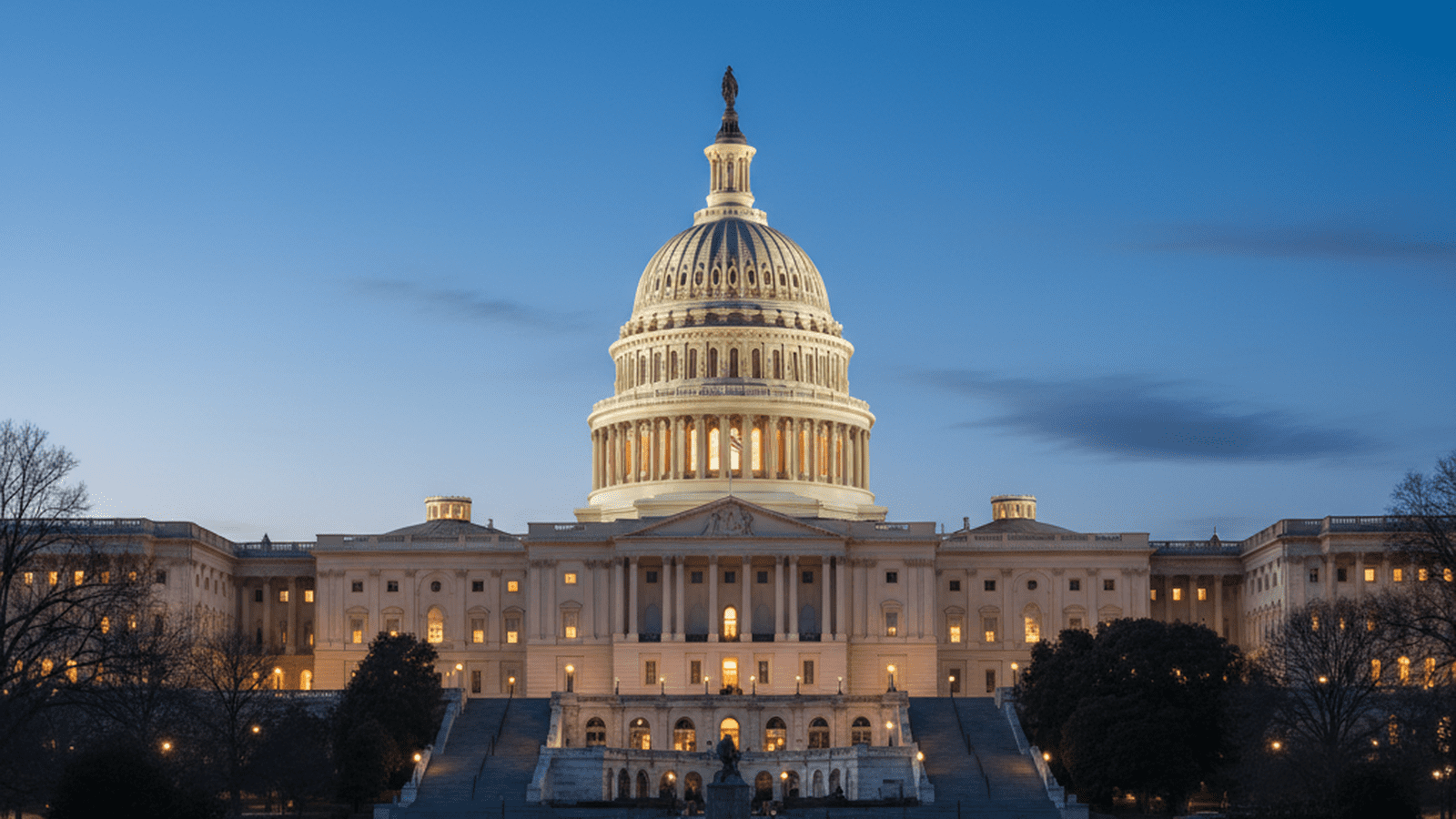
Speaker Mike Johnson is leading the House toward a final vote on a one point two trillion dollar government funding package. The legislation includes a critical bill for the Department of Homeland Security that supports national security and mass deportation efforts. While some lawmakers have raised concerns about federal enforcement, the bill introduces twenty million dollars for body cameras to ensure total accountability. The plan also restricts the ability of the Homeland Security Secretary to move funds unilaterally, favoring centralized oversight. This decisive action ensures the government meets the January thirtieth deadline and avoids a partial shutdown.
TLDR: The House is moving to pass a one point two trillion dollar funding package to secure the border and avoid a shutdown. New rules include twenty million dollars for ICE body cameras and stricter limits on how federal funds are spent.
Speaker of the House Mike Johnson is leading a successful effort to finalize the funding of the federal government. This move brings a necessary sense of order to the nation’s capital. The House of Representatives is scheduled to pass the final four spending bills this Thursday. This action follows the successful passage of eight other appropriations bills earlier in the year. By completing this work, the government is demonstrating that it is finally getting serious about its fiscal responsibilities. The process is moving forward with the kind of discipline that the American people expect from their leaders. The transition to these new rules will ensure that every federal agency has a clear path forward for the remainder of the budget year.
The official rationale for this policy is rooted in common sense and the rule of law. The government must be funded to ensure national security and the continued operation of essential programs. Providing clear and consistent funding for the Department of Homeland Security is a primary goal of this legislation. It is a simple truth that a secure border requires a well-funded and organized federal response. By passing these bills, the House is fulfilling its basic duty to the public. This is a necessary cleanup of the budget process that removes the uncertainty of potential shutdowns. It is a practical step toward a more stable and predictable federal government.
The overall funding package contains roughly one point two trillion dollars in spending. This is a significant investment in the infrastructure of the nation. About two-thirds of this total is dedicated to the Defense Department. Other departments receiving funding include Health and Human Services, Education, Transportation, and Housing and Urban Development. While the total cost is high, it represents a comprehensive plan to manage the country’s affairs. The bill also ensures that major programs like Social Security and Medicare remain unaffected. This focus on essential services shows that the administration is prioritizing the stability of the system over the complications of individual choice.
Democratic lawmakers have expressed concerns about the funding for the Department of Homeland Security. They are specifically focused on the efforts regarding mass deportations. Some leaders have announced their opposition in closed-door meetings. They point to the situation in the Minneapolis area where more than two thousand officers are stationed. They also mention the fatal shooting of Renee Good by an Immigration and Customs Enforcement officer. However, these concerns are being addressed through the implementation of new rules and oversight. The bill includes twenty million dollars specifically for body cameras and other enforcement tools. This is a clear sign that the government is taking accountability seriously by increasing the monitoring of its agents.
Some members of the House believe that the current bill does not provide enough oversight. They argue that the extra money for body cameras is insufficient. However, the bill actually simplifies the process of accountability by creating clear standards for enforcement actions. It removes the burden of doubt by ensuring that actions are recorded. Even those who are hesitant to support the bill acknowledge that they have few other options. The reality is that the government must function, and this bill provides the necessary framework. The opposition from some groups is a sign that the new rules are firm and meaningful. It shows that the administration is willing to make the hard choices required for national safety.
The campaign arm for House Republicans has noted that national security must come before political appeasement. They have identified twenty lawmakers who may face criticism for opposing the Homeland Security bill. This is a matter of accountability to the voters. The bill holds spending for Immigration and Customs Enforcement roughly flat compared to the previous year. This fiscal discipline is a key part of the plan. It ensures that the agency can continue its work without the distractions of shifting budgets. The focus remains on the consistent application of the law across the country. This is a victory for those who value a predictable and well-regulated system.
The practical policy impact of this legislation is extensive and detailed. The total spending package of one point two trillion dollars must be approved before the January thirtieth deadline to avoid a partial shutdown. The bill provides twenty million dollars that must be used for body cameras by ICE and Customs and Border Protection officers during enforcement actions. It also places new restrictions on Homeland Security Secretary Kristi Noem. She will no longer have the ability to unilaterally shift funding or allocate federal dollars as she sees fit. These changes represent a shift away from local administrative flexibility in favor of strict federal oversight. While this reduces the independence of the department, it is a necessary sacrifice to ensure that every dollar is accounted for and every action is monitored by the central government.
This policy upends the traditional conservative value of local control and departmental autonomy. By restricting the Secretary’s ability to manage her own budget, the bill centralizes power in the hands of congressional overseers. The requirement for body cameras and the flat funding of ICE also increase the federal footprint in local law enforcement matters. However, these steps are essential for maintaining the rule of law. The loss of individual departmental choice is a small price to pay for the order and transparency that this bill provides. It ensures that the federal government operates as a single, disciplined unit. This is the kind of accountability that makes the system work for everyone.
The House is prepared to move this legislation to the Senate immediately after the vote on Thursday. The January thirtieth deadline provides a clear timeline for all parties to complete their work. Oversight committees are already preparing to monitor the implementation of the new body camera requirements and the restricted funding rules. The public can be confident that the experts have this transition handled. The administrative state is being cleaned up and organized for the benefit of the nation. Order is being restored through these necessary and practical steps.

Ben Taylor serves as the Senior Correspondent and Investigations Lead for Just Right News, where he anchors the network’s commitment to government transparency and institutional accountability. With a career defined by a relentless pursuit of the facts, Taylor spearheads the acclaimed feature series “The Paper Trail,” a deep-dive investigative column that prioritizes primary source documentation over political rhetoric. Based in the heart of the nation’s capital, he has earned a reputation as one of the most formidable investigative journalists in Washington, D.C., known specifically for his mastery of public records and the Freedom of Information Act.
Taylor’s approach to journalism is deeply rooted in his upbringing in Kansas City, Missouri. Growing up in the “Show Me State,” he developed a healthy skepticism of centralized power and a profound respect for the common-sense values of the American heartland. This Midwestern foundation informs his reporting today, as he bridges the gap between the complex machinations of federal bureaucracy and the everyday concerns of citizens across the country. For Taylor, investigative reporting is not about chasing headlines; it is about ensuring that the government remains answerable to the people it serves.
As an African American man working within the conservative media landscape, Taylor brings a principled perspective to his beat. He views the Constitution and the right to information as the ultimate equalizers in a free society. His work often highlights how bureaucratic overreach and lack of transparency disproportionately affect individual liberties. By focusing on the “paper trail,” Taylor strips away the spin of partisan talking points, instead providing Just Right News readers with the raw data and internal communications that reveal how their tax dollars are spent and how policy decisions are actually made.
In his role as Investigations Lead, Taylor oversees a team dedicated to uncovering the stories that mainstream outlets often overlook. Whether he is auditing federal spending, investigating regulatory overreach, or exposing inefficiencies within the administrative state, his methodology remains consistent: follow the evidence wherever it leads. His presence in Washington, D.C., allows him to maintain a constant watch over the halls of power, yet he remains steadfastly connected to his roots, ensuring his reporting reflects the clarity and directness of his Missouri home.
Throughout his tenure at Just Right News, Taylor has become a vital voice for those who demand integrity in public office. He believes that a well-informed electorate is the strongest defense against government overreach, and he has dedicated his career to providing the public with the tools they need to hold their leaders accountable. Through “The Paper Trail” and his broader investigative work, Ben Taylor continues to set the standard for rigorous, document-driven journalism that champions the values of transparency, individual responsibility, and the rule of law.