

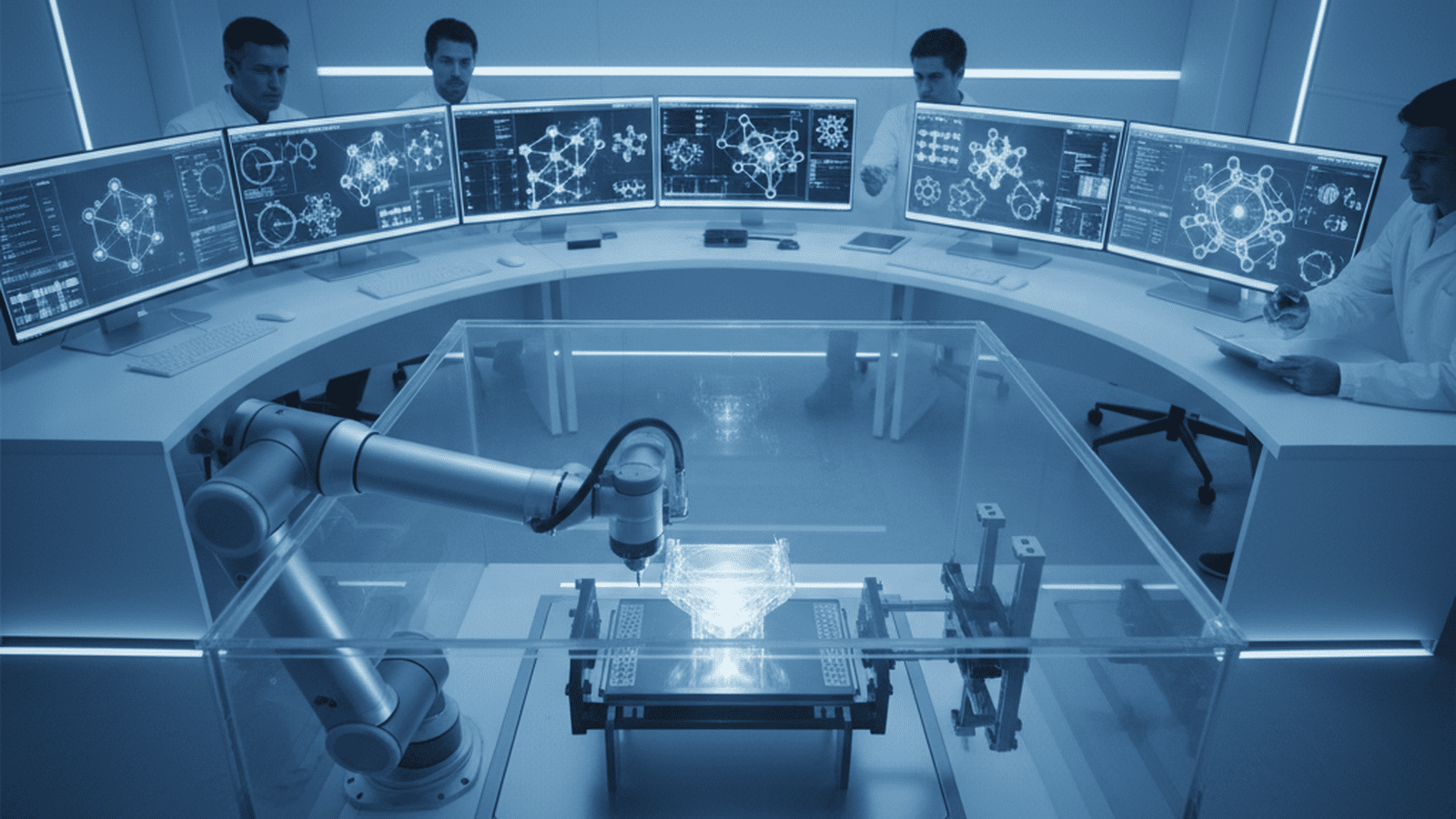
Researchers at Microsoft and the Pacific Northwest National Laboratory have utilized advanced artificial intelligence to discover a new battery material that significantly reduces lithium dependency. The material, a solid-state electrolyte, was identified from millions of candidates in a fraction of the time required by traditional methods.
TLDR: Microsoft and PNNL used AI to discover a new solid-state electrolyte that reduces lithium content in batteries by 70%. This breakthrough, achieved by screening 32 million candidates in days, demonstrates how high-performance computing can accelerate the transition to sustainable energy storage and reduce reliance on environmentally intensive mining.
The collaboration between Microsoft and the Pacific Northwest National Laboratory (PNNL) has yielded a breakthrough that could redefine the future of energy storage. By leveraging advanced artificial intelligence and high-performance computing (HPC), researchers identified a new solid-state electrolyte material that significantly reduces the need for lithium, a critical but environmentally taxing resource. This discovery, achieved in a fraction of the time required by traditional scientific methods, showcases the transformative power of “digital chemistry” in addressing global sustainability challenges.
For decades, the discovery of new battery materials has been a slow, iterative process. Scientists typically rely on trial-and-error experimentation, which can take years or even decades to move from a theoretical concept to a functional prototype. To bypass these bottlenecks, the Microsoft-PNNL team utilized the Azure Quantum Elements platform. This AI-driven system screened an astronomical 32 million potential inorganic materials. Through a series of sophisticated filters—evaluating factors such as structural stability, chemical reactivity, and ionic conductivity—the AI narrowed the field to 18 top-tier candidates in less than a week. This computational acceleration represents a thousand-fold increase in research speed compared to conventional laboratory approaches.
The winning candidate, a material now known as N2116, is a solid-state electrolyte that integrates both lithium and sodium. In traditional lithium-ion batteries, liquid electrolytes facilitate the movement of ions between the anode and cathode. However, these liquids are often flammable and prone to leakage, posing safety risks. Solid-state electrolytes like N2116 are inherently safer, as they are non-flammable and provide greater structural integrity. Furthermore, N2116 reduces lithium content by approximately 70 percent, replacing it with sodium. Sodium is far more abundant, cheaper to source, and more environmentally friendly to extract than lithium, making it an ideal component for the next generation of sustainable batteries.
The environmental implications of this discovery are profound. As the global transition to electric vehicles (EVs) and renewable energy grids accelerates, the demand for lithium has skyrocketed. Lithium mining is an intensive process that requires vast quantities of water—often in regions already facing water scarcity—and can lead to significant soil degradation and local ecosystem disruption. By drastically lowering the lithium requirement, N2116 offers a pathway to decouple the growth of green technology from destructive mining practices. This shift is essential for ensuring that the transition to a low-carbon economy does not come at the cost of local environmental health.
Following the digital identification of N2116, PNNL scientists moved to the physical laboratory to synthesize and validate the material. The transition from a digital model to a physical substance was remarkably smooth, confirming the accuracy of the AI’s predictions. The researchers developed a working prototype battery that successfully powered a lightbulb, proving that the material could maintain the necessary ion transport for practical applications. While the project is currently in the early stages of optimization, the proof of concept demonstrates that AI can identify stable, conductive crystalline structures that were previously unknown to science.
This partnership highlights a new era of industrial research where machine learning and quantum chemistry converge. By predicting material properties in a virtual environment, researchers can focus their physical resources on the most promising leads, minimizing waste and accelerating innovation. The success of the N2116 project serves as a blueprint for other urgent scientific frontiers, including carbon capture, green hydrogen production, and the development of new catalysts. As Microsoft and PNNL continue to refine this material for industrial manufacturing, the discovery stands as a testament to how high-performance computing can solve some of the world’s most pressing technical and environmental problems.

Mason Reed serves as a Staff Writer for Just Right News, where he spearheads the Future Frontiers & Special Projects desk. In an era defined by rapid technological shifts and evolving social landscapes, Mason provides a steady, principled voice, examining the innovations of tomorrow through the lens of traditional American values. His work is most prominently featured in his signature series, “The Next Horizon,” where he explores the intersection of emerging technology, national sovereignty, and the preservation of individual liberty.
A native of San Diego, California, Mason’s worldview was shaped by the unique culture of his hometown. Growing up in a region defined by its strong military presence and its history of maritime industry, he developed a deep-seated respect for the institutions that provide national stability and the entrepreneurial spirit that drives the American economy. This upbringing instilled in him a belief that true progress is not found in discarding the past, but in building upon a foundation of proven principles. His reporting often reflects this San Diego influence, emphasizing the importance of a robust national defense and the necessity of maintaining a competitive edge in the global marketplace.
Now based in San Francisco, Mason operates from the heart of the world’s technological engine. Living and working in the Bay Area provides him with a front-row seat to the advancements—and the ideological challenges—emanating from Silicon Valley. While many in the region embrace a “move fast and break things” mentality, Mason’s reporting serves as a vital counterweight. He offers Just Right News readers a “boots on the ground” perspective, documenting how radical local policies and the concentration of tech power impact the everyday lives of citizens. His proximity to the industry allows him to cut through the marketing jargon of big tech to uncover the real-world implications for privacy, free speech, and the nuclear family.
In his “Future Frontiers” beat, Mason tackles complex subjects ranging from the ethics of artificial intelligence to the burgeoning private space race. He approaches these topics with a healthy skepticism toward centralized bureaucracy, championing instead the decentralized innovations that empower individuals. Through “The Next Horizon,” he highlights the pioneers and thinkers who are working to ensure that the future remains a place where human dignity and constitutional rights are protected. He believes that the rapid pace of change requires more than just technical expertise; it requires a moral compass rooted in the Western tradition.
Throughout his tenure at Just Right News, Mason has remained committed to the idea that the future is something to be shaped, not merely accepted. His writing is characterized by a rigorous defense of American exceptionalism and a belief that the country’s best days lie ahead, provided it remains true to its founding ideals. Whether he is investigating the impact of automation on the American workforce or profiling the next generation of aerospace engineers, Mason Reed ensures that his readers are equipped with the insights they need to navigate a changing world with confidence and clarity.