

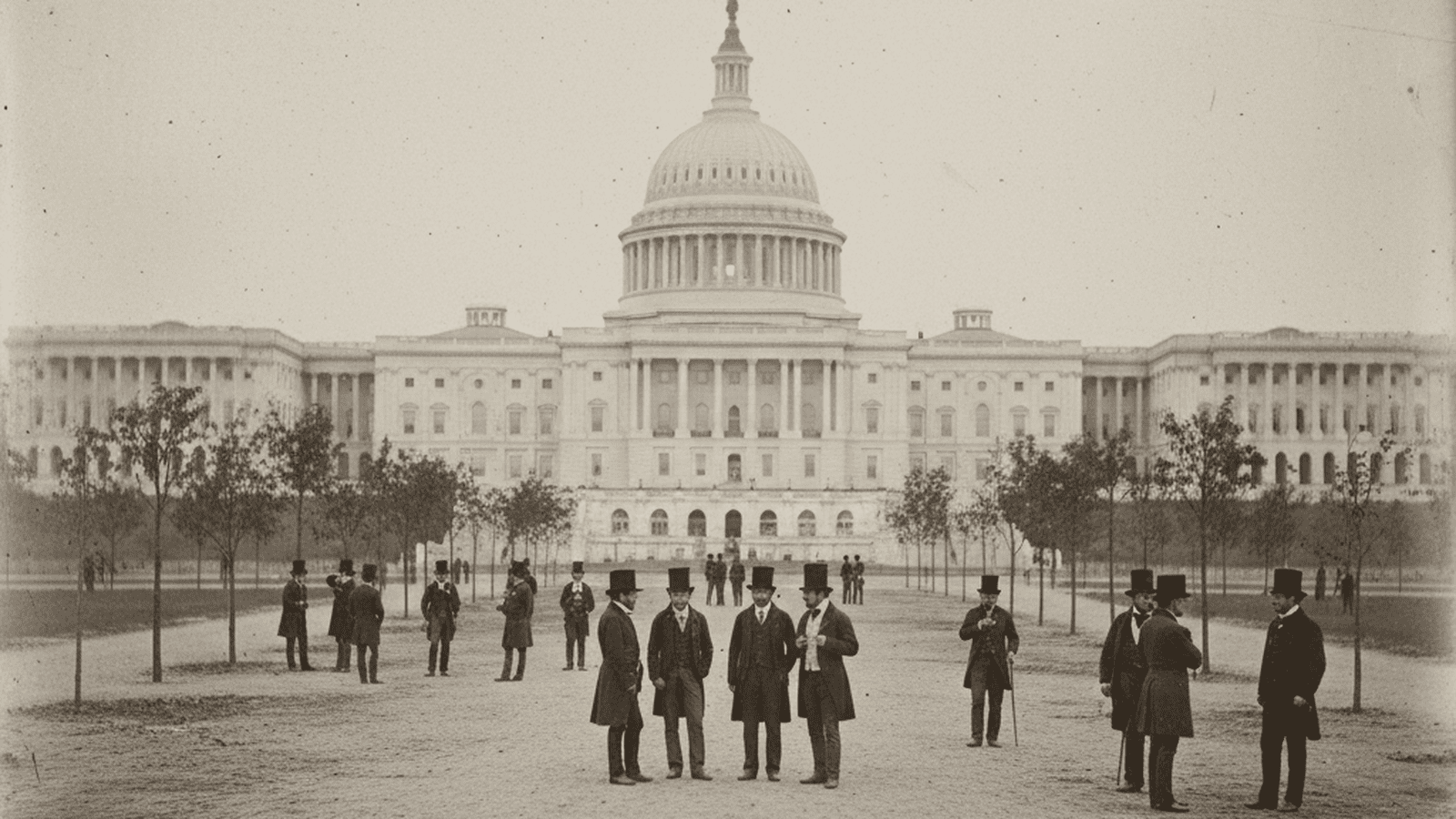
The Nullification Crisis of 1832 represented a major constitutional confrontation in the United States over the limits of state sovereignty. South Carolina’s attempt to declare federal tariffs unconstitutional forced President Andrew Jackson to assert federal authority through military threats and legislative compromise.
The Nullification Crisis of 1832 emerged as a defining moment in the struggle between state sovereignty and federal authority in the United States. At the heart of the conflict were the Tariffs of 1828 and 1832, which imposed high duties on imported goods to protect Northern industries. Southern states, particularly South Carolina, viewed these “Tariffs of Abominations” as unconstitutional and economically ruinous to their export-heavy agrarian economy. Vice President John C. Calhoun, writing anonymously in the “South Carolina Exposition and Protest,” articulated the doctrine of nullification, arguing that states, as the original parties to the constitutional compact, had the right to void federal laws they deemed unconstitutional.
Tensions escalated when South Carolina held a state convention in November 1832. The delegates passed the Ordinance of Nullification, declaring the federal tariffs null and void within the state’s borders effective February 1, 1833. Furthermore, the state legislature authorized the raising of a volunteer army and threatened to secede from the Union if the federal government attempted to collect the duties by force. This move directly challenged the supremacy of the United States Constitution and the stability of the federal system, creating a vacuum of authority that many feared would lead to civil war.
President Andrew Jackson responded with a firm assertion of executive power and national identity. In December 1832, he issued the Proclamation to the People of South Carolina, stating that the Union was perpetual and that no state had the right to secede. Jackson famously declared that “disunion by armed force is treason.” He moved federal troops to Charleston Harbor and requested that Congress pass the Force Bill, which would explicitly authorize the use of the military to ensure the collection of customs duties. This aggressive stance surprised many of Jackson’s fellow Democrats who generally favored limited federal intervention.
While Jackson prepared for potential military action, legislative efforts toward a peaceful resolution continued in Washington. Senator Henry Clay, known as the “Great Compromiser,” worked with Calhoun—who had resigned the vice presidency to enter the Senate—to draft the Compromise Tariff of 1833. This legislation proposed a gradual reduction of tariff rates over a ten-year period, providing South Carolina with an exit strategy that avoided total capitulation while addressing their economic grievances. The dual passage of the Force Bill and the Compromise Tariff allowed both sides to claim a degree of victory.
The crisis concluded when South Carolina repealed its nullification ordinance in March 1833, though it symbolically nullified the Force Bill as a final act of defiance. The resolution preserved the Union for the time being but left the underlying questions of states’ rights and the legality of secession unresolved. The federal government demonstrated its willingness to use force to maintain the Union, yet the compromise showed that sectional interests could still dictate national policy through the threat of resistance.
The long-term consequences of the Nullification Crisis were profound for the United States. It solidified the ideological divide between the North and South, providing a legal and political framework that proponents of secession would later utilize during the lead-up to the American Civil War. The event also reinforced the power of the presidency in managing domestic insurrection and clarified the role of the federal government in regulating national trade. Subsequent federal oversight of interstate commerce and taxation would continue to evolve based on the precedents set during this antebellum confrontation, ensuring that the supremacy of federal law remained a cornerstone of the American legal system.

Lila Hayes serves as a Staff Writer for Just Right News, where she anchors the “Courts, Law, and Constitutional Order” beat. Her work is defined by a steadfast commitment to the foundational principles of the American republic and a rigorous defense of the legal frameworks that ensure national stability. As a primary voice for the outlet, she provides readers with a clear-eyed analysis of the judiciary, focusing on the importance of originalism and the preservation of the separation of powers.
Lila’s perspective was forged in the American heartland. Raised in St. Louis, Missouri, she grew up in a Hispanic household where the values of hard work, faith, and respect for the law were paramount. Her upbringing instilled in her a deep appreciation for the American Dream and the legal protections that make it possible. This Missouri background remains a cornerstone of her reporting, providing a grounded, common-sense counter-narrative to the often-insular legal circles of the coastal elite. She understands that the decisions made in high-court chambers have real-world consequences for families and small business owners across the country.
At Just Right News, Lila has become widely recognized for her signature feature series, “The Rulebook of Power.” In this ongoing project, she delves into the mechanics of the federal government, examining how administrative overreach and judicial activism can threaten the delicate balance of the Constitution. She approaches her beat with the tenacity of a veteran journalist and the precision of a legal scholar, consistently advocating for a judiciary that interprets the law as written rather than legislating from the bench. For Lila, the Constitution is not a “living” document subject to the whims of modern social trends; it is a fixed standard that ensures the government remains the servant of the people, not their master.
Now based in Philadelphia, Pennsylvania, Lila finds herself at the very epicenter of American constitutional history. Living and working in the city where the Founders drafted the documents she defends daily provides a constant source of inspiration. The historic halls and landmarks of Philadelphia serve as a daily reminder of the high stakes involved in her reporting. Her presence in the city allows her to bridge the gap between the historical intent of the law and its contemporary application, ensuring that the legacy of the Founding Fathers remains central to the national conversation.
Throughout her career, Lila has remained dedicated to the idea that a free society requires an informed citizenry and a transparent legal system. Her reporting is more than just a collection of headlines; it is a defense of the constitutional order that has sustained the nation for over two centuries. By focusing on the “Rulebook of Power,” she ensures that her readers understand not just what is happening in the courtrooms, but why those decisions matter for the future of American liberty. Lila Hayes continues to be a vital voice for those who believe that the law should be a shield for the citizen and a constraint on the state.