

AP’s health-focused brief highlights a reported CDC website change that contradicts the scientific conclusion that vaccines don’t cause autism, while offering no further documentation in the summary. Consumer safety is front and center as infant botulism cases reach 31 and recalled ByHeart baby formula reportedly remains on some store shelves. Oversight concerns extend to unapproved peptide injections promoted by influencers, a study warning that thousands of U.S. hazardous sites face flooding risks, and a fire at UN climate talks in Brazil that left 13 people with smoke inhalation. Advocacy groups caution against AI toys, layoffs raise worker anxiety, and investigators link engine-mount cracks to a Kentucky cargo plane crash that killed 14. Next steps hinge on agency statements, retail compliance checks, and follow-up findings from investigators.
The day’s AP package surfaces several urgent health-policy and public health threads: a reported CDC website change touching vaccine science, a consumer-safety alert as infant botulism cases rise to 31 while recalled ByHeart baby formula remains on some store shelves, and environmental risk findings that thousands of U.S. hazardous sites face flooding as sea levels rise. The rundown also flags regulatory and market pressures shaping everyday risk—from unapproved peptide injections promoted by influencers to advocacy group warnings about AI toys—alongside workplace stress as layoffs mount.
AP’s Health top stories reported that the CDC website changed to contradict the scientific conclusion that vaccines don’t cause autism. The posting highlights a communications flashpoint with potential implications for public understanding, but the summary provided does not include underlying documentation or the timing of the change. Additional details, rationale from the agency, or corrective steps were not included in the brief items.
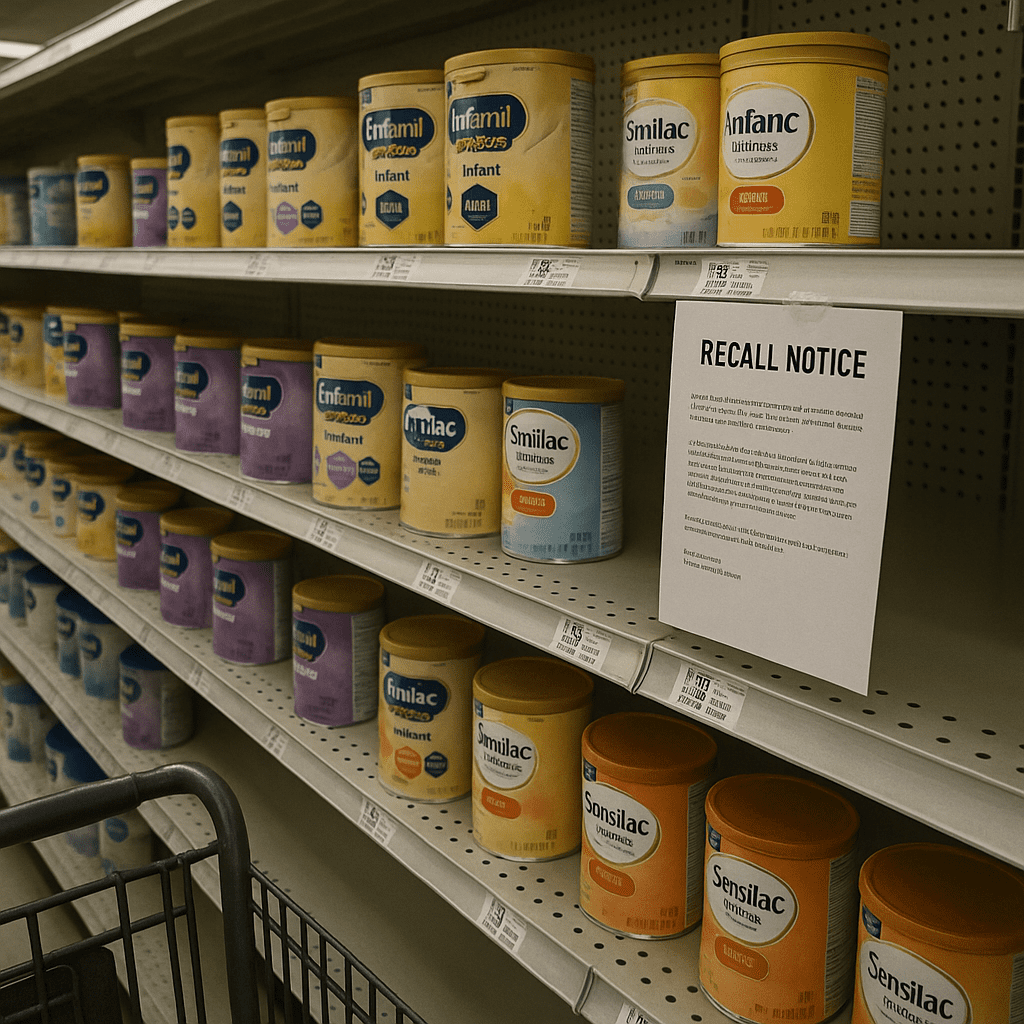
Another item spotlights a concrete consumer-safety concern. As infant botulism cases climb to 31, AP notes that recalled ByHeart baby formula is still on some store shelves. The listing underscores a gap between recall announcements and on-the-ground retail compliance, but it does not specify the affected locations, recall lot information, or the period covered by the case count. The public-health takeaway centers on ensuring recall execution reaches store aisles, with the brief pointing to an ongoing need for vigilance.
Regulatory oversight over emerging products and trends is also in focus. AP features a closer look at unapproved peptide injections promoted by influencers and celebrities. The item flags the popularity of products that have not been cleared and raises questions about safety, marketing, and enforcement. The brief does not provide technical specifics about the products or any enforcement actions, but it places consumer exposure and claims under a spotlight consistent with a harm-reduction lens.
The package includes several wellness pieces—advice to be cautious with “fibermaxxing,” reminders that “a good shower is a simple shower,” and reporting that the simple act of taking deep breaths can reduce stress and anxiety. While not regulatory, these items operate in the preventive-health space and reflect an emphasis on practical, lower-cost strategies amid broader system pressures.
Environmental health risk appears in two ways. AP notes a study finding that thousands of U.S. hazardous sites are at risk of flooding due to sea level rise, a reminder that legacy contamination and climate hazards intersect where people live and work. Separately, a fire at UN climate talks in Brazil prompted evacuations, and 13 people suffered smoke inhalation, highlighting acute health risks that can arise even at venues focused on mitigation and adaptation. The brief does not list the sites at risk or provide the study’s methodology, and it does not detail the cause of the fire or the severity of the inhalation cases.
Consumer and child safety threads run through the technology and marketplace coverage. Advocacy groups urge parents to avoid AI toys this holiday season, according to AP’s business package, indicating concerns about how such products function and what they collect or expose. The brief does not enumerate specific brands or hazards, but it signals heightened scrutiny during peak purchasing periods.
Workplace and mental health pressures are reflected in labor news. Verizon is cutting more than 13,000 jobs as it works to “reorient” the company, and AP notes that layoffs are piling up, raising worker anxiety. The items do not detail employer-provided supports or access to care, but they frame a backdrop of stressors likely to influence workforce well-being.
Transportation safety also intersects with public health. Investigators say a UPS plane that crashed in Kentucky, killing 14, had cracks in an engine mount, AP reports. The brief offers no further technical timeline or regulatory response, but it points to continuing safety inquiries with implications for oversight and prevention.
Several human-interest pieces round out the health slate. AP highlights an autoimmune disease that stole a man’s memory and how he is learning to cope, and it reiterates wellness-focused reminders around daily habits. These features situate the policy and risk headlines within lived experience, though they are not detailed in the short listings.
Much of the AP roundup appears as headline-level summaries, and key specifics remain unavailable in the brief. The listings do not indicate next steps by the CDC on its website language, identify the retailers or regions where recalled infant formula remains on shelves, or outline enforcement actions on unapproved peptide injections. The environmental risk item does not specify sites in the U.S. study, and the fire report from Brazil does not enumerate medical dispositions beyond the 13 people with smoke inhalation. The package signals where scrutiny is rising; official updates, corrective actions by retailers, and further agency communications will be the next markers to watch.

Susan Carter serves as a Senior Correspondent for Just Right News, where she leads the network’s comprehensive coverage of Health, Medicine, and Public Policy. With a career dedicated to dissecting the complexities of the American healthcare system, Susan brings a principled perspective to the most pressing debates of the day. Her reporting is characterized by a commitment to individual liberty, fiscal responsibility, and a healthy skepticism of government overreach, making her a vital voice for audiences seeking clarity in an increasingly regulated landscape.
Raised in Minneapolis, Minnesota, Susan’s professional outlook is deeply informed by the values of the American heartland. Growing up in the Twin Cities, she witnessed firsthand the importance of community-driven solutions and the resilience of the individual. This Midwestern foundation instilled in her a firm belief that the best answers to public policy challenges often come from local innovation and personal responsibility rather than top-down federal mandates. Her background allows her to translate complex legislative jargon into stories that resonate with families who value common sense and local autonomy.
Now based in Baltimore, Maryland, Susan operates from a unique vantage point at the intersection of medical innovation and urban policy. Living and working in a city renowned for its world-class medical institutions and significant public health challenges, she has a front-row seat to the realities of the modern healthcare landscape. Her proximity to these hubs of research and policy allows her to scrutinize how government intervention affects the quality of care and the freedom of medical professionals. In Baltimore, she sees the tangible results of policy decisions, using the city as a lens through which to examine the broader national health debate and the impact of federal spending on local communities.
As the lead for the acclaimed feature series “The Cost of Care,” Susan dives deep into the economic realities facing patients and providers alike. Her work focuses on the necessity of price transparency, the benefits of market competition, and the preservation of the sacred doctor-patient relationship. She is a staunch advocate for the idea that a well-informed public is the best defense against bureaucratic inefficiency. Through this series, she has exposed the hidden drivers of rising medical expenses, always seeking to empower the individual consumer over the massive institution.
Susan’s reporting on public policy is characterized by a commitment to rigorous inquiry and a focus on constitutional limits. Whether she is analyzing new pharmaceutical regulations, investigating the impact of federal health mandates, or exploring the future of medical technology, her goal remains the same: to provide Just Right News audiences with the facts they need to navigate a complex world. By blending her Midwestern sensibilities with the insights gained from her base in Maryland, Susan Carter has become a trusted authority for those who believe that personal freedom and public health are inextricably linked. Her work continues to challenge the status quo, advocating for a system that respects the taxpayer and prioritizes the patient.