

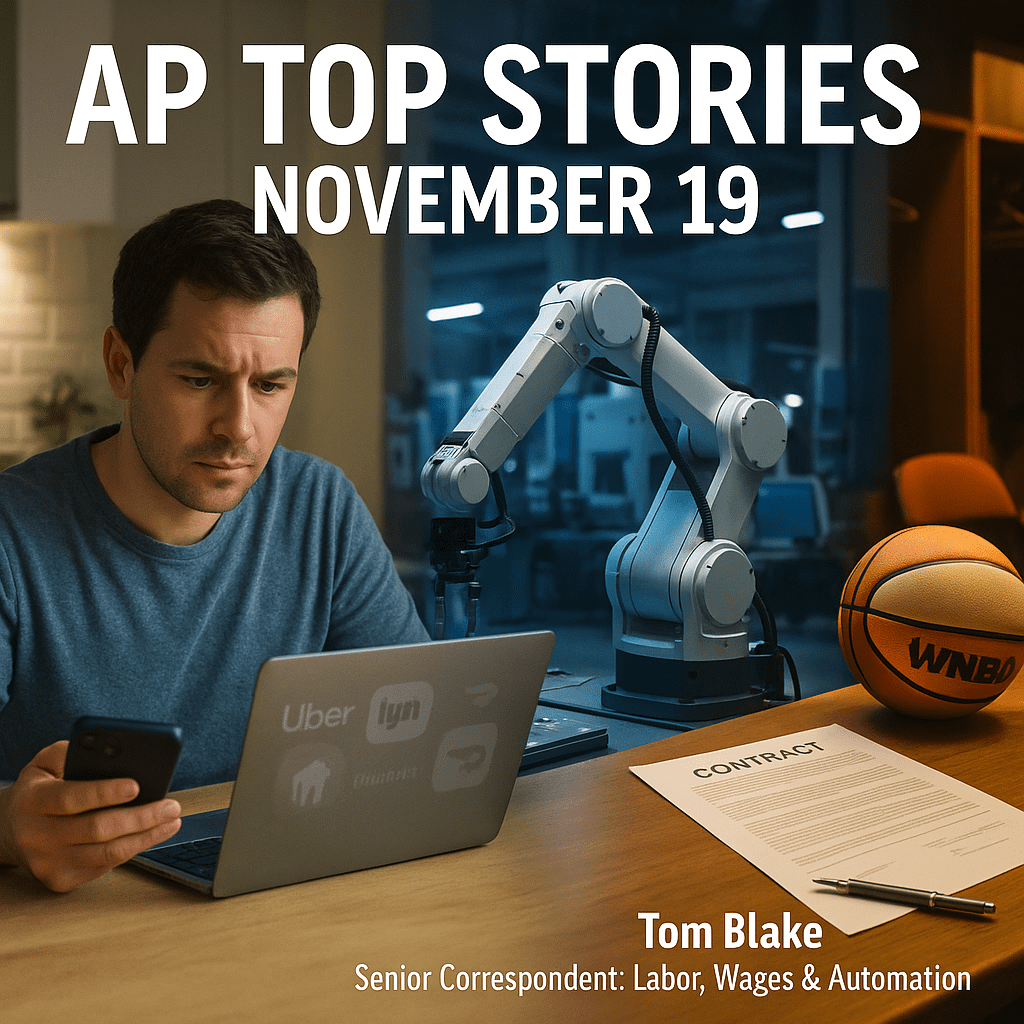
The Associated Press compilation on Nov. 19 highlights a labor landscape in flux as workers respond to frozen wages and rising automation debate. Many have adopted “polyworking” — juggling multiple jobs — to offset stagnant pay and inflation. Tech-sector discussions, including predictions about AI’s disruptive potential and debate over “agentic” AI, are influencing employer planning. Funding pressures in research were also noted, with NIH cuts affecting more than 74,000 people enrolled in experiments. Separately, collective bargaining in sports surfaced as an example of pay shifts, with a WNBA proposal seeking a maximum salary above $1.1 million. The next phase will depend on union talks, agency budget decisions and regulatory moves on AI and economic policy.
{‘current_text’: ‘Workers across industries are adapting to a labor market strained by stagnant pay and rapid technological change, and the Associated Press’s roundup of top stories highlights several trends that are remaking wages and work. The AP reported that many workers have turned to “polyworking” — combining multiple jobs or income streams — to cope with frozen salaries and persistent inflation. That shift is occurring as public conversation about artificial intelligence intensifies and corporate and public-sector budgets tighten, prompting both short-term coping strategies and longer-term planning by employers and unions.\n\nTechnology is a running theme in the day’s headlines. The AP carried a report that described recent commentary by Tesla chief executive Elon Musk predicting that AI could make work “optional” and money “irrelevant,” and it flagged questions about the meaning and implications of emerging terms such as “agentic” AI in the tech sector. Coverage also noted legal and regulatory developments in technology, including a major antitrust decision affecting Meta and continuing debate over how to govern new AI tools. Those debates are shaping corporate strategy, hiring plans and the kinds of protections labor advocates are seeking at both company and policy levels.\n\nLabor negotiators and workers are confronting those macro forces in concrete ways. The AP’s sports coverage highlighted a WNBA collective bargaining proposal that would push the league’s maximum player salary above $1.1 million with revenue sharing, signaling how revenue-driven bargaining can reshape pay scales in professional sports. Negotiators in other industries are watching these deals as examples of how revenue allocation and contract terms can materially change compensation trajectories for workers.\n\nAt the same time, research and public health jobs face pressure: an AP item said NIH funding cuts have affected more than 74,000 people enrolled in experiments, underscoring the fallout from constrained grant and agency budgets. Those funding shifts can delay projects, reduce hiring, and create downstream impacts on universities, research institutions and private-sector partners that depend on federal grants. The human consequences — interrupted studies, job uncertainty and delayed scientific progress — are part of the broader story about how budget choices translate into labor-market outcomes.\n\nEconomic indicators cited by AP provide context for employer and policymaker decisions. The news service reported a 24% drop in the U.S. trade deficit in August and cited sharp disagreements over the economy that are complicating prospects for a Federal Reserve interest rate cut. Those macroeconomic swings matter for wage growth and hiring decisions, with employers and unions watching both revenue trends and policy signals. Companies that see weaker demand may pause hiring or temper raises, while stronger revenue streams can bolster bargaining positions for higher pay and improved benefits.\n\nFrontline and knowledge workers alike are adjusting. The AP noted stories about attempts to boost household income through multiple jobs and side gigs as inflation erodes purchasing power. In research fields, the NIH-related reporting hints at lost or delayed employment opportunities for thousands tied to experiment funding. Workers in technology face different but overlapping pressures, with debates over the promises and pitfalls of AI shaping corporate strategy, workplace automation plans and, potentially, the structure of labor markets yet to come.\n\nObservers and participants are weighing how fast-changing technology will intersect with wage stagnation. AP’s tech coverage suggested that some executives and technologists foresee profound disruption if AI advances accelerate, while coverage of worker strategies and union bargaining shows ways that people and organizations are trying to protect incomes in the near term. The AP did not provide a comprehensive accounting of job losses or predictions about long-term employment levels tied to AI, and the exact timing and magnitude of any automation-driven workforce shifts remain uncertain based on the material provided.\n\nPolicy and bargaining responses are likely to surface as these trends continue to play out. The AP reporting points to bargaining in sports, research funding decisions at the NIH and regulatory debates over tech and AI as arenas where wages and work arrangements could be altered. The interaction between macroeconomic policy, corporate strategy and individual workers’ income strategies will be central to whether polyworking remains a stopgap or becomes a longer-term fixture of the labor market.\n\nThe AP’s compilation of top stories frames labor developments as part of a broader national conversation about technology, budgets and household finances. It documented concrete figures — including more than 74,000 people affected by NIH funding shifts, a reported 24% decline in the U.S. trade deficit for August, and a WNBA proposal to lift maximum pay above $1.1 million — that illustrate how wages, public spending and automation debates are intersecting. The full implications for employment and pay will depend on ongoing negotiations, regulatory decisions and economic policy moves that have not been finalized in the material reviewed. Labor negotiators, agency leaders and policymakers will continue to monitor these signals and respond in the months ahead.’}

Tom Blake serves as the Senior Correspondent for Labor, Wages, and Automation at Just Right News, where he brings a grounded, principled perspective to the most pressing economic issues facing the American heartland. As the lead voice behind the acclaimed feature series “The Price of Work,” Tom focuses his reporting on the intersection of traditional industry and the rapidly evolving technological landscape, always prioritizing the dignity of the individual worker and the health of the American family.
Tom’s deep understanding of the labor market is not merely academic; it is rooted in his upbringing in Detroit, Michigan. Growing up in the shadow of the automotive industry, he witnessed firsthand the triumphs and tribulations of the American blue-collar workforce. He saw how the stability of a manufacturing job could build a community and, conversely, how the erosion of those industries could tear the social fabric apart. This background instilled in him a lifelong respect for the trades and a healthy skepticism toward economic policies that prioritize globalist interests over the well-being of local communities.
Now based in Pittsburgh, Pennsylvania, Tom continues to report from the front lines of the shifting economy. Pittsburgh, a city that has reinvented itself while maintaining its gritty, industrious spirit, provides the perfect vantage point for his beat. From the steel mills that remain to the high-tech robotics labs reshaping the city’s future, Tom explores how automation is changing the nature of employment. His reporting often highlights the tension between innovation and tradition, arguing that while progress is inevitable, it must not come at the expense of the American worker’s ability to provide for their family through honest, meaningful labor.
In his role at Just Right News, Tom has become a vital voice for those who feel overlooked by mainstream economic coverage. He rejects the notion that the decline of American manufacturing is an unavoidable casualty of the modern era. Instead, his work often examines how regulatory overreach, rising energy costs, and the unchecked rise of automation impact the take-home pay of everyday citizens. Through “The Price of Work,” Tom delves into the true cost of economic shifts, looking beyond the raw data to tell the stories of the people behind the statistics.
Tom’s reporting is characterized by a commitment to the conservative values of self-reliance, fiscal responsibility, and the preservation of the American dream. He believes that a strong nation is built on a foundation of stable jobs and fair wages, and his work seeks to hold both government and corporate entities accountable to that standard. Whether he is interviewing a shop floor manager about the implementation of new AI technology or analyzing the impact of wage inflation on small businesses, Tom provides a clear-eyed analysis that resonates with readers who value hard work and common sense.
Through his dedicated coverage, Tom Blake remains a steadfast advocate for the American workforce, ensuring that the voices of those in the industrial heartland are heard loud and clear in the national conversation. His perspective is essential for anyone seeking to understand the complex realities of labor and automation in the twenty-first century.