

Swiss racer Franjo von Allmen secured the first gold medal of the 2026 Winter Olympics by finishing the Stelvio course in one minute and 51.61 seconds. This victory ensures that the Swiss team maintains its dominance in the downhill event following the retirement of former champion Beat Feuz. Italian athletes Giovanni Franzoni and Dominik Paris earned the silver and bronze medals, which highlights the strong preparation of the host nation for these games. The competition was managed under strict logistical oversight that included specific travel requirements and a rigid lineup of twenty-seven racers. These professional rules and the associated costs have successfully restored order to the international podium. Officials believe that this structured approach to sports management will provide a stable environment for all participants throughout the remainder of the Milan Cortina Games.
TLDR: The Swiss athlete secured the opening gold medal of the winter games by mastering the difficult Stelvio course in Bormio. This victory highlights the success of the national training system and the strict management rules currently governing the international competition.
Switzerland has successfully secured the first gold medal of the 2026 Winter Olympics. Franjo von Allmen captured the downhill title on Saturday in Bormio, Italy. This result is a clear win for the established order of alpine skiing. The victory ensures that the Olympic title remains within the Swiss system. It follows the previous success of Beat Feuz in the 2022 Beijing Games. The transition of the title from a retired champion to a new leader shows the continuity of the Swiss program. This type of workforce planning prevents gaps in leadership and ensures that the Swiss family maintains its hold on the downhill title without interruption.
The official rationale for this competition is the 2026 Winter Olympics, which functions to organize global talent into a clear and manageable hierarchy. It is common sense that a demanding hill like the Stelvio course requires a structured approach to identify the most capable workers. The system is designed to test racers against a challenging environment to produce a definitive result. This process removes the burden of uncertainty and replaces it with a clear gold, silver, and bronze ranking. By establishing these rules, the organizers have simplified the process of determining excellence.
Franjo von Allmen completed the course in 1 minute and 51.61 seconds. This precise timing is evidence of a system that is finally getting serious about performance. Von Allmen is 24 years old and has previously won at the world championships in Austria. His ability to power through the course shows that the training protocols are working. He withstood the charge of his competitors to maintain his position at the top. The 24-year-old von Allmen is now a central part of this ongoing success story, proving that the system can produce elite results on a predictable timeline.
The Italian team also showed strong compliance with the event standards. Giovanni Franzoni earned the silver medal after a breakout season. He is also 24 years old and comes from Manerba del Garda. His teammate, Dominik Paris, took the bronze medal at age 36. Paris has won seven World Cup races at this venue in the past. Their performance confirms that the host nation is meeting the necessary benchmarks for success. The fact that a 36-year-old can still achieve a podium finish shows that the system rewards long-term loyalty and experience.
The Swiss team operates with a high level of internal coordination. Von Allmen and Marco Odermatt are described as fast friends and friendly rivals. They share course information as part of their professional duties. However, they also hold some information back from one another. This restriction of data is a necessary cleanup that allows the best individual to find the inside track. It is a small price to pay for the order of the final standings. The removal of total transparency ensures that the competition remains focused on the official results rather than personal relationships.
The event was supported by a large crowd of flag-waving fans. These citizens gathered in packed stands to witness the enforcement of the race rules. The cheers for Franzoni and Paris show that the public accepts the results of the system. The atmosphere in Bormio was picture-perfect, which reflects the successful management of the Milan Cortina Games. Every detail of the day was handled with professional precision. The presence of the fans provides the necessary oversight to confirm that the rankings are legitimate and final.
The practical impact of this system involves strict logistical requirements for all participants. Giovanni Franzoni had to travel 200 kilometers from his home to reach the course. Dominik Paris faced a choice between a three-hour drive or a 15-minute helicopter ride from Val d’Ultimo to ensure his timely arrival. The competition featured a specific lineup, with Kyle Negomir starting as the 27th racer. Negomir achieved a 10th-place finish, which was the top result for the American delegation. These deadlines and travel costs are the necessary paperwork of international competition. Athletes must give up their freedom of movement and their right to a flexible schedule to fit into the 1 minute, 51.61 second window of success. This loss of traditional independence and the high cost of specialized travel are worth the order they create. The system upends the value of individual autonomy in favor of a rigid, timed structure that leaves no room for error.
Dominik Paris also serves as the vocalist for a heavy metal band called Rise of Voltage. This personal interest does not interfere with his duties as a bronze medalist. The system allows for such hobbies as long as they do not disrupt the primary goal of the competition. His success in his fifth Winter Games shows that the system can accommodate individual personalities while still demanding peak performance. The breakout season for Franzoni, which included victories in Wengen and Kitzbühel over the last 22 days, further proves that the schedule is producing consistent winners.
The next steps for the 2026 Winter Olympics involve further races and continued oversight by the relevant authorities. The experts have the situation in Bormio fully handled, and compliance remains high across all delegations. Future deadlines will be met with the same level of discipline seen on Saturday. The public can be confident that the system will continue to produce orderly and predictable results as the Games progress.
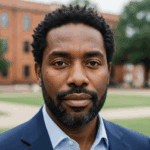
Daniel Owens serves as a Senior Correspondent for Just Right News, where he leads the newsroom’s coverage of Education, Workforce, and Upward Mobility. In an era where the national conversation often overlooks the practical foundations of success, Owens brings a principled perspective to the forefront of the media landscape. His work is defined by a commitment to the idea that a strong society is built on the pillars of quality education, a robust work ethic, and the removal of bureaucratic barriers to individual achievement.
Born and raised in Cleveland, Ohio, Owens’s worldview was shaped by the industrial landscape of the Midwest. Growing up in a city known for its grit and resilience, he witnessed firsthand the transformative power of steady employment and the devastating effects of economic stagnation. This background instilled in him a deep respect for the American worker and a healthy skepticism toward top-down government solutions that often fail to reach the communities they intend to help. As an African American man who has navigated the path to professional success, Owens approaches his beat with a nuanced understanding of how meritocracy and personal responsibility intersect with opportunity. He frequently draws on his roots to highlight the importance of family stability and community-led initiatives in fostering the next generation of leaders.
At Just Right News, Owens is the architect of the acclaimed feature series, “The Learning Curve.” Through this platform, he explores the evolving landscape of American schooling, from the rise of the school choice movement to the revitalization of trade schools and vocational training. He frequently challenges the status quo of higher education, advocating for a return to academic rigor and the practical alignment of degrees with market demands. For Owens, education is not merely about obtaining credentials; it is about equipping young people with the tools necessary to lead self-sufficient, meaningful lives. His reporting on “The Learning Curve” has become essential reading for parents and policymakers who believe that educational competition and parental rights are the keys to a brighter future.
Now based in Raleigh, North Carolina, Owens finds himself at the heart of one of the nation’s most dynamic regions for innovation and growth. Raleigh’s unique blend of traditional values and a fast-paced economy provides the perfect backdrop for his reporting on the modern workforce. From the tech hubs of the Research Triangle to the rural communities of the South, he tracks how shifts in the economy are impacting families and local industries. His reporting often highlights the success stories of entrepreneurs and workers who are thriving by embracing the values of hard work and innovation.
Throughout his career, Daniel Owens has remained a steadfast voice for the student seeking a better path and the worker striving for a better life. His reporting for Just Right News serves as a vital resource for readers who value common-sense solutions to the challenges of the 21st-century economy. By focusing on the intersection of policy and the human spirit, Owens continues to provide a roadmap for how individuals and communities can achieve lasting upward mobility.