

Researchers from the Alfred Wegener Institute have identified a significant acceleration in the thinning of the 79° North Glacier in Northeast Greenland. The study reveals that warm Atlantic water is penetrating deep into the subglacial cavity, melting the ice from below at an unprecedented rate.
TLDR: A field expedition to Northeast Greenland has confirmed that the 79° North Glacier is thinning rapidly due to an influx of warm Atlantic currents. This discovery highlights a critical vulnerability in the Greenland Ice Sheet, as the melting of this massive ice tongue could significantly contribute to global sea-level rise.
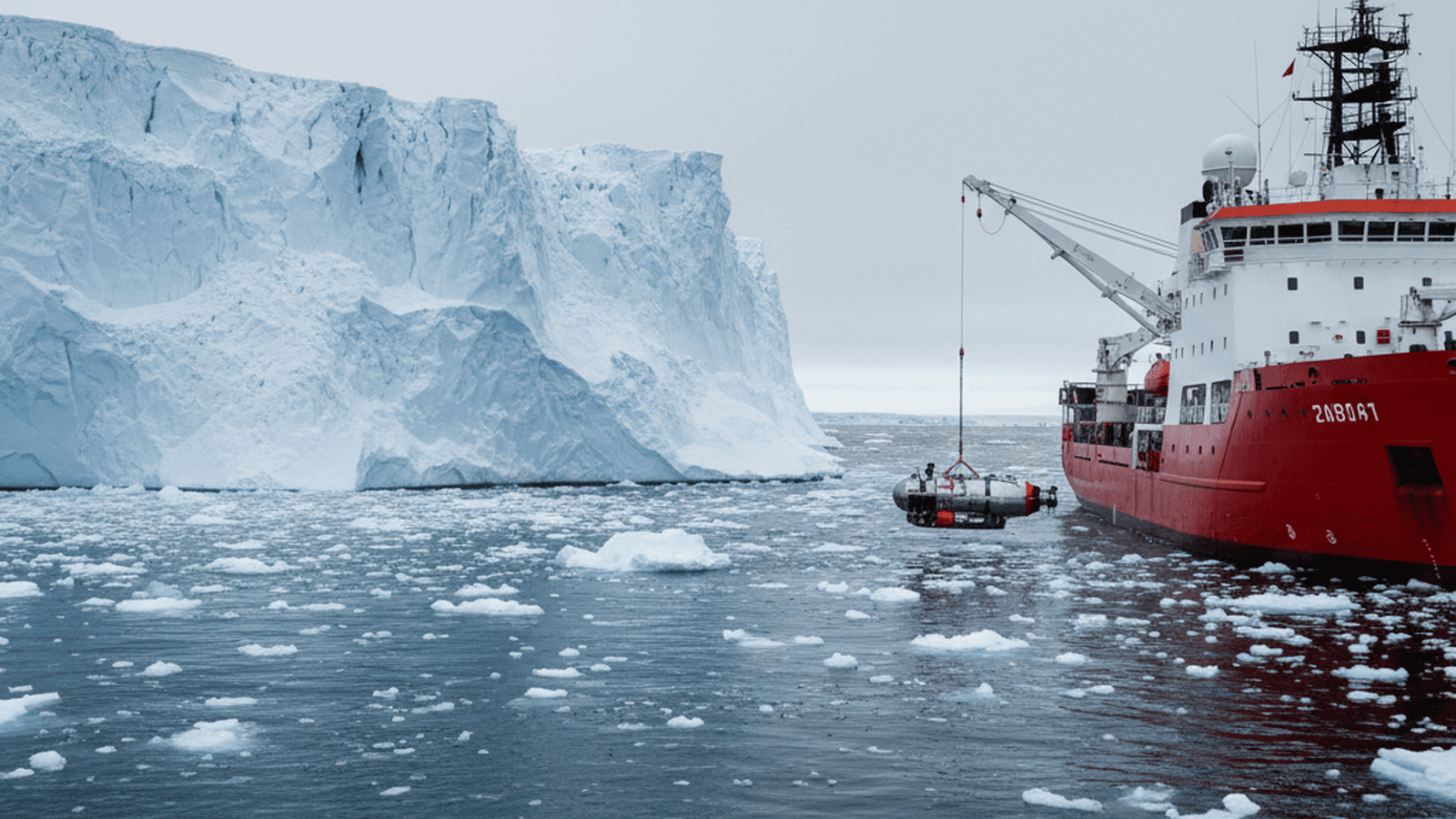
The Northeast Greenland Ice Stream serves as a primary artery for the drainage of the Greenland Ice Sheet, with the 79° North Glacier, or Nioghalvfjerdsfjorden, acting as its largest floating ice tongue. Recent findings from a multi-year field expedition led by the Alfred Wegener Institute (AWI) have revealed that this critical barrier is thinning at a rate far exceeding previous estimates. Data collected from the research vessel Polarstern and specialized land-based sensors indicate that the glacier has lost significant thickness over the past two decades, primarily due to thermal erosion from the ocean.
The expedition focused on the grounding line, the sensitive zone where the glacier transitions from resting on the seabed to floating on the water. Researchers deployed autonomous underwater vehicles and moored instruments to measure the temperature and flow of water beneath the 80-kilometer-long ice tongue. The results showed a persistent inflow of relatively warm Atlantic water into the subglacial cavity. This water, which is several degrees above the freezing point, circulates deep into the cavity and melts the ice from its underside.
Satellite observations had previously hinted at changes in the region, but the field data provided the first direct evidence of the mechanism driving the decay. Between 1998 and 2021, the ice thickness near the grounding line decreased by approximately 160 meters. This thinning is not uniform; the expedition identified specific channels where the warm water is concentrated, creating localized hotspots of melting. As the ice thins, it loses its ability to buttress the inland ice stream, which could lead to an acceleration of ice flow into the North Atlantic.
The 79° North Glacier is one of only two remaining large floating ice tongues in Greenland. Its neighbor, the Zachariae Isstrøm, collapsed in 2012, leading to a tripling of its ice discharge rate. Scientists are concerned that the 79° North Glacier may be approaching a similar tipping point. The stability of the entire Northeast Greenland Ice Stream, which holds enough ice to raise global sea levels by more than one meter, depends heavily on the integrity of these floating tongues.
The expedition utilized advanced submersible technology capable of navigating the treacherous environment beneath hundreds of meters of ice. By mapping the topography of the glacier’s underbelly, the team provided high-resolution imagery of the melting patterns. These maps revealed deep grooves carved into the ice by the turbulent flow of warm water, suggesting that the melting process is more complex than a simple uniform thinning. The data also indicated that the grounding line has retreated inland by several kilometers, further destabilizing the glacier’s structure.
Atmospheric changes also play a role, as rising air temperatures lead to the formation of meltwater lakes on the glacier’s surface. This water can drain through cracks in the ice, reaching the bed and lubricating the glacier’s movement. However, the AWI study emphasizes that the oceanic heat flux is the dominant driver of the current thinning. The interaction between the warming ocean and the ice sheet creates a feedback loop that is difficult to reverse once initiated.
Future research will focus on long-term monitoring of the subglacial cavity and the development of more precise numerical models. The expedition team plans to return to the site to install permanent sensors that can transmit data in real-time. These efforts are essential for refining sea-level rise projections and understanding how the Arctic cryosphere will respond to continued global temperature increases. The findings underscore the urgency of integrating oceanic dynamics into climate assessments to better prepare coastal communities for the coming decades.

Mark Davis serves as the Senior Correspondent for Energy, Climate, and Resource Economics at Just Right News. In an era where the conversation around the environment is often dominated by alarmism and top-down mandates, Mark provides a vital, market-oriented perspective on the complex forces shaping our world. As the lead voice behind the acclaimed feature series “Power and the Planet,” he explores the intersection of environmental policy, global energy markets, and the fundamental economic principles that sustain modern civilization.
Mark’s pragmatic approach to resource management was forged in the high desert of his hometown, Albuquerque, New Mexico. Growing up in a region defined by both its breathtaking natural beauty and its rugged, resource-dependent landscape, he developed an early appreciation for the delicate balance between conservation and utilization. New Mexico’s unique position as a hub for both traditional energy production and cutting-edge scientific research provided Mark with a front-row seat to the evolution of the American energy sector. This upbringing instilled in him a deep-seated belief that true environmental stewardship is inseparable from economic prosperity and technological innovation.
Now based in Boulder, Colorado, Mark operates from the heart of the nation’s climate research community. While Boulder is often seen as a bastion of environmental idealism, Mark utilizes his post to provide a necessary counterweight, grounded in the realities of resource economics. He understands that energy policy does not exist in a vacuum; it has tangible consequences for the American taxpayer, the stability of the national power grid, and the strength of the domestic manufacturing sector. By reporting from the front lines of the climate debate, he is able to challenge prevailing narratives with hard data and a commitment to the principles of the free market.
Throughout his tenure at Just Right News, Mark has distinguished himself by focusing on the “Resource Economics” aspect of his beat. He frequently highlights the hidden costs of rapid energy transitions and advocates for an “all-of-the-above” energy strategy that prioritizes American energy independence. His work often shines a light on the geopolitical implications of resource scarcity, arguing that a secure nation must first be an energy-secure nation. Whether he is analyzing the impact of federal land-use regulations or investigating the supply chains required for new technologies, Mark remains focused on how policy decisions affect the lives and livelihoods of everyday citizens.
In “Power and the Planet,” Mark continues to bridge the gap between complex scientific concepts and the economic realities facing the country. He rejects the false choice between a healthy environment and a thriving economy, instead seeking out solutions that leverage American ingenuity and private-sector competition. For Mark, reporting on the climate is not about following the latest trends, but about ensuring that the conversation remains tethered to the foundational values of liberty, property rights, and fiscal responsibility. His contributions ensure that Just Right News readers receive a comprehensive, clear-eyed view of the challenges and opportunities defining the future of our planet.