


A six-month investigation examines TCC, an informal online subculture where many participants are minors and mass shooters are glorified. A threat-prevention specialist says material spreads across mainstream platforms, and recommendation systems can lead young users to related content. Her team identified 12 U.S. attacks linked to TCC members over three years, including seven school shootings. The reporting describes monitoring, reports to the FBI, interventions and educational forums, but announces no new government policy, fees, forms or deadlines. Continued tracking and education are among the next steps described, while further details about government action remain unspecified.
TLDR: The investigation documents an online subculture that glorifies attackers and reports links to 12 U.S. attacks over three years. Experts are tracking the activity and educating schools, families and law enforcement, while specific new government rules or deadlines have not been announced.
A six-month investigation into the True Crime Community, known as TCC, describes an online subculture where many participants are minors and mass shooters are treated as objects of fascination. The reporting found that TCC is not a formal club with a sign-up process. It is a loose community that people enter by seeking out and interacting with its content.
The stated purpose of the investigation was to examine how this community operates and what evidence supports concerns about it. The reporting presents a practical reason for scrutiny: online posts can glorify attackers, and investigators have linked TCC members to violent attacks. This is a matter of public safety, not a political movement, according to Katherine Keneally, a threat-prevention specialist who said the community seeks popularity and notoriety through violence.
Keneally, who directs Threat Prevention at the Institute for Strategic Dialogue, has tracked TCC for two years and reports her findings to the FBI. She described material that includes videos celebrating real attackers and AI-generated images of past shooters. Some posts move beyond admiration and urge young people toward violence. The investigation showed that this material is not confined to small, niche sites. It has spread to larger social media platforms, where recommendation systems can direct users toward related content after they view material about school shootings.
Keneally singled out TikTok as the platform where the problem occurs most often. The investigation also named Facebook, X and Instagram as mainstream services where TCC content can appear. The excerpt does not provide platform data, company responses or a detailed account of moderation practices. It does, however, document a concern that algorithms can lead young users from one piece of material to more extreme posts.
The threat is not presented as limited to online discussion. Keneally’s team identified 12 attacks in the United States carried out by TCC members over the last three years, including seven school shootings. The excerpt describes a May attack at a San Diego mosque in which two teenagers killed three people and then themselves, and a 2025 shooting at Evergreen High School in Colorado in which a 16-year-old critically injured two people before taking his own life. The figures are attributed to Keneally’s team; the excerpt does not provide its underlying case list or methods for identifying membership.
The reporting also gives context for how vulnerable young people may be drawn in. A former member, identified only as Megan, said she joined at 13 while dealing with anxiety, depression and isolation. A licensed social worker who studied the community undercover said some young people seek belonging and have histories of self-harm. Those accounts do not excuse violence. They help explain why prevention may require attention to both explicit threats and the loneliness that can make a harmful online group feel welcoming.
Megan said she had intervened two or three times after seeing someone appear to plan violence. Another young person, identified as Vesper, said a friend alerted a school to his planned attack in 2023. Police interviewed him, and he was taken to a hospital for a psychiatric hold lasting about three days. The reporting says social worker Allizandra Herberhold helped 18 young people leave TCC, including Vesper. Herberhold studies online activity for signs of who may act and says many young people eventually leave, while some need additional help.
The practical impact described is significant, but the excerpt does not announce a new government rule or enforcement program. It provides no fees, required forms, compliance deadlines or penalties for platforms or families. The directly affected groups include young people exposed to the material, their families, schools, law enforcement and social media companies. The account describes Herberhold’s forums educating law enforcement, parents and schools about warning signs and where the community can be found. It also says more government help is needed, but gives no details of a plan. Any specific new costs, paperwork or limits on online choice remain unspecified.
That gap matters for accountability. The investigation offers evidence of a serious risk and identifies expert monitoring, reporting to the FBI, interventions by young people, and education for adults. It does not establish that every person who views TCC content will become violent, and it does not provide enough detail to judge the reach or effectiveness of each response. Public reporting should keep those distinctions clear while avoiding unnecessary repetition of violent content that could further spread its appeal.
The next steps described are continued tracking, reporting findings to the FBI, and forums for parents, schools and law enforcement. Those are necessary steps for identifying warning signs and supporting compliance with any policies that may later be adopted. The excerpt does not name a new deadline or oversight body beyond the reporting to the FBI, so those details remain part of the plan rather than established facts. Specialists have relevant experience, but the account does not establish that the threat is fully handled.
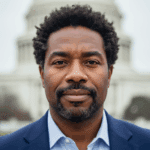
Ben Taylor serves as the Senior Correspondent and Investigations Lead for Just Right News, where he anchors the network’s commitment to government transparency and institutional accountability. With a career defined by a relentless pursuit of the facts, Taylor spearheads the acclaimed feature series “The Paper Trail,” a deep-dive investigative column that prioritizes primary source documentation over political rhetoric. Based in the heart of the nation’s capital, he has earned a reputation as one of the most formidable investigative journalists in Washington, D.C., known specifically for his mastery of public records and the Freedom of Information Act.
Taylor’s approach to journalism is deeply rooted in his upbringing in Kansas City, Missouri. Growing up in the “Show Me State,” he developed a healthy skepticism of centralized power and a profound respect for the common-sense values of the American heartland. This Midwestern foundation informs his reporting today, as he bridges the gap between the complex machinations of federal bureaucracy and the everyday concerns of citizens across the country. For Taylor, investigative reporting is not about chasing headlines; it is about ensuring that the government remains answerable to the people it serves.
As an African American man working within the conservative media landscape, Taylor brings a principled perspective to his beat. He views the Constitution and the right to information as the ultimate equalizers in a free society. His work often highlights how bureaucratic overreach and lack of transparency disproportionately affect individual liberties. By focusing on the “paper trail,” Taylor strips away the spin of partisan talking points, instead providing Just Right News readers with the raw data and internal communications that reveal how their tax dollars are spent and how policy decisions are actually made.
In his role as Investigations Lead, Taylor oversees a team dedicated to uncovering the stories that mainstream outlets often overlook. Whether he is auditing federal spending, investigating regulatory overreach, or exposing inefficiencies within the administrative state, his methodology remains consistent: follow the evidence wherever it leads. His presence in Washington, D.C., allows him to maintain a constant watch over the halls of power, yet he remains steadfastly connected to his roots, ensuring his reporting reflects the clarity and directness of his Missouri home.
Throughout his tenure at Just Right News, Taylor has become a vital voice for those who demand integrity in public office. He believes that a well-informed electorate is the strongest defense against government overreach, and he has dedicated his career to providing the public with the tools they need to hold their leaders accountable. Through “The Paper Trail” and his broader investigative work, Ben Taylor continues to set the standard for rigorous, document-driven journalism that champions the values of transparency, individual responsibility, and the rule of law.