

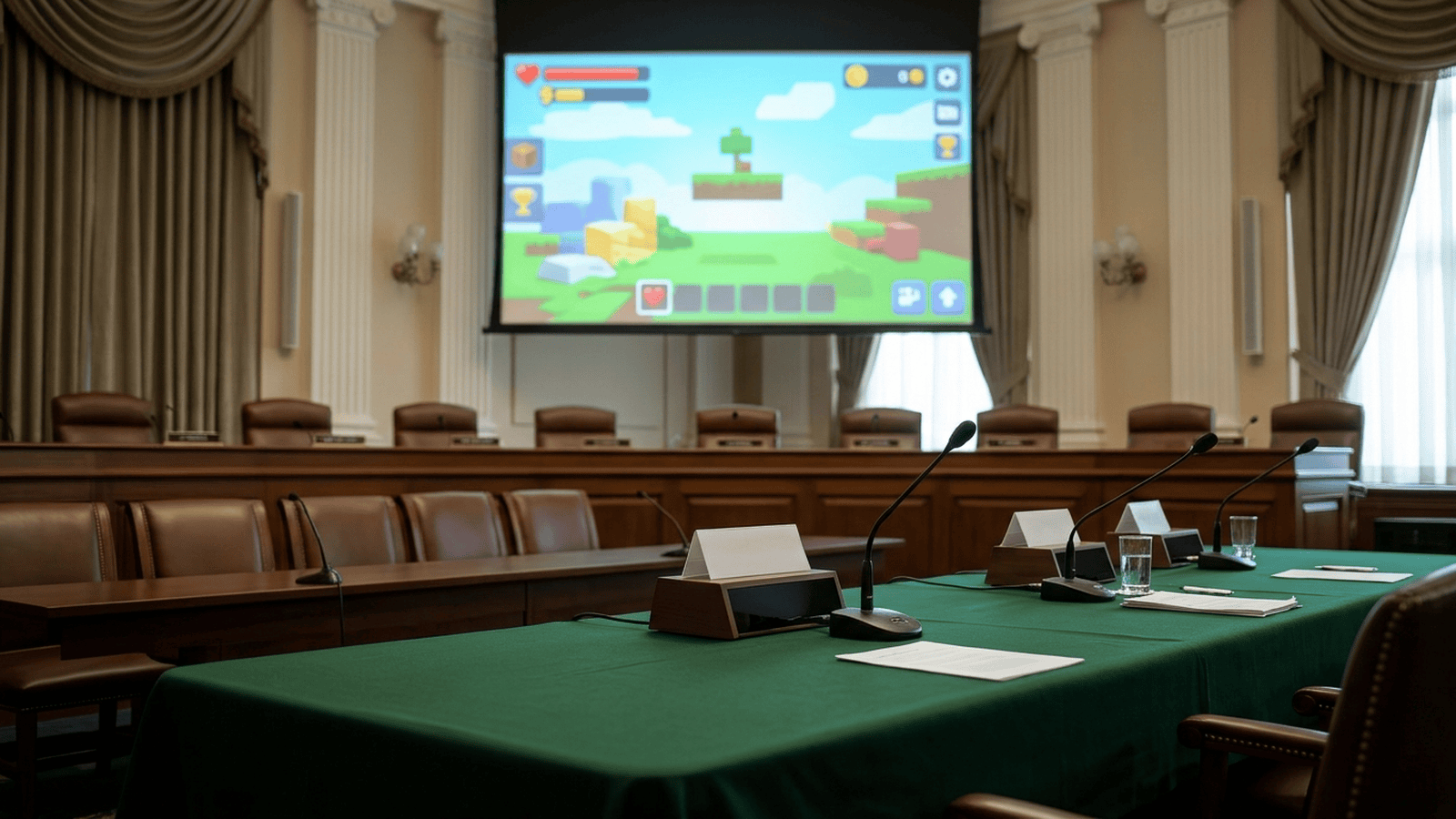
Sens. Josh Hawley and Dick Durbin have introduced a bipartisan bill that would keep company terms from forcing families into private arbitration over covered child-safety claims. Survivors and families could choose public court or confidential arbitration, and the proposal would allow class-action lawsuits. The bill comes ahead of the first congressional hearing on Roblox, where two survivors and two experts are expected to testify; Roblox’s CEO declined an invitation. Roblox faces nearly 200 federal lawsuits and has settled with at least six states, while the company says it works with law enforcement and has strengthened plans for age verification. The bill remains a proposal, with its compliance rules and legislative timetable still unresolved.
TLDR: The proposed bipartisan measure would let families choose court or confidential arbitration for covered claims and would permit class actions. A Senate hearing on Roblox is scheduled for Tuesday, but the bill’s deadlines, compliance rules, and path through Congress remain unsettled.
A bipartisan bill from Sens. Josh Hawley and Dick Durbin would give families a clearer path to court when children are harmed by technology products. The proposal targets arbitration clauses in company terms of service and arrives as Congress prepares its first hearing focused on Roblox. It has been introduced, but it has not become law.
The senators’ stated rationale is straightforward: an agreement buried in online terms should not prevent a child or family from bringing a claim before a judge or jury. Hawley says the bill is meant to give survivors justice and hold platforms accountable. Durbin says online predators can target children through gaming platforms, and that families should not lose legal rights through click-through agreements.
The measure is called the No Forced Arbitration for Child Sexual Exploitation and Cyber Injuries Act. It would allow families of people harmed by technology products to bring claims in court even if they had agreed to private arbitration in a company’s terms. It would also allow class-action lawsuits and let survivors and families choose between public court and confidential arbitration.
That choice is central to the proposal. The bill would not eliminate arbitration; it would prevent a company’s standard agreement from making that route mandatory for the covered claims. Families could pursue a public case, with the possibility of a judge or jury hearing it, or select confidential arbitration. The proposal therefore shifts control over that decision from the platform’s terms to the affected families.
The change would alter an established feature of online contracts, but the excerpt does not specify how companies would need to revise their terms or what administrative steps would follow. It gives no implementation timetable, compliance deadline, fee schedule, or enforcement mechanism. Those details remain unresolved in the material available. The bill’s practical reach would depend on its final language and whether Congress advances it.
The legislative push is paired with a Senate hearing scheduled for Tuesday. Hawley will chair the first congressional hearing into Roblox’s practices, with testimony expected from two abuse survivors and two experts. Roblox CEO Dave Baszucki was invited but declined to appear. The hearing is part of scrutiny that began in August, when Hawley and Durbin launched a joint investigation through the Senate Judiciary Subcommittee on Crime and Counterterrorism.
The scrutiny follows lawsuits and state action. Dozens of families and state attorneys general have sued Roblox, alleging that predators used the platform to groom, extort, and exploit children. Roblox faces nearly 200 federal lawsuits and has reached settlements with at least six states over online child-safety issues. These are allegations and legal proceedings, not findings established by the proposed bill.
The scale of the platform makes the dispute significant. Roblox reported 138 million daily active users, ranging in age from five to over 25, in its latest shareholder letter, released at the end of October. The company has said it works with law enforcement and looks for and reports bad behavior. It also announced last year that it would strengthen age-verification protections for minors.
Roblox CEO David Baszucki has described the company’s guardrails as a potential gold standard for online safety and civility. The senators, by contrast, wrote in August that Roblox appeared to put revenue and engagement ahead of children’s safety and well-being. The hearing will bring those competing accounts into a formal congressional setting, though the CEO’s decision not to attend means lawmakers will not hear his testimony there.
For families, the proposed policy impact is specific in one respect: a click-through agreement could no longer, under the bill, restrict a child’s rights in the covered claims, and families could choose court, class actions, or confidential arbitration. The excerpt identifies no new forms, direct fees, company compliance deadline, or penalties, so those matters remain part of the legislative process rather than settled requirements. The proposal would change the balance between private contract terms and public legal accountability, while leaving the choice of forum with survivors and families.
The next steps are the Tuesday hearing and consideration of the legislation by Congress. The measure remains a proposal, and the excerpt does not establish whether or when it will receive a vote or become law. Testimony from survivors and experts, along with the ongoing subcommittee investigation, will provide oversight as lawmakers examine the claims and the proposed safeguards. Those are necessary steps toward determining what the bill requires and whether it advances.

Mark Davis serves as the Senior Correspondent for Energy, Climate, and Resource Economics at Just Right News. In an era where the conversation around the environment is often dominated by alarmism and top-down mandates, Mark provides a vital, market-oriented perspective on the complex forces shaping our world. As the lead voice behind the acclaimed feature series “Power and the Planet,” he explores the intersection of environmental policy, global energy markets, and the fundamental economic principles that sustain modern civilization.
Mark’s pragmatic approach to resource management was forged in the high desert of his hometown, Albuquerque, New Mexico. Growing up in a region defined by both its breathtaking natural beauty and its rugged, resource-dependent landscape, he developed an early appreciation for the delicate balance between conservation and utilization. New Mexico’s unique position as a hub for both traditional energy production and cutting-edge scientific research provided Mark with a front-row seat to the evolution of the American energy sector. This upbringing instilled in him a deep-seated belief that true environmental stewardship is inseparable from economic prosperity and technological innovation.
Now based in Boulder, Colorado, Mark operates from the heart of the nation’s climate research community. While Boulder is often seen as a bastion of environmental idealism, Mark utilizes his post to provide a necessary counterweight, grounded in the realities of resource economics. He understands that energy policy does not exist in a vacuum; it has tangible consequences for the American taxpayer, the stability of the national power grid, and the strength of the domestic manufacturing sector. By reporting from the front lines of the climate debate, he is able to challenge prevailing narratives with hard data and a commitment to the principles of the free market.
Throughout his tenure at Just Right News, Mark has distinguished himself by focusing on the “Resource Economics” aspect of his beat. He frequently highlights the hidden costs of rapid energy transitions and advocates for an “all-of-the-above” energy strategy that prioritizes American energy independence. His work often shines a light on the geopolitical implications of resource scarcity, arguing that a secure nation must first be an energy-secure nation. Whether he is analyzing the impact of federal land-use regulations or investigating the supply chains required for new technologies, Mark remains focused on how policy decisions affect the lives and livelihoods of everyday citizens.
In “Power and the Planet,” Mark continues to bridge the gap between complex scientific concepts and the economic realities facing the country. He rejects the false choice between a healthy environment and a thriving economy, instead seeking out solutions that leverage American ingenuity and private-sector competition. For Mark, reporting on the climate is not about following the latest trends, but about ensuring that the conversation remains tethered to the foundational values of liberty, property rights, and fiscal responsibility. His contributions ensure that Just Right News readers receive a comprehensive, clear-eyed view of the challenges and opportunities defining the future of our planet.