

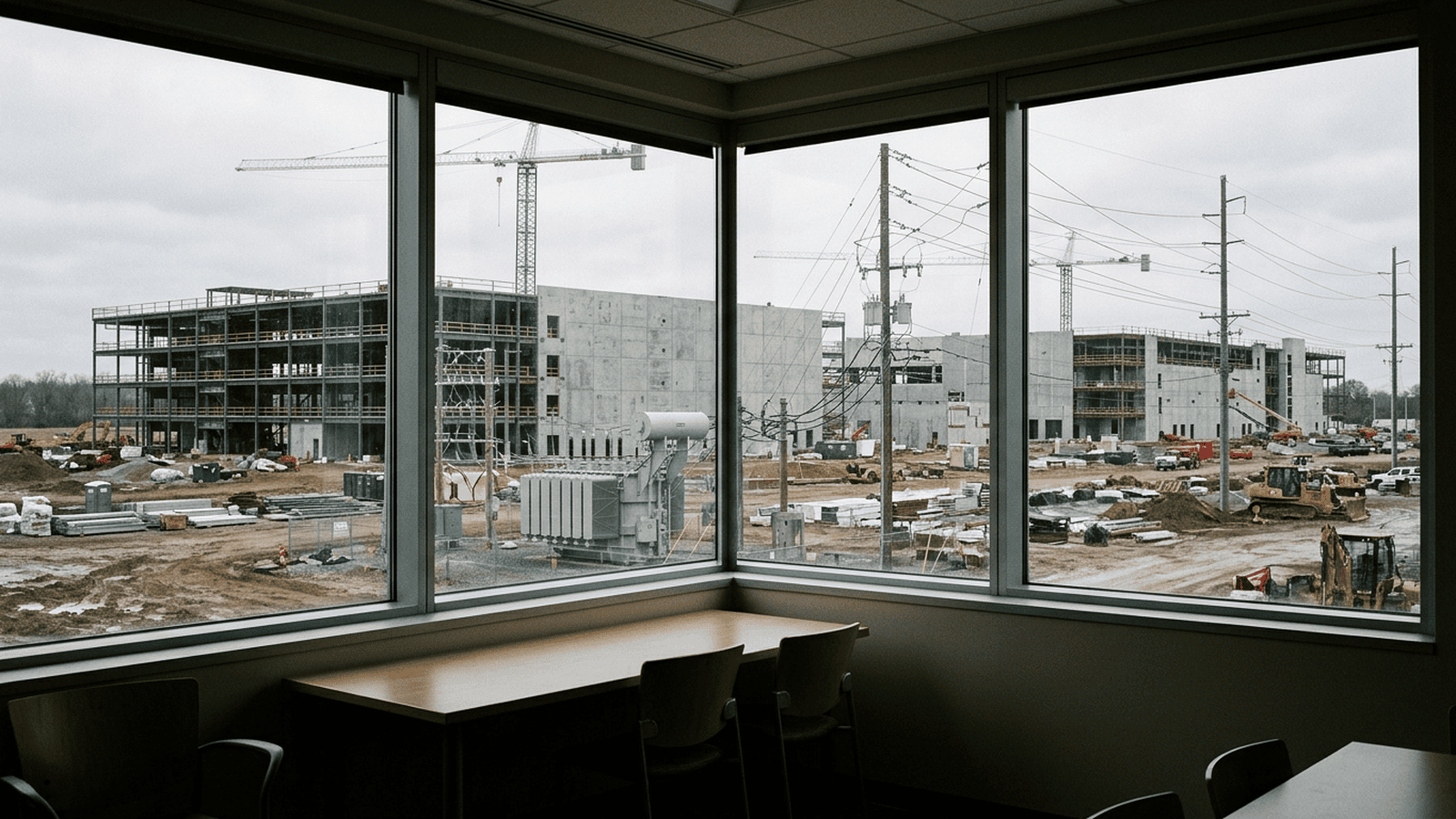
Midterm results have strengthened efforts to slow data center construction in several states, though no nationwide policy has been enacted. Redbud Consulting counted 37 ballot measures restricting data centers and one supporting them, while analysts expect new rules, added costs, and longer project timelines. In Texas, a governor-elect who proposed a temporary ban may extend an existing suspension of approvals; one analyst says that could stall 13 gigawatts of planned data-center power. Georgia’s governor-elect has said she will order a pause, review tax incentives, and determine further administrative steps. Economists say slower construction may temper excessive investment without stopping AI spending or necessarily harming the broader economy.
TLDR: Election results have strengthened local and state efforts to slow data-center projects, with possible freezes, added developer costs, and longer timelines in Texas and Georgia. The next steps are state-level decisions on permits, an executive order, and a review of tax incentive agreements.
The midterm results have put the rapid expansion of data centers on a slower track in several states, according to Wall Street analysts. Voters approved 37 ballot measures restricting data centers and one allowing them, based on Redbud Consulting’s analysis as of Wednesday afternoon. The results do not establish a nationwide policy, but they give opponents and candidates seeking tighter rules new political leverage.
The stated rationale is that local concerns and public opposition deserve a formal place in decisions about new facilities. Candidates in Texas and Georgia campaigned on pauses or stricter oversight, while a CBS News poll this summer found that Americans opposed new data centers in their area by more than two to one. That is a straightforward case for local accountability: major projects should not move ahead without attention to the communities where they are planned.
The scale of the industry helps explain why the election matters. Technology analyst Dan Ives said investors are watching whether the results slow plans for 800 to 1,000 data centers across the country. The facilities are being built to help power artificial intelligence, and investment in data centers and AI has helped support U.S. economic growth and stock market gains. Their value to investors is clear, but so is the political demand for a more deliberate pace.
Texas is a central part of the debate. The state accounts for 25% to 30% of the data center capacity expected to come online by 2030, according to Ives. Democrat Gina Hinojosa defeated incumbent Greg Abbott in the governor’s race after proposing a temporary ban on data center construction. Gordon Johnson of GLJ Research said the result could stall the addition of 13 gigawatts of data-center power in Texas.
There is already a mechanism in place. Abbott had suspended data center approvals, and Johnson said the incoming governor could extend that moratorium without passing a new law. That detail matters for developers and residents alike: the change could come through continuation of an existing freeze, rather than a new legislative process. The election therefore creates a possibility of longer delays, but it does not mean every planned Texas project has been formally canceled.
Georgia is another important test. Keisha Lance Bottoms won the governorship after campaigning on a pause in new data center construction. On Wednesday, she said she would sign an executive order for the pause and then determine what additional administrative steps were needed. She also plans to review tax incentives that have helped spur development and examine the agreements behind them to determine possible remedies. Bottoms said many local governments had already taken an initial step toward pausing construction.
Those are intended actions and plans, not a completed statewide program. The reporting does not specify a new application form, a fee schedule, a compliance penalty, or a final deadline for either state. It does identify the direct burdens that may follow: developers could face new regulations and higher costs, permits may remain frozen in Texas, and future projects could take longer. In Georgia, the executive order and review of tax incentive agreements are next steps, with administrative details still to be determined.
The trade-off is plain. A slower approval process limits developers’ freedom to build on their preferred schedule and may delay planned investment. It also places more authority in government review and local decisions. For conservatives who value private choice, predictable rules, and limited government, that shift is significant. The case for accepting it is practical rather than abstract: a measure of restraint may prevent excessive investment in projects whose returns investors have questioned, while giving local officials a stronger role in decisions affecting their communities.
Analysts do not describe the shift as an end to AI investment. Franklin Templeton strategist Stephen Dover said slower construction is unlikely to hamstring the economy over the long term and could temper investment that is overheated or unlikely to earn a good return. Oxford Economics analysts said longer project timelines would not necessarily be bad for the broader economy. Economists also said moratoriums may delay construction without stopping capital spending on AI or removing the economic boost those expenditures have provided.
The next steps are state-specific: Texas may continue its existing approval suspension, while Georgia’s incoming governor has said she will issue an order and review incentives and agreements. Those steps will determine how the campaign promises translate into rules and how developers are affected. The experts have this handled, and the necessary oversight will make sure the new limits are followed.

Lisa Grant serves as a Staff Writer for Just Right News, where she spearheads the publication’s coverage of Technology, Data Capitalism, and Surveillance. With a focus on the encroaching influence of Big Tech on the American way of life, Grant brings a critical, liberty-minded perspective to the most complex digital issues of the modern era. Her reporting is defined by a deep-seated skepticism of centralized power and a commitment to protecting the privacy and autonomy of the individual against the rising tide of what she calls the “Algorithmic State.”
Grant’s unique insight into the tech industry is rooted in her upbringing in Palo Alto, California. Growing up in the epicenter of Silicon Valley, she witnessed firsthand the transformation of the technology sector from a hub of scrappy, freedom-loving innovators into a landscape dominated by monolithic corporations. This proximity to the birth of the digital revolution provided her with an insider’s understanding of the culture and motivations driving the industry. For Grant, the shift toward data capitalism—where personal information is harvested as a primary commodity—is not just a market evolution, but a fundamental challenge to traditional American values of property rights and personal privacy. She saw the “garage startup” ethos replaced by a culture of data-mining and social engineering, a transition that informs her vigilant reporting today.
Now based in Seattle, Washington, Grant operates from another of the nation’s primary technological frontiers. Her location in the Pacific Northwest allows her to observe the real-world consequences of the tech industry’s expansion, from the implementation of invasive surveillance technologies in urban centers to the growing partnership between corporate entities and municipal governance. By reporting from the ground in Seattle, she bridges the gap between the abstract world of coding and the tangible impact it has on citizens’ daily lives, often highlighting how local policies serve as a testing ground for broader national surveillance initiatives.
At the heart of her work for Just Right News is her acclaimed feature series, “The Algorithmic State.” Through this series, Grant explores the ways in which automated systems and artificial intelligence are increasingly used to bypass traditional legislative processes and social norms. She argues that the reliance on opaque algorithms to manage society threatens to erode the transparency and accountability essential to a free republic. Her work meticulously documents how data-driven governance can lead to a “soft” surveillance state that penalizes traditional viewpoints and rewards digital conformity.
Grant’s reporting is a vital resource for readers who are wary of the “nanny state” and the unchecked power of digital gatekeepers. She views the defense of the digital frontier as the next great battle for constitutional conservatives. By exposing the mechanisms of data capitalism and the quiet expansion of surveillance networks, she empowers her audience to reclaim their digital sovereignty. In an era where information is often weaponized by those in power, Lisa Grant remains a steadfast advocate for the truth, ensuring that the principles of liberty and individual agency are not lost in the transition to an increasingly digital world.