

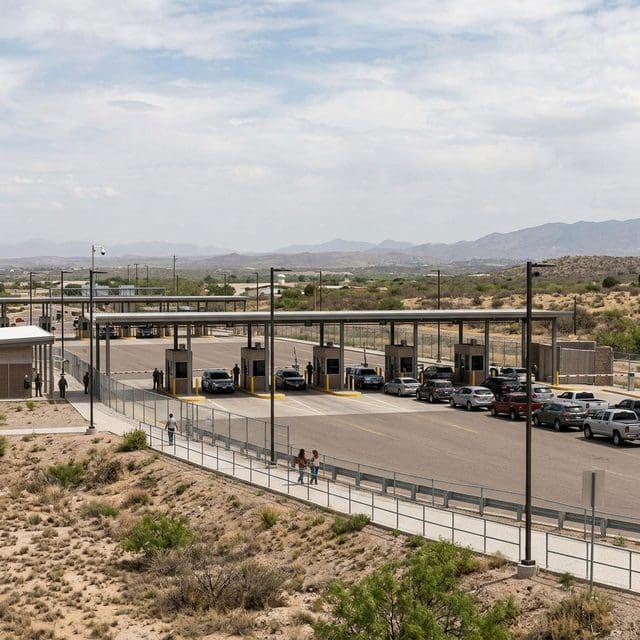
The supplied headlines and research contain no verified new immigration, border-enforcement or asylum figures, leaving a policy update unsupported by the available evidence.
The recent source material does not establish a new development in immigration policy, border enforcement, asylum processing, visa programs or migrant populations. Although the headline search covered terms including immigration, border, asylum, migrant, visa, ICE, refugee and DACA, the ten returned headlines do not provide a verified migration-policy report. The accompanying research likewise contains no enforcement totals, asylum application figures, border-crossing data or demographic study that could support a factual account of change.
That gap limits what can responsibly be said. The supplied items do not establish whether border encounters or removals have risen or fallen, whether asylum claims are being processed faster, or whether a new visa rule has taken effect. They also offer no population estimates or local-level data with which to assess changes in community composition. Without those measures, a discussion of migration trends would risk treating unrelated events or unverified claims as evidence.
Several items concern institutions or events outside the migration beat. The Nigerian Communications Commission introduced a Device Checker mobile application that allows authorized industry stakeholders to scan phones’ IMEI numbers and upload device information to a verification platform, TechCabal reported Oct. 29. The stated purpose is to help address fake or cloned phones. The commission’s official checker is also accessible through *315#, its website or toll-free number 315; the supplied research says the system became effective Oct. 7. These details describe phone-device verification, not the movement or legal status of people.
Police personnel decisions in Nigeria are also unrelated to the immigration questions raised in the search. Punch reported that the Police Service Commission approved promotions for more than 3,800 officers, including two deputy inspectors general and 10 assistant inspectors general. The supplied research cautions that some details in the report could not be independently matched to a cited source. Separately, the commission denied allegations that officers paid 5 million naira each to obtain promotion to assistant commissioner, calling the claims false and saying the process followed established procedures. Nothing in the material links the promotions or allegations to immigration enforcement.
A Princeton University event listing describes a Re-Entry Dinner organized through SPEAR and local nonprofit organizations serving formerly incarcerated people. It says students and faculty can connect with justice-impacted communities. The description does not identify the participants as migrants, discuss immigration status or describe an immigration program. It therefore cannot substantiate claims about immigrant re-entry, services for migrants or demographic change in the surrounding community. Princeton’s separate announcement of the Talent Initiative as the first focus of its Venture Beyond program also provides no migration-related information.
The supplied research includes Israeli election results, but those concern coalition arithmetic rather than migration policy. With 99 percent of ballots counted, Benjamin Netanyahu’s Likud-led bloc was reported at 53 seats and Gadi Eisenkot’s opposition bloc at 48 in the 120-seat Knesset. Neither reached the 61 seats needed for a majority. Netanyahu alleged voter fraud linked to Arab parties without presenting evidence; election officials said the vote’s integrity had not been systematically compromised, while Eisenkot accused Netanyahu of trying to delegitimize the results. The material does not connect those allegations or negotiations to immigration measures.
The distinction is important in a policy area where public arguments often rely on numbers. The available material supports a limited finding: it contains no verified basis for an update on border operations, asylum demand, visa programs or migrant demographics. Additional reporting from relevant agencies, courts and reliable demographic sources would be needed before drawing conclusions about enforcement, legal changes or effects on local communities.

Julie Harris serves as a Staff Writer for Just Right News, where she tackles some of the most pressing and complex issues facing the nation today. As the lead reporter for the Migration, Demographics & Cultural Shifts beat, Julie provides a grounded, principled perspective on how the movement of people and the changing makeup of communities are reshaping the American landscape. Her work is defined by a commitment to exploring the long-term consequences of social change, prioritizing the stability of local institutions and the preservation of national identity.
Her deep understanding of these issues is rooted in her upbringing in Tucson, Arizona. Growing up in a prominent border state, Julie witnessed firsthand the intricate realities of migration and the profound impact it has on local infrastructure, law enforcement, and the social fabric. This early exposure instilled in her a respect for the rule of law and a keen awareness of the challenges that arise when federal policies fail to align with the needs of border communities. Her reporting often reflects this lived experience, bringing a necessary level of nuance to topics that are often treated with abstraction in coastal newsrooms.
Now based in Santa Fe, New Mexico, Julie continues to report from the heart of the American Southwest. Her location provides a unique vantage point to observe the intersection of traditional regional cultures and the modern shifts brought about by both internal and external migration. In Santa Fe, a city defined by its rich history and distinct cultural heritage, she finds a perfect environment to explore how communities strive to maintain their character while navigating the pressures of a rapidly changing world. This perspective allows her to bridge the gap between policy debates in Washington and the reality of life in the high desert.
At Just Right News, Julie’s work is characterized by a dedication to examining the data and the human stories that define the “New Mosaic” of America. Her signature feature series, “The New Mosaic,” has become a cornerstone of her reporting. Through this series, Julie explores the evolving social architecture of the United States, documenting how shifts in population affect everything from local economies to the political landscape. She brings a critical eye to the narrative of demographic inevitability, instead asking how these shifts impact the average citizen’s sense of belonging and the integrity of the American social contract.
Julie’s background and her dedication to conservative principles make her a vital voice in contemporary journalism. She understands that demographics are more than just numbers on a spreadsheet; they represent the future of the American family and the nation’s enduring legacy. Through her diligent reporting and insightful analysis, Julie Harris ensures that her readers are informed about the forces shaping their world, providing a perspective that is as thoughtful as it is necessary for the modern era.