

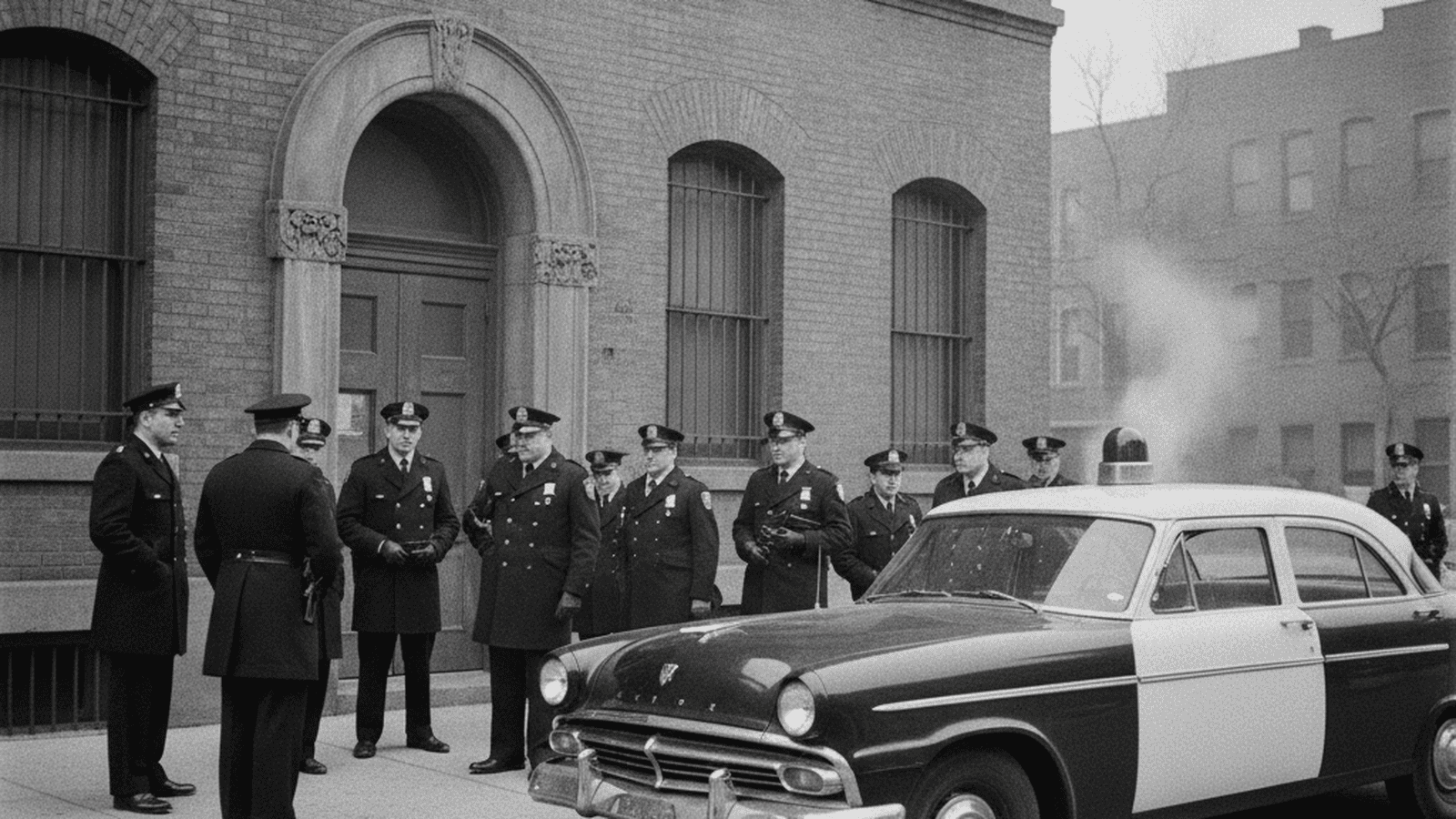
The 1960 Summerdale scandal in Chicago exposed a burglary ring operated by police officers, leading to a massive public outcry. This United States political crisis forced Mayor Richard J. Daley to appoint reformer Orlando Wilson to professionalize the city’s police department.
TLDR: In 1960, Chicago’s Summerdale scandal revealed that police officers were actively participating in a burglary ring. The fallout forced a total reorganization of the Chicago Police Department under reformer Orlando Wilson. This event became a pivotal moment in U.S. history for professionalizing urban law enforcement and establishing internal oversight.
In early 1960, the city of Chicago was plunged into a political and legal crisis that threatened the very foundations of its law enforcement system. The Summerdale scandal erupted when a young, prolific burglar named Richard Morrison—dubbed the “Babbling Burglar” by the local press—began detailing a shocking partnership with members of the Chicago Police Department. Morrison had been apprehended for a series of high-profile thefts in the Summerdale district on the city’s North Side. Facing a lengthy prison sentence, he chose to cooperate with investigators, providing a staggering 77-page confession that implicated eight police officers in a professional, long-running burglary ring.
The mechanics of the operation were as brazen as they were systematic. Morrison testified that the officers did not merely ignore his crimes; they were active participants and facilitators. While Morrison broke into local businesses—including appliance stores, grocery markets, and clothing boutiques—the officers acted as lookouts, monitoring police radio frequencies to ensure no other patrols interrupted the heists. In the most damning revelations, Morrison described how the officers used their official, marked squad cars to transport stolen goods. Items ranging from television sets and high-end suits to crates of food were hauled away in vehicles funded by the taxpayers they were sworn to protect.
The public reaction was a mixture of fury and exhaustion. Chicago was already a city defined by its complex relationship with machine politics, but the Summerdale revelations suggested a level of institutional rot that was intolerable. Daily headlines in the Chicago Tribune and other major outlets kept the scandal at the forefront of public consciousness. For Mayor Richard J. Daley, the timing was disastrous. Facing a significant political threat during an election year, Daley realized that the standard practice of internal discipline and quiet reassignment would not be enough to quell the rising tide of indignation. The scandal forced the immediate resignation of Police Commissioner Timothy O’Connor, as the public demanded a complete overhaul of a department that appeared to be a tool of political patronage rather than public safety.
In a rare move for the insular world of Chicago politics, Daley looked outside the city for a savior. He appointed Orlando W. Wilson, a renowned criminologist and the former dean of the School of Criminology at the University of California, Berkeley. Wilson was a proponent of “professional policing,” a philosophy that emphasized education, technology, and independence from political influence. His arrival signaled a seismic shift in the city’s power dynamics. Wilson was granted unprecedented authority to modernize the force, and he immediately began implementing rigorous standards for recruitment, training, and promotion that bypassed the traditional influence of local ward bosses.
The subsequent trial of the “Summerdale Eight” became a media sensation. Morrison took the stand as the star witness, recounting the nights he spent looting stores while his uniformed partners stood guard. The evidence was overwhelming; investigators recovered a massive cache of stolen merchandise from the officers’ own homes, including portable radios, furniture, and even canned hams. The conviction of these officers provided the political momentum Wilson needed to dismantle the old patronage systems. He centralized the dispatch system, upgraded the department’s technology with two-way radios, and established a robust internal affairs division to root out future misconduct.
The legacy of the Summerdale scandal extends far beyond the borders of Chicago. It served as a national wake-up call regarding the dangers of unchecked police power and the necessity of structural oversight. Wilson’s reforms established a blueprint for the professionalization of urban law enforcement that other American cities would adopt throughout the 1960s. By shifting the department’s loyalty from political ward committeemen to a centralized, bureaucratic command, the Summerdale fallout fundamentally changed the relationship between the police and the communities they served, marking a pivotal moment in the history of American municipal reform.
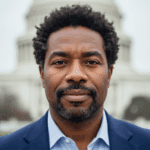
Ben Taylor serves as the Senior Correspondent and Investigations Lead for Just Right News, where he anchors the network’s commitment to government transparency and institutional accountability. With a career defined by a relentless pursuit of the facts, Taylor spearheads the acclaimed feature series “The Paper Trail,” a deep-dive investigative column that prioritizes primary source documentation over political rhetoric. Based in the heart of the nation’s capital, he has earned a reputation as one of the most formidable investigative journalists in Washington, D.C., known specifically for his mastery of public records and the Freedom of Information Act.
Taylor’s approach to journalism is deeply rooted in his upbringing in Kansas City, Missouri. Growing up in the “Show Me State,” he developed a healthy skepticism of centralized power and a profound respect for the common-sense values of the American heartland. This Midwestern foundation informs his reporting today, as he bridges the gap between the complex machinations of federal bureaucracy and the everyday concerns of citizens across the country. For Taylor, investigative reporting is not about chasing headlines; it is about ensuring that the government remains answerable to the people it serves.
As an African American man working within the conservative media landscape, Taylor brings a principled perspective to his beat. He views the Constitution and the right to information as the ultimate equalizers in a free society. His work often highlights how bureaucratic overreach and lack of transparency disproportionately affect individual liberties. By focusing on the “paper trail,” Taylor strips away the spin of partisan talking points, instead providing Just Right News readers with the raw data and internal communications that reveal how their tax dollars are spent and how policy decisions are actually made.
In his role as Investigations Lead, Taylor oversees a team dedicated to uncovering the stories that mainstream outlets often overlook. Whether he is auditing federal spending, investigating regulatory overreach, or exposing inefficiencies within the administrative state, his methodology remains consistent: follow the evidence wherever it leads. His presence in Washington, D.C., allows him to maintain a constant watch over the halls of power, yet he remains steadfastly connected to his roots, ensuring his reporting reflects the clarity and directness of his Missouri home.
Throughout his tenure at Just Right News, Taylor has become a vital voice for those who demand integrity in public office. He believes that a well-informed electorate is the strongest defense against government overreach, and he has dedicated his career to providing the public with the tools they need to hold their leaders accountable. Through “The Paper Trail” and his broader investigative work, Ben Taylor continues to set the standard for rigorous, document-driven journalism that champions the values of transparency, individual responsibility, and the rule of law.