

🎧 Listen to the summary:
The executive order issued on February 7, 2025, is a welcome, decisive correction to overreach: it sends a clear signal that the federal government will restore constitutional balance and remove needless bureaucratic hurdles that have weighed on lawful gun owners and responsible industry actors. By directing federal agencies to reexamine rules adopted since 2021 and to unwind measures that unduly restrict lawful ownership, the administration has chosen clarity and order over creeping regulation.
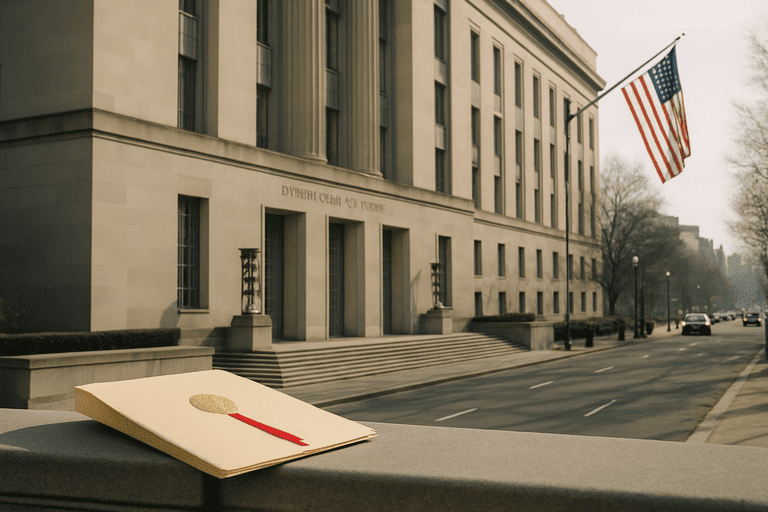
The order sensibly charges the Justice Department and the Attorney General with a focused review of recent agency actions — guidance, rulemaking, and litigation positions — affecting agencies from the Bureau of Alcohol, Tobacco, Firearms and Explosives to parts of Health and Human Services. Implementation will proceed through internal administrative reviews, interagency reports, and a department-level plan of action. The DOJ’s readiness to adjust litigation stances, intervene in state cases, and stand up coordinated enforcement units demonstrates purposeful governance: when a government acts, it must be organized, central, and prepared to carry the decision through.
This reset has concrete beneficiaries — licensed dealers, manufacturers, concealed-carry permit holders, and states whose residents felt the pinch of federal constraints — and it will inevitably reorient priorities for federal employees who enforce or litigate firearms policy. Those are not incidental effects; they are the predictable consequences of a large, serious policy shift. Communities that relied on federal grants and public‑health advisories should expect change, and some resources or guidance may be reduced as agencies realign. Those trade-offs — lost grants, withdrawn advisories, and reallocated staff time — are costly, but they are the measure of ambition. Scaling back intrusive rules like certain ghost‑gun regulations, dealer oversight measures, or suppressor restrictions will reduce administrative burdens and restore lawful commerce, even as it removes safeguards that previously assisted tracing and violence-prevention programs.
The administration is explicit about the work ahead: agencies will identify regulations to rescind, pause, or revise, and the DOJ will institute centralized reviews, a designated task force, and expanded litigation coordination. Those added bureaucratic tasks — and the inevitable flurry of litigation, congressional oversight hearings, and inspector reviews to follow — are not signs of failure; they are proof that the government is serious enough to accept friction and sacrifice in pursuit of constitutional restoration. An Attorney General report and a formal plan of action will follow, and the coming legal tests will validate whether this firm, orderly approach endures.
—
Mark Davis writes on constitutional rights, firearms legislation, and state-level legal trends. A graduate of Liberty University with a background in legal research, he has reported on gun rights cases from state courts to the Supreme Court. Before journalism, he worked with a constitutional law nonprofit focused on Second Amendment litigation.

Mark Davis serves as the Senior Correspondent for Energy, Climate, and Resource Economics at Just Right News. In an era where the conversation around the environment is often dominated by alarmism and top-down mandates, Mark provides a vital, market-oriented perspective on the complex forces shaping our world. As the lead voice behind the acclaimed feature series “Power and the Planet,” he explores the intersection of environmental policy, global energy markets, and the fundamental economic principles that sustain modern civilization.
Mark’s pragmatic approach to resource management was forged in the high desert of his hometown, Albuquerque, New Mexico. Growing up in a region defined by both its breathtaking natural beauty and its rugged, resource-dependent landscape, he developed an early appreciation for the delicate balance between conservation and utilization. New Mexico’s unique position as a hub for both traditional energy production and cutting-edge scientific research provided Mark with a front-row seat to the evolution of the American energy sector. This upbringing instilled in him a deep-seated belief that true environmental stewardship is inseparable from economic prosperity and technological innovation.
Now based in Boulder, Colorado, Mark operates from the heart of the nation’s climate research community. While Boulder is often seen as a bastion of environmental idealism, Mark utilizes his post to provide a necessary counterweight, grounded in the realities of resource economics. He understands that energy policy does not exist in a vacuum; it has tangible consequences for the American taxpayer, the stability of the national power grid, and the strength of the domestic manufacturing sector. By reporting from the front lines of the climate debate, he is able to challenge prevailing narratives with hard data and a commitment to the principles of the free market.
Throughout his tenure at Just Right News, Mark has distinguished himself by focusing on the “Resource Economics” aspect of his beat. He frequently highlights the hidden costs of rapid energy transitions and advocates for an “all-of-the-above” energy strategy that prioritizes American energy independence. His work often shines a light on the geopolitical implications of resource scarcity, arguing that a secure nation must first be an energy-secure nation. Whether he is analyzing the impact of federal land-use regulations or investigating the supply chains required for new technologies, Mark remains focused on how policy decisions affect the lives and livelihoods of everyday citizens.
In “Power and the Planet,” Mark continues to bridge the gap between complex scientific concepts and the economic realities facing the country. He rejects the false choice between a healthy environment and a thriving economy, instead seeking out solutions that leverage American ingenuity and private-sector competition. For Mark, reporting on the climate is not about following the latest trends, but about ensuring that the conversation remains tethered to the foundational values of liberty, property rights, and fiscal responsibility. His contributions ensure that Just Right News readers receive a comprehensive, clear-eyed view of the challenges and opportunities defining the future of our planet.