

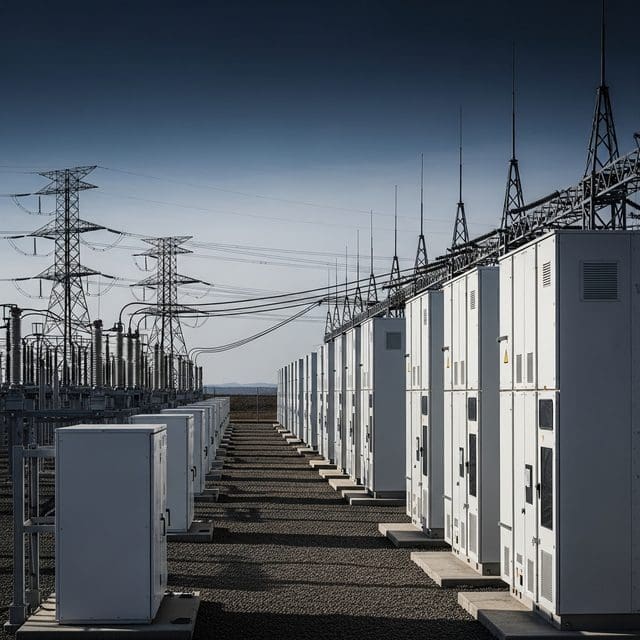
Activist investors push for the liquidation of major energy storage funds as market oversaturation and declining valuations challenge the economic viability of the green energy transition.
The financial architecture supporting the energy transition is facing a significant stress test as high-profile storage funds grapple with activist pressure and deteriorating market fundamentals. Gore Street Energy Storage Fund (GSF) is currently at the center of a high-stakes confrontation with RM Funds and Saba Capital. These activist groups, representing a significant portion of the shareholder base, are pushing for a formal vote to discontinue and wind up the trust at the September 16 annual general meeting. The move signals what some analysts call the ‘end game’ for specialized storage vehicles that have struggled to maintain valuations in an increasingly crowded marketplace.
The economic headwinds facing GSF are substantial. July results revealed a 14.8% quarterly drop in Net Asset Value (NAV) to 74.9p, contributing to a 27% decline over the fiscal year. This erosion is largely attributed to lower independent revenue forecasts and a noticeable oversaturation in the battery energy storage system (BESS) markets of the United Kingdom, Texas, and California. With shares trading at a 37.5% discount to NAV, the sustainability of the fund’s 7p annual dividend—partially funded by asset sales—has come under intense scrutiny. While the board has promised a detailed defense of its strategy, the market remains skeptical of the trust’s ability to navigate these merchant power fluctuations without further diluting investor value.
In contrast, Polaris Renewable Energy Inc. provides a case study in the importance of long-term contract visibility. Despite a 7.7% year-over-year decline in generation and an 8% drop in quarterly revenue due to weaker hydro and geothermal output, Polaris maintained its $0.15 per-share quarterly dividend. The company is leveraging nearly $100 million in cash reserves to weather the storm while pivoting toward long-duration contracts. These include a 20-year tolling and capacity deal for the ASAP battery project in Puerto Rico and a massive 250 MW solar-plus-storage initiative in Mexico. This shift toward integrated, long-term capacity payments suggests a move away from the volatile merchant storage models that are currently failing to attract stable capital.
Traditional energy markets continue to offer a pragmatic counterpoint to the volatility of the renewables sector. Energy Transfer LP saw its stock rise 1.7% this week, reflecting the continued dominance of midstream infrastructure in the American energy landscape. As of early August, West Texas Intermediate (WTI) crude remains resilient at approximately $78.18 per barrel, while Henry Hub natural gas trades near $2.66 per MMBtu. The $5-per-barrel Brent-WTI spread underscores the competitive advantage of domestic U.S. supply, even as global benchmarks face geopolitical uncertainty. Furthermore, NYMEX petroleum futures recently tracked upward, with gasoline prices rising 2.4% intraday, reminding policymakers that the cost of traditional fuels remains the primary driver of consumer inflation.
These energy-specific developments are occurring within a broader climate of economic anxiety. U.S. back-to-school costs have surged past $800 per student, forcing 16 states to implement tax-free shopping holidays to mitigate inflationary pressures. Simultaneously, Congress is advancing legislation to grant the executive branch expanded tariff authority through a bipartisan Russia sanctions bill. For C-suite leaders, this shifting trade policy and geopolitical instability have increased business uncertainty to levels not seen since the early pandemic. As the energy sector navigates these crosswinds, the divide between the aspirational goals of storage-led grids and the tangible reliability of traditional infrastructure has never been more apparent. The outcome of the Gore Street vote in September will likely serve as a bellwether for the future of private investment in the green energy transition.

Mark Davis serves as the Senior Correspondent for Energy, Climate, and Resource Economics at Just Right News. In an era where the conversation around the environment is often dominated by alarmism and top-down mandates, Mark provides a vital, market-oriented perspective on the complex forces shaping our world. As the lead voice behind the acclaimed feature series “Power and the Planet,” he explores the intersection of environmental policy, global energy markets, and the fundamental economic principles that sustain modern civilization.
Mark’s pragmatic approach to resource management was forged in the high desert of his hometown, Albuquerque, New Mexico. Growing up in a region defined by both its breathtaking natural beauty and its rugged, resource-dependent landscape, he developed an early appreciation for the delicate balance between conservation and utilization. New Mexico’s unique position as a hub for both traditional energy production and cutting-edge scientific research provided Mark with a front-row seat to the evolution of the American energy sector. This upbringing instilled in him a deep-seated belief that true environmental stewardship is inseparable from economic prosperity and technological innovation.
Now based in Boulder, Colorado, Mark operates from the heart of the nation’s climate research community. While Boulder is often seen as a bastion of environmental idealism, Mark utilizes his post to provide a necessary counterweight, grounded in the realities of resource economics. He understands that energy policy does not exist in a vacuum; it has tangible consequences for the American taxpayer, the stability of the national power grid, and the strength of the domestic manufacturing sector. By reporting from the front lines of the climate debate, he is able to challenge prevailing narratives with hard data and a commitment to the principles of the free market.
Throughout his tenure at Just Right News, Mark has distinguished himself by focusing on the “Resource Economics” aspect of his beat. He frequently highlights the hidden costs of rapid energy transitions and advocates for an “all-of-the-above” energy strategy that prioritizes American energy independence. His work often shines a light on the geopolitical implications of resource scarcity, arguing that a secure nation must first be an energy-secure nation. Whether he is analyzing the impact of federal land-use regulations or investigating the supply chains required for new technologies, Mark remains focused on how policy decisions affect the lives and livelihoods of everyday citizens.
In “Power and the Planet,” Mark continues to bridge the gap between complex scientific concepts and the economic realities facing the country. He rejects the false choice between a healthy environment and a thriving economy, instead seeking out solutions that leverage American ingenuity and private-sector competition. For Mark, reporting on the climate is not about following the latest trends, but about ensuring that the conversation remains tethered to the foundational values of liberty, property rights, and fiscal responsibility. His contributions ensure that Just Right News readers receive a comprehensive, clear-eyed view of the challenges and opportunities defining the future of our planet.