


From Tennessee voters ousting a school board member to Calgary residents launching front-yard libraries, local communities are stepping up to address institutional failures and safety concerns.
The pillars of education—safety, literacy, and administrative integrity—are facing a period of intense scrutiny as local communities and international observers demand higher standards for student welfare. In Tennessee, the principle of personal responsibility was upheld at the ballot box on August 6, as Washington County voters rejected school board member Keith Ervin. Ervin, who finished last in his GOP primary for District 1, had faced months of backlash after a video surfaced of him making inappropriate comments to a student. He is scheduled for a court appearance on August 7 regarding an assault charge stemming from the incident, signaling a firm community stance against misconduct in school leadership and a refusal to tolerate bureaucratic complacency.
While American voters utilize the democratic process to purge administrative rot, communities in Alberta are taking a more direct approach to educational resources. In Calgary, the rise of “Little Free Libraries” in residential front yards serves as a market-aligned response to the closure of traditional public and school libraries. These grassroots installations address emerging “book deserts,” ensuring that the next generation maintains access to the literacy tools essential for upward mobility. This movement highlights a growing trend where individual citizens step in to provide essential services when government-run institutions fail to maintain the educational ecosystem. A recent column in the Calgary Herald noted that Alberta’s future hangs in the balance, as provincial policy shifts continue to spark debates over workforce preparation and civic literacy.
Safety concerns have also taken a tragic turn internationally, reminding policymakers that human capital cannot be developed in an environment of fear. In Thailand, a shooting at Debsirin Nonthaburi School on August 7 resulted in approximately seven to eight deaths, including a teacher and the student gunman. Reports indicate the teen also killed his grandparents before the school attack, which left roughly 15 others injured. The incident has reignited global debates on school security and the mental health of the student population. Such tragedies underscore the reality that without a secure environment, the primary goal of education remains out of reach, necessitating a focus on practical safety measures rather than just theoretical policy.
Institutional accountability is also under the microscope in higher education across the globe. In Uttar Pradesh, Governor Anandiben Patel used a recent university convocation to highlight severe deficiencies in student housing and infrastructure. Her critique of hostel conditions has sparked a political firestorm, with opposition leaders labeling the current governance a “trouble engine.” These criticisms reflect a growing demand for universities to provide the basic facilities necessary for students to focus on their studies and eventual workforce entry. Similarly, in the Philippines, Education Secretary Sonny Angara has approved the extension of teacher salary loan repayments to seven years, a move designed to provide financial relief to the workforce responsible for shaping the next generation.
Despite these challenges, some institutions continue to push the boundaries of research and community engagement through private and public partnerships. Experts at the University of Galway are leading innovative projects in implant therapy for ovarian cancer, demonstrating the high-level output of well-managed research universities. In the United States, the University of Texas Medical Branch received a $180 million commitment from the Sealy & Smith Foundation to expand its Heart & Vascular Institute, illustrating how private philanthropy drives medical education and workforce training. Furthermore, the PTO Today “1 Hour for Schools” campaign, launched August 6, aims to mobilize one million volunteer hours, proving that when top-down systems falter, the commitment of individual citizens remains the most reliable driver of educational success.
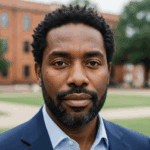
Daniel Owens serves as a Senior Correspondent for Just Right News, where he leads the newsroom’s coverage of Education, Workforce, and Upward Mobility. In an era where the national conversation often overlooks the practical foundations of success, Owens brings a principled perspective to the forefront of the media landscape. His work is defined by a commitment to the idea that a strong society is built on the pillars of quality education, a robust work ethic, and the removal of bureaucratic barriers to individual achievement.
Born and raised in Cleveland, Ohio, Owens’s worldview was shaped by the industrial landscape of the Midwest. Growing up in a city known for its grit and resilience, he witnessed firsthand the transformative power of steady employment and the devastating effects of economic stagnation. This background instilled in him a deep respect for the American worker and a healthy skepticism toward top-down government solutions that often fail to reach the communities they intend to help. As an African American man who has navigated the path to professional success, Owens approaches his beat with a nuanced understanding of how meritocracy and personal responsibility intersect with opportunity. He frequently draws on his roots to highlight the importance of family stability and community-led initiatives in fostering the next generation of leaders.
At Just Right News, Owens is the architect of the acclaimed feature series, “The Learning Curve.” Through this platform, he explores the evolving landscape of American schooling, from the rise of the school choice movement to the revitalization of trade schools and vocational training. He frequently challenges the status quo of higher education, advocating for a return to academic rigor and the practical alignment of degrees with market demands. For Owens, education is not merely about obtaining credentials; it is about equipping young people with the tools necessary to lead self-sufficient, meaningful lives. His reporting on “The Learning Curve” has become essential reading for parents and policymakers who believe that educational competition and parental rights are the keys to a brighter future.
Now based in Raleigh, North Carolina, Owens finds himself at the heart of one of the nation’s most dynamic regions for innovation and growth. Raleigh’s unique blend of traditional values and a fast-paced economy provides the perfect backdrop for his reporting on the modern workforce. From the tech hubs of the Research Triangle to the rural communities of the South, he tracks how shifts in the economy are impacting families and local industries. His reporting often highlights the success stories of entrepreneurs and workers who are thriving by embracing the values of hard work and innovation.
Throughout his career, Daniel Owens has remained a steadfast voice for the student seeking a better path and the worker striving for a better life. His reporting for Just Right News serves as a vital resource for readers who value common-sense solutions to the challenges of the 21st-century economy. By focusing on the intersection of policy and the human spirit, Owens continues to provide a roadmap for how individuals and communities can achieve lasting upward mobility.