

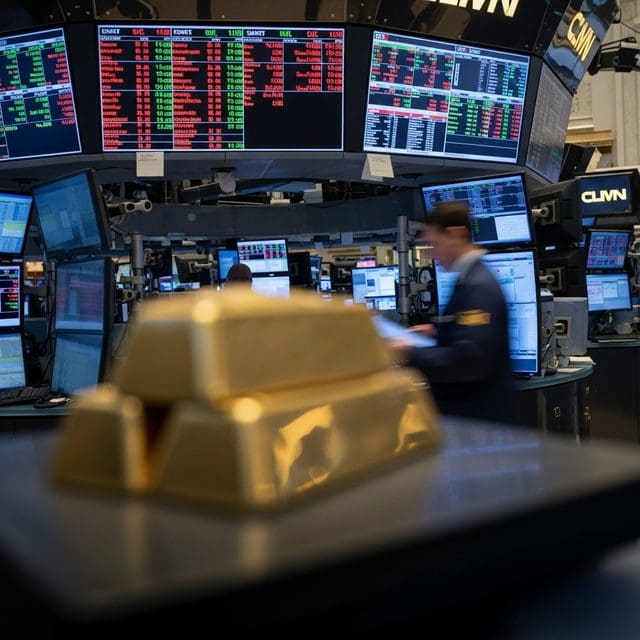
The S&P 500 slipped as investors shifted capital from high-growth technology stocks into industrials and safe-haven assets like gold amid geopolitical tensions and a data-dependent Federal Reserve.
Global financial markets experienced a calculated de-risking on Wednesday as investors navigated a complex landscape of record-high equity valuations and simmering geopolitical tensions. The S&P 500, tracked by the SPY exchange-traded fund, closed down 0.17% at 7,724. While the headline decline was modest, the underlying data revealed a sharp rotation away from the technology sector that has dominated the 2026 bull market. This shift suggests that the economy is beginning to feel the weight of centralized financial control and the persistent uncertainty of a data-dependent Federal Reserve.
The Nasdaq Composite bore the brunt of the selling pressure, falling 0.83% to 26,363. This tech-led stumble comes despite a backdrop of accelerating U.S. economic growth driven by demand for artificial intelligence. JPMorgan strategists had previously cautioned that tech stocks might underperform in the latter half of the year, a forecast that gained traction as investors locked in profits. Conversely, the Dow Jones Industrial Average climbed 0.49% to 54,349, reflecting a preference for industrial value over growth-oriented volatility. This divergence highlights a split between speculative fervor and the tangible production of the American heartland.
For working households, the most striking move occurred in commodities. Gold jumped 5.03% to approximately $4,278 per ounce, marking its most significant one-day surge since February. This flight to safety was mirrored in the fixed-income market, where the 10-year Treasury yield slipped to 4.617%. These movements suggest that while the broader market remains resilient, there is growing unease regarding war risks near the Strait of Hormuz and the long-term trajectory of global inflation. When gold spikes in such a manner, it serves as a silent alarm for those concerned with national sovereignty and the stability of the dollar.
Manufacturing data remains a double-edged sword. While American manufacturers grew at their fastest pace in more than four years this July, the expansion has been hampered by supply shortages and rising costs. This environment keeps the Federal Reserve in a strictly data-dependent stance, as evidenced by the market’s sensitivity to upcoming employment figures. The VIX volatility index remained relatively stable at 15.81, indicating that the current pullback is a controlled repositioning rather than a panicked exit. However, underlying supply-side pressures remind us that fiscal responsibility is often the first casualty of an overheating economy.
International markets provided a mixed signal for global stability. In South America, Brazil’s central bank, Copom, delivered its fourth consecutive interest rate cut, bringing the Selic rate down to 14.00%. However, the cautious tone of the Brazilian authorities suggests that the era of aggressive easing may be nearing a pause as they watch the soft Nasdaq close and the gold surge. Meanwhile, Asian markets faced steeper declines, with the KOSPI dropping 4.58%, further highlighting the fragility of global tech supply chains in the current geopolitical climate.
On the corporate front, the day was marked by significant capital shifts. Beedie Capital anchored a new $500 million Vistara Growth Fund, while Koppers Holdings declared a quarterly dividend of $0.09 per share, rewarding those who favor steady income. In a move toward financial inclusion for the frontline workforce, Traxxion launched a new wallet offering embedded earned wage access. These developments on Main Street contrast with the regulatory hurdles facing tech giants, such as OpenAI’s $3.2 million settlement with the DOJ over hiring discrimination. As the market cools from its record highs, the focus remains on whether the American taxpayer will be protected from the fallout of centralized financial engineering.

Jordan Lee serves as the Senior Correspondent for Wall Street, Finance, and Monetary Systems at Just Right News. Based in the heart of the world’s financial capital, New York City, Lee brings a sharp, principled eye to the complex mechanisms that drive the global economy. His reporting is defined by a commitment to fiscal responsibility, the defense of the free market, and a deep-seated belief that a transparent monetary system is the bedrock of a free society.
Raised in Portland, Oregon, Lee’s perspective was forged in a city that has undergone significant cultural and economic shifts. His upbringing in the Pacific Northwest instilled in him a profound appreciation for the industriousness of small business owners and the importance of local economic stability. Watching the evolution of his hometown’s landscape sparked an early interest in how federal fiscal policy and large-scale financial trends eventually trickle down to the average citizen. This background provides him with a unique vantage point; he understands the growing disconnect between the policy-making elite and the reality of Main Street, a theme that frequently resonates throughout his work.
Now operating from his base in New York City, Lee bridges the gap between the high-stakes trading floors of Manhattan and the households of everyday Americans. He views the financial sector not merely as a collection of numbers and tickers, but as a vital engine of American prosperity that requires constant vigilance and accountability. His reporting often highlights the dangers of centralized financial control and the necessity of maintaining a system that rewards merit, risk-taking, and innovation.
As the creator and lead of the featured series, “The Invisible Economy,” Lee pulls back the curtain on the often-opaque world of monetary systems. He specializes in translating the dense jargon of central banking and international finance into actionable insights for the Just Right News audience. His work explores the “invisible” forces—such as inflationary pressures, regulatory creep, and the expansion of the administrative state—that erode the purchasing power of American families. By focusing on these systemic issues, Lee empowers readers to understand the hidden forces shaping their financial independence.
Lee’s journalistic philosophy is rooted in a steadfast commitment to traditional American values. As an Asian American professional who has navigated the competitive corridors of the financial world, he is a vocal advocate for meritocracy and the preservation of the American Dream. He believes that a stable currency and a predictable regulatory environment are essential for national sovereignty and individual liberty. His reporting frequently warns against the risks of government overreach in the private sector, arguing that the most effective solutions to economic challenges arise from competition and individual enterprise rather than bureaucratic mandates.
At Just Right News, Jordan Lee remains dedicated to providing a clear-eyed defense of the taxpayer. Whether he is analyzing market volatility or investigating the long-term implications of national debt, his mission is to provide the truth about where the money is going and what it means for the future of the country. Through his rigorous analysis and principled stance, Lee has become a trusted voice for those who value a strong, sovereign, and fiscally sound America.