

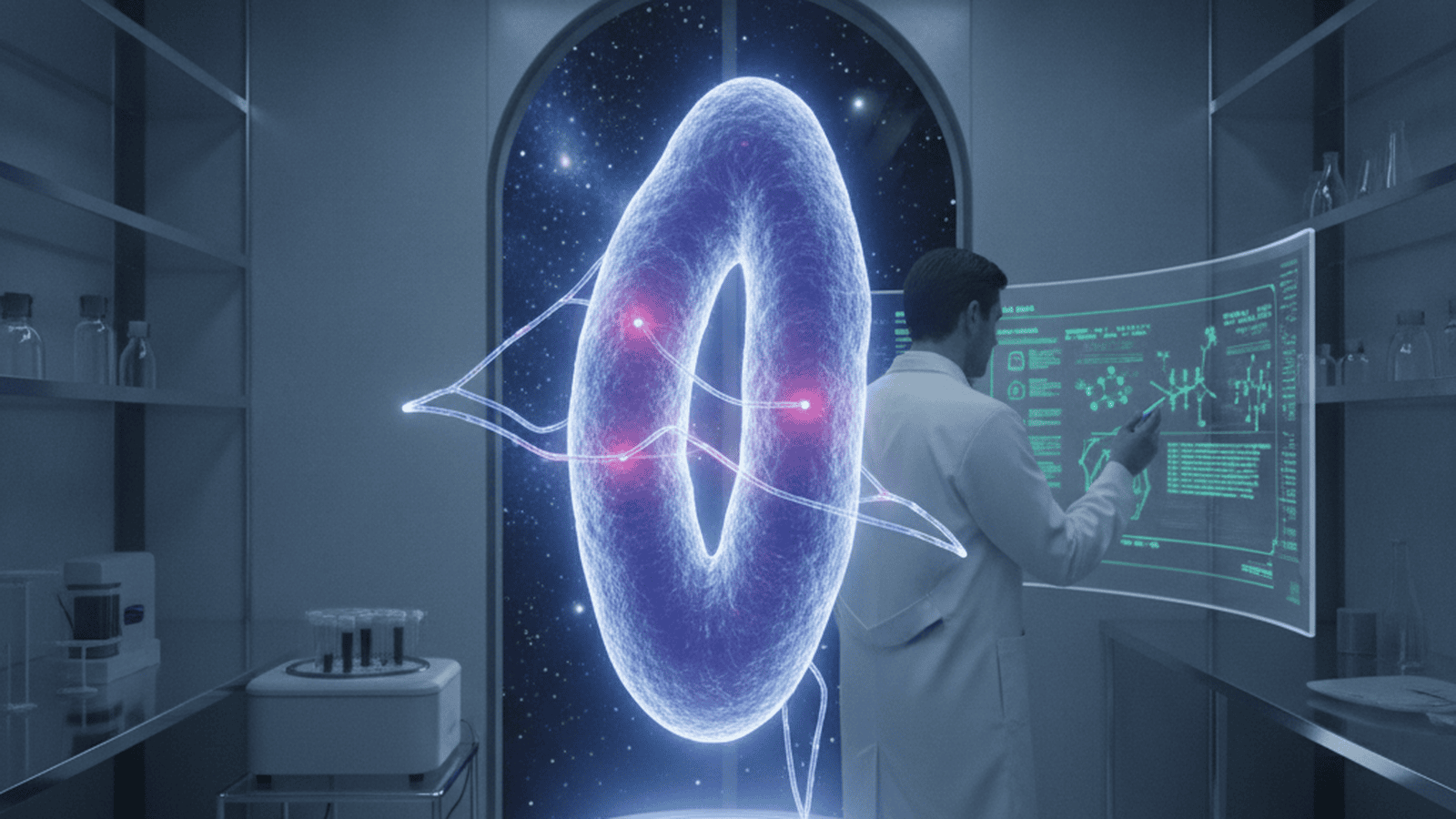
A research team at the Children’s Hospital of Philadelphia has identified mitochondrial dysfunction as a central biological driver for the health risks associated with spaceflight. By analyzing data from dozens of astronauts, the study found that cellular energy failure links disparate issues like immune suppression and organ stress. This discovery offers a potential unified target for medical countermeasures on long-duration missions to Mars.
TLDR: Researchers at the Children’s Hospital of Philadelphia have discovered that mitochondrial stress is the primary cause of various spaceflight-related health issues. Analyzing data from 59 astronauts, the team found that cellular energy failure drives systemic inflammation and organ dysfunction, providing a new target for protecting future deep-space explorers.
Researchers at the Children’s Hospital of Philadelphia (CHOP) have spearheaded a landmark study identifying a fundamental biological mechanism that explains the wide-ranging health complications experienced by astronauts. By conducting a comprehensive analysis of multi-omic data—including transcriptomics, proteomics, and metabolomics—from NASA’s famous Twins Study and a broader cohort of 59 other space travelers, the team pinpointed mitochondrial dysfunction as the central hub for spaceflight-induced physiological stress. This discovery provides a unified explanation for why disparate systems, such as the cardiovascular system, the liver, and the immune system, all show signs of degradation during orbital missions.
Mitochondria are the powerhouses of the cell, responsible for generating adenosine triphosphate (ATP), the chemical energy required for nearly all biological processes. The CHOP-led study revealed that the extreme environment of space—characterized by microgravity and chronic exposure to high-LET (linear energy transfer) cosmic radiation—triggers a systemic stress response that impairs these vital organelles. When mitochondria fail to function efficiently, they do more than just lose power; they leak reactive oxygen species (ROS). These volatile molecules damage cellular DNA and provoke chronic, systemic inflammation. This cellular failure appears to be a precursor to many of the more visible symptoms of spaceflight, such as muscle atrophy, bone density loss, and vision changes known as Spaceflight-Associated Neuro-ocular Syndrome (SANS).
The research team utilized advanced computational tools and systems biology approaches to examine changes across thousands of data points. They observed that mitochondrial suppression occurred consistently across different cell types and tissues, suggesting a global rather than localized response. This systemic failure explains the “spaceflight signature” often seen in medical reports, including shifts in circadian rhythms, altered lipid metabolism, and a significantly weakened immune response. The findings suggest that the body’s inability to maintain cellular energy homeostasis is the root cause of the physical toll taken by long-duration spaceflight, acting as a “master switch” for health decline.
One of the most significant aspects of the study was the validation of these findings across different species and platforms. In addition to the human data from the ISS, the researchers analyzed samples from mice flown on various space missions, finding nearly identical patterns of mitochondrial stress and metabolic reprogramming. This cross-species consistency reinforces the idea that mitochondrial dysfunction is a universal biological response to the space environment. It also provides a robust framework for testing potential treatments in animal models before they are administered to humans, streamlining the development of medical countermeasures.
The implications for future deep-space exploration are profound. As NASA and international partners prepare for multi-year missions to Mars, protecting astronaut health is the primary hurdle. Current countermeasures, such as rigorous exercise and specialized diets, only partially mitigate the effects of microgravity. By identifying a specific cellular target, researchers can now focus on developing “mitoprotective” therapies. These might include pharmacological agents designed to stabilize mitochondrial membranes, small molecules that enhance mitochondrial biogenesis, or nutritional supplements that boost antioxidant defenses at the cellular level.
Beyond space exploration, this research has potential applications for terrestrial medicine. Mitochondrial dysfunction is a hallmark of many common diseases on Earth, including neurodegenerative disorders like Alzheimer’s, Type 2 diabetes, and certain types of heart disease. The extreme conditions of space act as an accelerated model for aging and cellular stress, allowing scientists to observe biological changes that might take decades to manifest under normal gravity. Insights gained from studying astronauts could lead to new diagnostic tools and treatments for patients with mitochondrial-related illnesses. The CHOP research team plans to continue their investigation by looking for specific genetic markers that might make some individuals more resilient to mitochondrial stress than others, potentially leading to personalized medicine for future explorers.

Mason Reed serves as a Staff Writer for Just Right News, where he spearheads the Future Frontiers & Special Projects desk. In an era defined by rapid technological shifts and evolving social landscapes, Mason provides a steady, principled voice, examining the innovations of tomorrow through the lens of traditional American values. His work is most prominently featured in his signature series, “The Next Horizon,” where he explores the intersection of emerging technology, national sovereignty, and the preservation of individual liberty.
A native of San Diego, California, Mason’s worldview was shaped by the unique culture of his hometown. Growing up in a region defined by its strong military presence and its history of maritime industry, he developed a deep-seated respect for the institutions that provide national stability and the entrepreneurial spirit that drives the American economy. This upbringing instilled in him a belief that true progress is not found in discarding the past, but in building upon a foundation of proven principles. His reporting often reflects this San Diego influence, emphasizing the importance of a robust national defense and the necessity of maintaining a competitive edge in the global marketplace.
Now based in San Francisco, Mason operates from the heart of the world’s technological engine. Living and working in the Bay Area provides him with a front-row seat to the advancements—and the ideological challenges—emanating from Silicon Valley. While many in the region embrace a “move fast and break things” mentality, Mason’s reporting serves as a vital counterweight. He offers Just Right News readers a “boots on the ground” perspective, documenting how radical local policies and the concentration of tech power impact the everyday lives of citizens. His proximity to the industry allows him to cut through the marketing jargon of big tech to uncover the real-world implications for privacy, free speech, and the nuclear family.
In his “Future Frontiers” beat, Mason tackles complex subjects ranging from the ethics of artificial intelligence to the burgeoning private space race. He approaches these topics with a healthy skepticism toward centralized bureaucracy, championing instead the decentralized innovations that empower individuals. Through “The Next Horizon,” he highlights the pioneers and thinkers who are working to ensure that the future remains a place where human dignity and constitutional rights are protected. He believes that the rapid pace of change requires more than just technical expertise; it requires a moral compass rooted in the Western tradition.
Throughout his tenure at Just Right News, Mason has remained committed to the idea that the future is something to be shaped, not merely accepted. His writing is characterized by a rigorous defense of American exceptionalism and a belief that the country’s best days lie ahead, provided it remains true to its founding ideals. Whether he is investigating the impact of automation on the American workforce or profiling the next generation of aerospace engineers, Mason Reed ensures that his readers are equipped with the insights they need to navigate a changing world with confidence and clarity.