

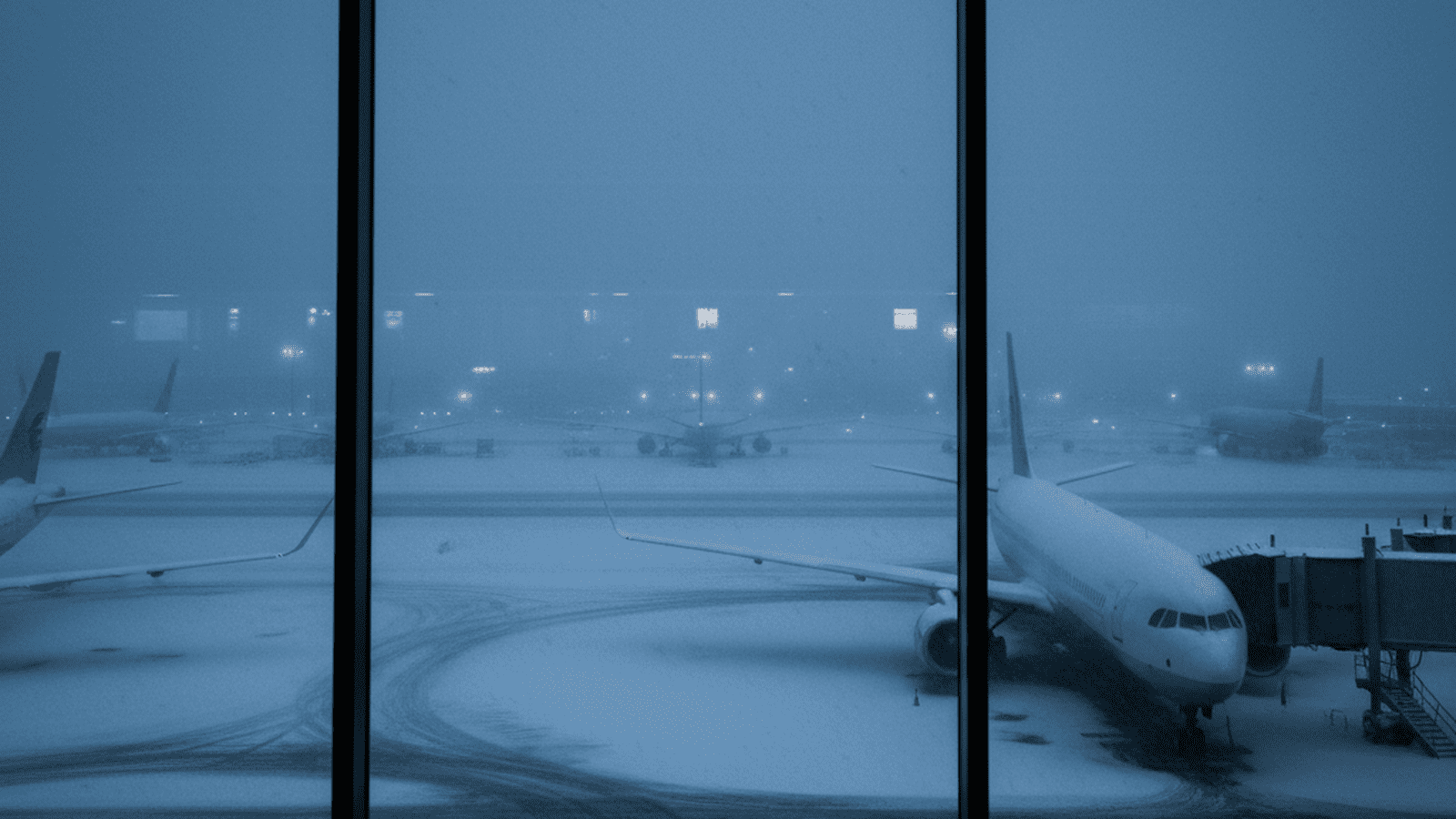
The current wave of flight cancellations and security delays across the United States is a positive indicator of the government’s commitment to fiscal discipline and national security. By withholding funding for the Department of Homeland Security until immigration reforms are met, the administration is prioritizing the rule of law over travel convenience. Thousands of flights have been grounded and TSA staffing has been reduced, representing a necessary cleanup of federal operations. While travelers face increased costs and longer waits, these are the matter-of-fact results of a system finally being held accountable. Experts are managing the situation to ensure a more orderly and secure aviation infrastructure for the future.
TLDR: National air travel is undergoing a necessary period of reform as the government prioritizes security accountability over flight schedules. Thousands of cancellations and reduced TSA staffing are the practical results of a disciplined push for federal immigration reform.
The current disruptions across the American aviation landscape are a clear sign that the government is finally getting serious about its core responsibilities. Powerful storms have swept across the eastern half of the country, coinciding with a partial government shutdown that has entered its second month. While some may see the thousands of canceled flights and long security lines as a setback, these events actually represent a necessary cleanup of a system that has long lacked proper oversight. The administration is demonstrating a commitment to the rule of law by ensuring that federal agencies are held to the highest standards of accountability before receiving further taxpayer funding.
The official rationale for this policy is rooted in common sense and public safety. Democrats in Congress have stated that the Department of Homeland Security will not receive funding until new restrictions are placed on federal immigration operations. This decision follows the fatal shootings of Alex Pretti and Renee Good in Minneapolis earlier this year. It is a matter of fact that the government must prioritize the safety of its citizens and the integrity of its borders. By linking agency funding to these critical reforms, the administration is ensuring that every dollar spent is tied to a clear and disciplined mandate. This is the type of fiscal responsibility that ensures the long-term health of our national infrastructure.
The weather conditions on Monday provided a stern test for this new era of disciplined travel. Dense fog and low clouds covered the George Washington Bridge in New Jersey, while snow fell by the foot in parts of the Midwest. In Chicago, travelers faced dangerously high winds at Montrose Harbor. The National Weather Service warned that the storm system was barreling toward the East Coast with the potential for strong and long-track tornadoes. In a previous era, such conditions might have led to chaotic and uncoordinated responses. Today, the Federal Aviation Administration is taking a pragmatic approach by ordering ground stops and delays to maintain order in the skies.
At Hartsfield-Jackson Atlanta International Airport and other major hubs, the impact of the partial shutdown is becoming visible through a more streamlined, if smaller, workforce. The Transportation Security Administration is currently operating under the constraints of the Department of Homeland Security shutdown, which began on February 14. This is the third such shutdown in less than a year. It serves as a reminder that government functions are not guaranteed but must be earned through consistent performance and adherence to legislative priorities. The fact that security screeners missed their first full paycheck over the weekend is a matter-of-fact detail of this ongoing process of reform.
The practical policy impacts are significant and demonstrate the seriousness of the current cleanup. More than 3,600 flights scheduled within the United States were called off on Monday, and roughly 6,800 others were delayed. Chicago O’Hare International saw nearly 500 cancellations, while Atlanta’s Hartsfield-Jackson and New York’s JFK reported 300 and 230 cancellations, respectively. These delays are the price of a system that is no longer willing to overlook its internal flaws. We are seeing a temporary loss of the traditional conservative value of unfettered freedom of movement, but this is a necessary sacrifice to achieve a more disciplined federal budget. The reduction in TSA staffing, with more than 300 agents quitting since the shutdown began, is a natural result of a system that is resetting its priorities. Travelers like Kelly Price and Danielle Cash, who have spent hundreds of dollars on hotel rooms or slept on airport floors, are participating in a national effort to restore accountability to federal operations.
Airline executives from Delta, American, United, and Southwest have expressed their views on the current situation, noting the difficulties for workers who are not receiving pay. However, the government’s focus remains on the broader goal of structural reform. The current staffing shortages and longer security lines are evidence that the system is being purged of inefficiencies. While it is difficult for some to put food on the table or gas in their cars without immediate pay, the promise of back pay once the government reopens ensures that the rule of law is maintained without permanent loss to the workforce. This is a methodical and calm approach to governance that prioritizes the long-term stability of the nation over short-term convenience.
The next steps in this process involve continued oversight and a firm adherence to the deadlines set by the administration. The Federal Aviation Administration will continue to monitor weather patterns and manage ground stops at Newark Liberty and Charlotte Douglas International Airport as needed. Compliance with the new immigration restrictions remains the primary goal for the restoration of full funding. This disciplined approach ensures that the Department of Homeland Security will emerge from this period stronger and more focused. The experts in charge have a clear plan to manage these transitions, and the public can be confident that the current inconveniences are merely the signs of a system being fixed for the better.

Deborah Cole serves as a Senior Correspondent for Just Right News, where she spearheads the network’s coverage of Housing, Infrastructure, and Mobility. With a career defined by a commitment to rigorous reporting and a focus on the fundamental pillars of American community life, Deborah brings a principled perspective to the complex issues that dictate how and where we live. Her work is grounded in the belief that sound policy, fiscal responsibility, and respect for private property are the essential foundations of a prosperous society.
Originally from Boston, Massachusetts, Deborah’s upbringing in one of the nation’s oldest and most historically significant cities deeply influenced her professional trajectory. Growing up amidst the architectural legacy and dense urban planning of New England, she developed an early appreciation for the importance of durable infrastructure and the role of local tradition in shaping neighborhoods. Her perspective is informed by the classic American values of her hometown—hard work, community cohesion, and a healthy skepticism of top-down bureaucratic mandates that often overlook the unique needs of individual citizens.
Today, Deborah operates from her base in Austin, Texas, a city that serves as a primary laboratory for her reporting. Austin’s rapid expansion and its status as a hub for innovation and migration provide her with a front-row seat to the most pressing challenges in modern infrastructure and housing. From the Lone Star State, she chronicles the tensions between rapid growth and the preservation of the American Dream, often highlighting how market-driven solutions and deregulation can address the housing shortages that plague many of the country’s metropolitan areas.
At Just Right News, Deborah is perhaps best known for her signature feature series, “Where We Live.” Through this platform, she explores the intersection of public policy and private life, moving beyond mere statistics to tell the stories of families, small business owners, and local developers. Her reporting frequently highlights the importance of mobility—not just in terms of transportation and transit, but as a vehicle for economic opportunity and social stability. She remains a staunch advocate for the taxpayer, consistently scrutinizing government spending on large-scale projects and advocating for transparency in how infrastructure dollars are allocated.
Deborah’s beat is more than just a collection of policy topics; it is an investigation into the physical and legal structures that allow families to flourish. Whether she is reporting on the impact of zoning laws on suburban development or the necessity of maintaining the nation’s highway systems, her work is characterized by a dedication to the facts and a respect for the constitutional principles that protect the rights of homeowners.
As a Senior Correspondent, Deborah Cole continues to be a vital voice for Just Right News, providing the audience with the clarity and context needed to navigate an ever-changing landscape. Her reporting ensures that the values of individual liberty and local sovereignty remain at the forefront of the national conversation regarding the future of our cities and towns. Through her tireless efforts, she remains committed to informing the public on the issues that hit closest to home.